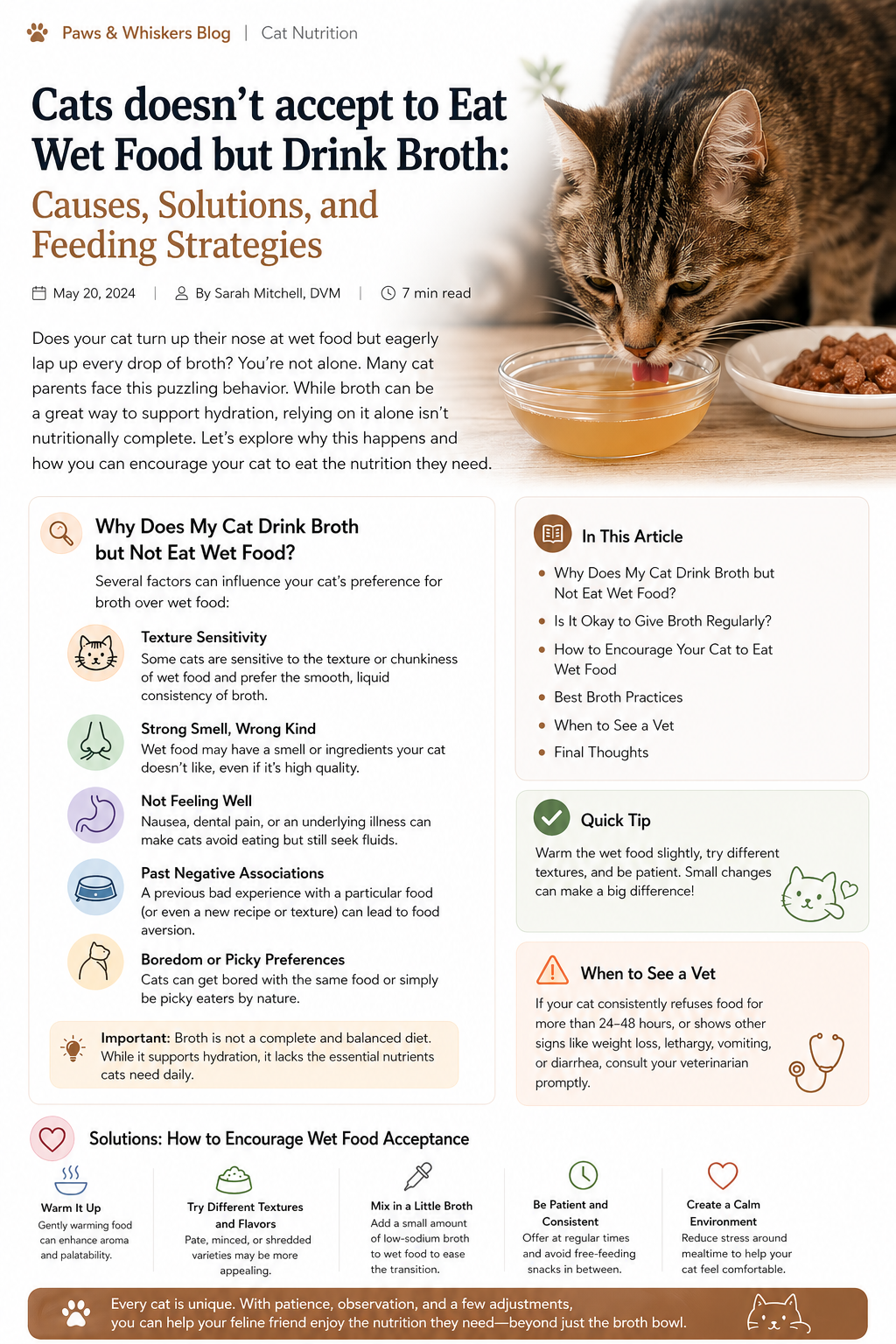
Cats refuse to Eat Wet Food but Drink Broth: Causes, Solutions, and Feeding Strategies
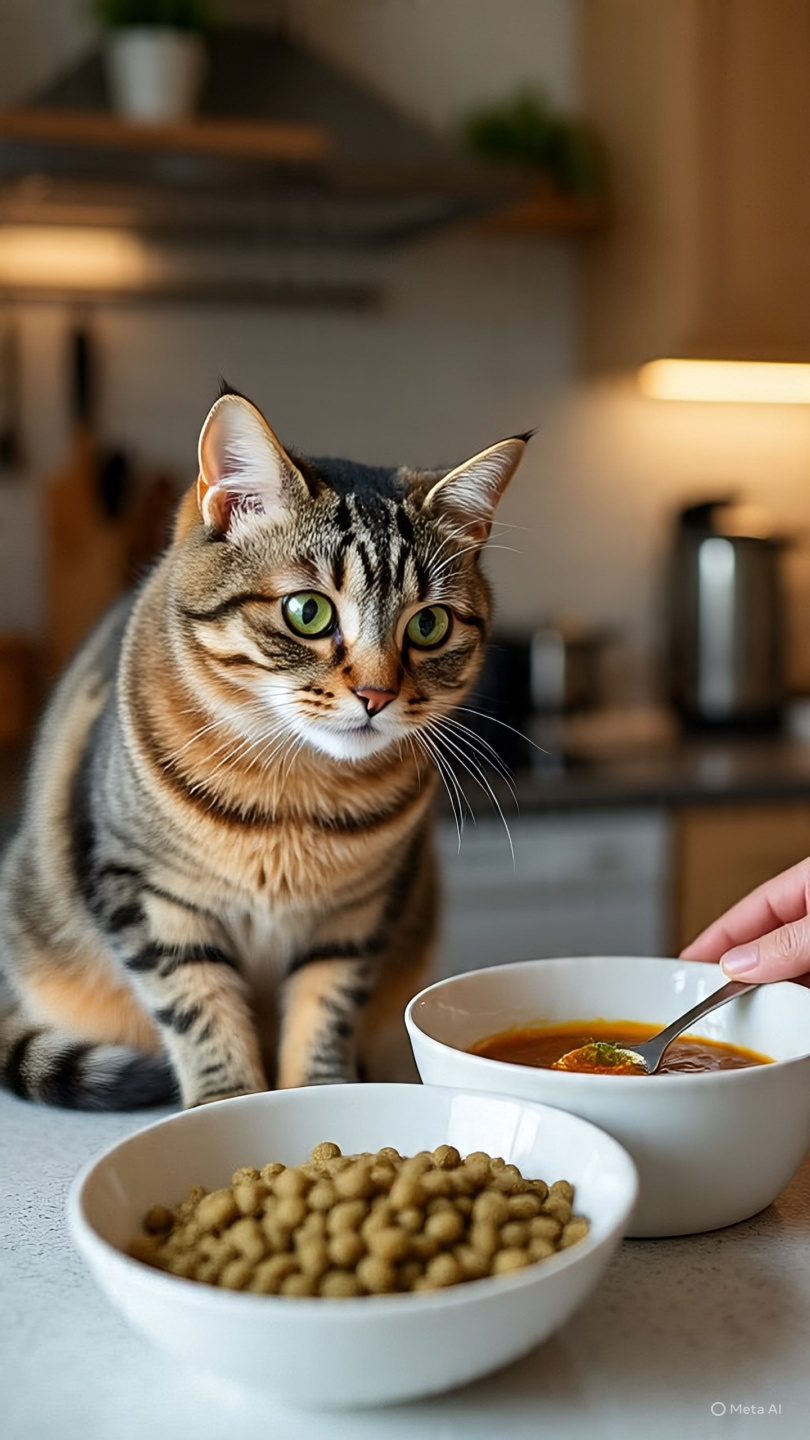
If your cat eagerly laps up broth but doesn’t accept to touch wet food, you’re not alone. This puzzling behavior is surprisingly common and can leave cat owners worried about nutrition, hydration, and overall health. The good news: in most cases, this issue can be fixed with the right understanding and a few practical adjustments.
Let’s break down why this happens and exactly what you can do about it.
Why Your Cat Drinks Broth but Rejects Wet Food
At first glance, it seems contradictory. Wet food contains moisture, flavor, and nutrients—so why would a cat prefer broth alone?
1. Texture Sensitivity
Cats are extremely sensitive to texture. Wet food comes in many forms—pâté, chunks, shreds—but not all cats like the same consistency.
- Broth = smooth, liquid, easy to lap
- Wet food = thicker, sometimes sticky or chunky
If your cat dislikes the mouthfeel, they may avoid it entirely—even if they like the taste.
2. Strong Smell vs. Subtle Aroma
Cats rely heavily on smell when choosing food.
- Broth often has a light, savory aroma
- Wet food can smell stronger or “too rich”
Some cats get overwhelmed by intense odors and prefer something milder.
3. Learned Preference
If your cat has been exposed more to broth or treats than to wet food, they may simply prefer what they know.
This is especially common in:
- Newly adopted cats
- Cats that were fed mostly dry food
- Picky eaters
4. Temperature Matters
Cold wet food (straight from the fridge) can be unappealing.
Broth, on the other hand, is often served slightly warm—which enhances flavor and smell.
5. Dental or Mouth Discomfort
If your cat has dental pain, they may avoid chewing or thicker food.
- Broth = easy to drink
- Wet food = requires more mouth contact
If this behavior appears suddenly, a vet check is important.
6. Overfeeding Broth
If your cat fills up on broth, they may not feel hungry enough to eat actual food.
This creates a cycle: Drinks broth → feels full → ignores food → waits for more broth
Is This Behavior Dangerous?
Short answer: it can be—if it continues long-term.
Broth alone is not nutritionally complete. Cats need:
- Protein
- Essential fats
- Taurine
- Vitamins and minerals
Without these, your cat may develop:
- Weight loss
- Weakness
- Nutritional deficiencies
So while broth is fine as a supplement, it cannot replace a balanced diet.
How to Get Your Cat to Eat Wet Food
Now the important part—solutions that actually work.
1. Mix Broth Into Wet Food
Start by combining the two:
- Add a small amount of broth to wet food
- Stir until the texture becomes smoother
- Gradually reduce broth over time
This bridges the gap between what your cat likes and what they need.
2. Change the Texture
Experiment with different styles:
- Pâté (smooth and soft)
- Shredded meat
- Minced or mousse-style
If needed, you can:
- Mash the food
- Blend it slightly
- Add warm water or broth to thin it
3. Warm the Food Slightly
Warming enhances smell and taste.
Tips:
- Use warm (not hot) water
- Microwave for a few seconds (test temperature carefully)
A stronger aroma can make the food more appealing.
4. Try Different Flavors
Cats can be surprisingly selective.
Try rotating proteins:
- Chicken
- Fish
- Turkey
- Beef
Some cats prefer lighter flavors over rich ones.
5. Reduce Broth Gradually
Don’t cut broth suddenly—it can backfire.
Instead:
- Day 1–3: 70% broth, 30% food
- Day 4–6: 50/50
- Day 7+: mostly food, little broth
Slow transitions work best.
6. Feed on a Schedule
Free-feeding can encourage picky habits.
Switch to:
- 2–3 set meals per day
- Remove uneaten food after 20–30 minutes
This builds appetite and reduces selective eating.
7. Avoid Too Many Treats
If your cat is getting:
- Treats
- Table scraps
- Extra broth
They may simply not be hungry enough.
Keep treats minimal during the transition.
8. Use Food Toppers
Enhance appeal with:
- Crushed freeze-dried meat
- A small amount of tuna water
- Specialized cat food toppers
These can make wet food more exciting.
9. Create a Calm Feeding Environment
Cats are sensitive to stress.
Make sure:
- Feeding area is quiet
- No loud noises or interruptions
- Bowls are clean and shallow
Even small stressors can affect appetite.
10. Check Bowl Type and Placement
Some cats dislike deep bowls (whisker fatigue).
Try:
- Wide, shallow dishes
- Ceramic or stainless steel bowls
Also, avoid placing food near litter boxes.
When to Be Concerned
Sometimes, this behavior signals a deeper issue.
Watch for:
- Sudden refusal to eat
- Weight loss
- Lethargy
- Drooling or bad breath
- Vomiting
If you notice any of these, consult a veterinarian.
Special Case: Newly Adopted Cats
New cats often refuse food due to stress.
Common reasons:
- Unfamiliar environment
- Separation anxiety
- New smells and sounds
In this case:
- Be patient
- Offer familiar or simple foods
- Keep routines consistent
Most cats adjust within a few days to a couple of weeks.
Should You Keep Giving Broth?
Yes—but in moderation.
Broth can:
- Improve hydration
- Encourage appetite
- Make food more palatable
But it should always be:
- Low sodium
- Free from onions, garlic, and harmful additives
- Used as a supplement—not a replacement
Homemade vs. Store-Bought Broth
Homemade Broth
Pros:
- Control ingredients
- No additives
Cons:
- Time-consuming
- Must be properly balanced
Store-Bought Broth
Pros:
- Convenient
- Formulated for cats
Cons:
- Check labels carefully
Avoid anything with:
- Salt
- Spices
- Artificial flavors
Transitioning from Dry Food to Wet Food
If your cat is used to dry food, resistance is normal.
Try this method:
- Mix a small amount of wet food into dry food
- Increase wet food slowly
- Reduce dry food over time
Patience is key—this can take weeks.
Common Mistakes to Avoid
- Forcing your cat to eat
- Switching foods too quickly
- Giving too much broth
- Ignoring underlying health issues
- Offering too many alternatives (this reinforces picky behavior)
Long-Term Feeding Strategy
The goal is balance and consistency.
A good plan:
- High-quality wet food as the base
- Occasional broth for hydration
- Consistent feeding times
- Minimal treats
Once your cat adapts, stick to what works.
If your cats eagerly laps up broth but don’t touch wet food, you’re not alone. This behavior is surprisingly common and can leave cat owners worried about nutrition, hydration, and overall health. The good news: in most cases, this issue can be fixed with the right understanding and a few practical adjustments.
Let’s break down why this happens and exactly what you can do about it.
Why Your Cat Drinks Broth but Rejects Wet Food
At first glance, it seems contradictory. Wet food contains moisture, flavor, and nutrients—so why would a cat prefer broth alone?
1. Texture Sensitivity
Cats are extremely sensitive to texture. Wet food comes in many forms—pâté, chunks, shreds—but not all cats like the same consistency.
- Broth = smooth, liquid, easy to lap
- Wet food = thicker, sometimes sticky or chunky
If your cat dislikes the mouthfeel, they may avoid it entirely—even if they like the taste.
2. Strong Smell vs. Subtle Aroma
Cats rely heavily on smell when choosing food.
- Broth often has a light, savory aroma
- Wet food can smell stronger or “too rich”
Some cats get overwhelmed by intense odors and prefer something milder.
3. Learned Preference
If your cat has been exposed more to broth or treats than to wet food, they may simply prefer what they know.
This is especially common in:
- Newly adopted cats
- Cats that were fed mostly dry food
- Picky eaters
4. Temperature Matters
Cold wet food (straight from the fridge) can be unappealing.
Broth, on the other hand, is often served slightly warm—which enhances flavor and smell.
5. Dental or Mouth Discomfort
If your cat has dental pain, they may avoid chewing or thicker food.
- Broth = easy to drink
- Wet food = requires more mouth contact
If this behavior appears suddenly, a vet check is important.
6. Overfeeding Broth
If your cat fills up on broth, they may not feel hungry enough to eat actual food.
This creates a cycle: Drinks broth → feels full → ignores food → waits for more broth
Is This Behavior Dangerous?
Short answer: it can be—if it continues long-term.
Broth alone is not nutritionally complete. Cats need:
- Protein
- Essential fats
- Taurine
- Vitamins and minerals
Without these, your cat may develop:
- Weight loss
- Weakness
- Nutritional deficiencies
So while broth is fine as a supplement, it cannot replace a balanced diet.
How to Get Your Cat to Eat Wet Food
Now the important part—solutions that actually work.
1. Mix Broth Into Wet Food
Start by combining the two:
- Add a small amount of broth to wet food
- Stir until the texture becomes smoother
- Gradually reduce broth over time
This bridges the gap between what your cat likes and what they need.
2. Change the Texture
Experiment with different styles:
- Pâté (smooth and soft)
- Shredded meat
- Minced or mousse-style
If needed, you can:
- Mash the food
- Blend it slightly
- Add warm water or broth to thin it
3. Warm the Food Slightly
Warming enhances smell and taste.
Tips:
- Use warm (not hot) water
- Microwave for a few seconds (test temperature carefully)
A stronger aroma can make the food more appealing.
4. Try Different Flavors
Cats can be surprisingly selective.
Try rotating proteins:
- Chicken
- Fish
- Turkey
- Beef
Some cats prefer lighter flavors over rich ones.
5. Reduce Broth Gradually
Don’t cut broth suddenly—it can backfire.
Instead:
- Day 1–3: 70% broth, 30% food
- Day 4–6: 50/50
- Day 7+: mostly food, little broth
Slow transitions work best.
6. Feed on a Schedule
Free-feeding can encourage picky habits.
Switch to:
- 2–3 set meals per day
- Remove uneaten food after 20–30 minutes
This builds appetite and reduces selective eating.
7. Avoid Too Many Treats
If your cat is getting:
- Treats
- Table scraps
- Extra broth
They may simply not be hungry enough.
Keep treats minimal during the transition.
8. Use Food Toppers
Enhance appeal with:
- Crushed freeze-dried meat
- A small amount of tuna water
- Specialized cat food toppers
These can make wet food more exciting.
9. Create a Calm Feeding Environment
Cats are sensitive to stress.
Make sure:
- Feeding area is quiet
- No loud noises or interruptions
- Bowls are clean and shallow
Even small stressors can affect appetite.
10. Check Bowl Type and Placement
Some cats dislike deep bowls (whisker fatigue).
Try:
- Wide, shallow dishes
- Ceramic or stainless steel bowls
Also, avoid placing food near litter boxes.
When to Be Concerned
Sometimes, this behavior signals a deeper issue.
Watch for:
- Sudden refusal to eat
- Weight loss
- Lethargy
- Drooling or bad breath
- Vomiting
If you notice any of these, consult a veterinarian.
Special Case: Newly Adopted Cats
New cats often refuse food due to stress.
Common reasons:
- Unfamiliar environment
- Separation anxiety
- New smells and sounds
In this case:
- Be patient
- Offer familiar or simple foods
- Keep routines consistent
Most cats adjust within a few days to a couple of weeks.
Should You Keep Giving Broth?
Yes—but in moderation.
Broth can:
- Improve hydration
- Encourage appetite
- Make food more palatable
But it should always be:
- Low sodium
- Free from onions, garlic, and harmful additives
- Used as a supplement—not a replacement
Homemade vs. Store-Bought Broth
Homemade Broth
Pros:
- Control ingredients
- No additives
Cons:
- Time-consuming
- Must be properly balanced
Store-Bought Broth
Pros:
- Convenient
- Formulated for cats
Cons:
- Check labels carefully
Avoid anything with:
- Salt
- Spices
- Artificial flavors
Transitioning from Dry Food to Wet Food
If your cat is used to dry food, resistance is normal.
Try this method:
- Mix a small amount of wet food into dry food
- Increase wet food slowly
- Reduce dry food over time
Patience is key—this can take weeks.
Common Mistakes to Avoid
- Forcing your cat to eat
- Switching foods too quickly
- Giving too much broth
- Ignoring underlying health issues
- Offering too many alternatives (this reinforces picky behavior)
Long-Term Feeding Strategy
The goal is balance and consistency.
A good plan:
- High-quality wet food as the base
- Occasional broth for hydration
- Consistent feeding times
- Minimal treats
Once your cat adapts, stick to what works.
Final Thoughts
A cat that drinks broth but refuses wet food isn’t being “difficult”—they’re responding to texture, smell, habit, or comfort.
The key is not to fight the behavior, but to work with it:
- Adjust texture
- Use gradual transitions
- Enhance flavor naturally
- Stay consistent
With patience and the right approach, most cats will eventually accept wet food and enjoy a more balanced diet.






Leave a Reply