Introduction
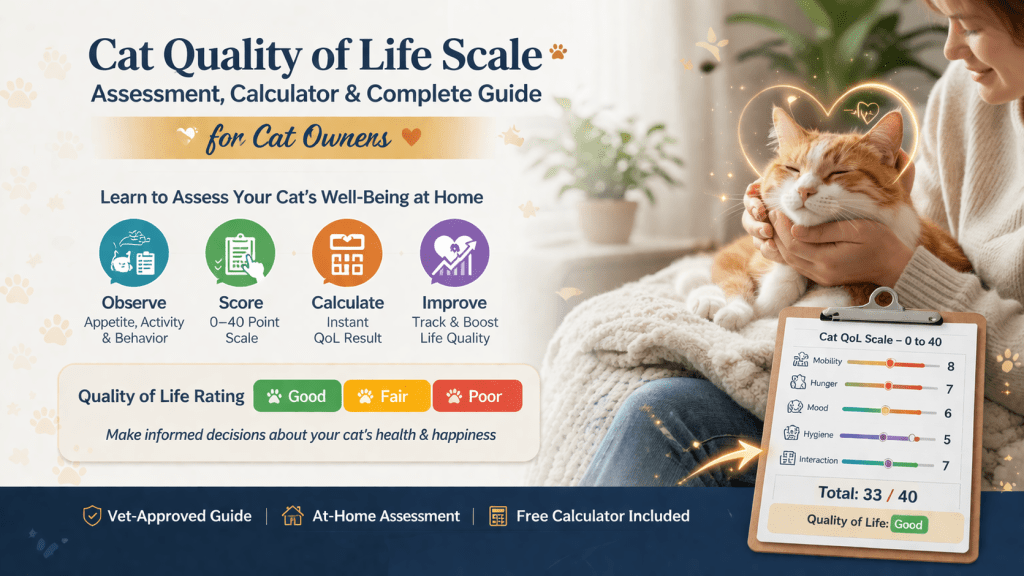
Understanding your cat’s well-being is one of the most important responsibilities of any pet owner. Cats are masters at hiding pain and discomfort, which makes it difficult to know when they are truly suffering. This is where the Cat Quality of Life (QoL) Scale becomes essential.
This comprehensive, guide will walk you through everything you need to know about cat quality of life assessment, including how to use a QoL calculator, interpret results, and make informed decisions about your cat’s care.
What Is a Cat Quality of Life Scale?
The Cat Quality of Life Scale is a structured tool used to evaluate a cat’s overall well-being. It helps pet owners and veterinarians assess physical health, emotional state, and daily functioning.
Instead of relying on guesswork, the QoL scale provides measurable indicators to determine whether a cat is:
- Comfortable and happy
- Experiencing manageable discomfort
- Suffering and needing intervention
It is especially useful for:
- Senior cats
- Cats with chronic illnesses
- End-of-life care decisions
Why Quality of Life Assessment Matters
Cats instinctively hide pain as a survival mechanism. This means that by the time symptoms become obvious, the condition may already be serious.
A structured QoL assessment helps you:
- Detect early signs of suffering
- Track health changes over time
- Make objective decisions
- Communicate better with veterinarians
Key Signs That Affect a Cat’s Quality of Life
Before diving into the calculator, it’s important to understand the core indicators of feline well-being.
1. Appetite and Hydration
A healthy cat eats regularly and drinks enough water. Warning signs include:
- Loss of appetite
- Weight loss
- Dehydration
2. Mobility
Cats should be able to:
- Walk comfortably
- Jump or climb
- Use the litter box without difficulty
Reduced mobility often signals pain or aging issues.
3. Grooming Behavior
Cats are naturally clean animals. Poor grooming may indicate:
- Pain
- Depression
- Illness
4. Social Interaction
Changes in behavior can be key:
- Hiding more than usual
- Avoiding people
- Aggression or irritability
5. Pain Levels
Signs of pain include:
- Vocalization
- Limping
- Sensitivity to touch
6. Bathroom Habits
Watch for:
- Accidents outside the litter box
- Constipation or diarrhea
- Difficulty urinating
The Cat Quality of Life Scale: Core Categories
Most QoL scales use a scoring system based on several categories. A popular framework includes:
HHHHHMM Scale (Adapted for Cats)
Each category is scored from 0 to 10:
- Hurt (Pain)
- Hunger (Appetite)
- Hydration
- Hygiene
- Happiness
- Mobility
- More Good Days Than Bad
How to Use a Cat Quality of Life Calculator
A Cat QoL Calculator is a simple tool where you assign scores to each category and calculate a total.
Step-by-Step Guide
Step 1: Score Each Category (0–10)
Category Score (0–10) Notes Pain Appetite Hydration Hygiene Happiness Mobility Good Days
Step 2: Add the Total Score
Maximum score = 70
Step 3: Interpret the Results
- 60–70 → Excellent quality of life
- 45–59 → Moderate (monitor closely)
- 30–44 → Poor (intervention needed)
- Below 30 → Very poor (serious concern)
Example of a Cat Quality of Life Calculation
Let’s say your cat has the following scores:
- Pain: 6
- Appetite: 5
- Hydration: 7
- Hygiene: 6
- Happiness: 5
- Mobility: 4
- Good Days: 5
Total = 38/70
👉 Interpretation: Your cat may be experiencing significant discomfort, and a veterinary consultation is strongly recommended.
How Often Should You Assess Your Cat?
Frequency depends on your cat’s condition:
- Healthy cats: once every 3–6 months
- Senior cats: monthly
- Sick cats: weekly or daily
Tracking scores over time is more important than a single result.
Benefits of Using a QoL Scale
1. Objectivity
Removes emotional bias when making difficult decisions.
2. Early Detection
Identifies subtle changes before they worsen.
3. Better Communication
Helps you clearly explain symptoms to your vet.
4. End-of-Life Guidance
Provides clarity during emotional moments.
Limitations of the Cat QoL Scale
While helpful, the scale is not perfect.
- It depends on owner observation
- Cats may hide symptoms
- It cannot replace a veterinary diagnosis
👉 Always combine QoL results with professional advice.
Improving Your Cat’s Quality of Life
If your cat’s score is declining, there are ways to improve it.
1. Pain Management
- Consult a vet for safe medications
- Avoid self-medicating
2. Nutrition Support
- Offer high-quality food
- Try appetite stimulants if needed
3. Hydration
- Provide fresh water daily
- Use water fountains
4. Comfortable Environment
- Soft bedding
- Warm, quiet spaces
5. Mental Stimulation
- Toys and interaction
- Gentle play sessions
When to Be Concerned
Watch for these red flags:
- Refusing food for more than 24–48 hours
- Severe lethargy
- Difficulty breathing
- Persistent pain
If your QoL score drops quickly, act immediately.
Quality of Life and End-of-Life Decisions
One of the hardest parts of pet ownership is knowing when to say goodbye.
A QoL scale helps answer:
- Is my cat still enjoying life?
- Are good days outweighing bad ones?
- Is treatment helping or prolonging suffering?
A consistently low score may indicate that humane decisions should be considered.
Tips for Accurate Assessment
- Be honest, not hopeful
- Observe daily habits
- Keep a journal
- Reassess regularly
Creating Your Own Cat QoL Tracker
You can build a simple tracking system:
- Use a notebook or spreadsheet
- Record daily scores
- Note behavioral changes
- Track trends over time
This helps you make data-driven decisions.
Frequently Asked Questions (FAQ)
What is a good quality of life score for a cat?
A score above 60 indicates a healthy and happy cat.
Can a cat recover from a low QoL score?
Yes, depending on the condition and treatment.
Is the QoL scale reliable?
It is a helpful guideline but should always be combined with veterinary advice.
When should I use a QoL calculator?
Use it when you notice behavioral or health changes.
Final Thoughts
The Cat Quality of Life Scale is one of the most powerful tools available to cat owners. It transforms emotional decisions into clear, structured evaluations.
By regularly assessing your cat’s:
- Comfort
- Behavior
- Physical health
You can ensure they live a life that is not just long—but truly worth living.
Conclusion
Your cat depends on you to recognize when something is wrong. The QoL scale and calculator provide a reliable way to measure well-being and act accordingly.
Start today:
- Assess your cat
- Track their score
- Take action when needed
Because a happy cat isn’t just surviving—it’s thriving. 🐱✨




 Fresh Cat News: Trusted Updates for Cat Lovers & Responsible Owners
Do you found this guide useful, please leave a comment.