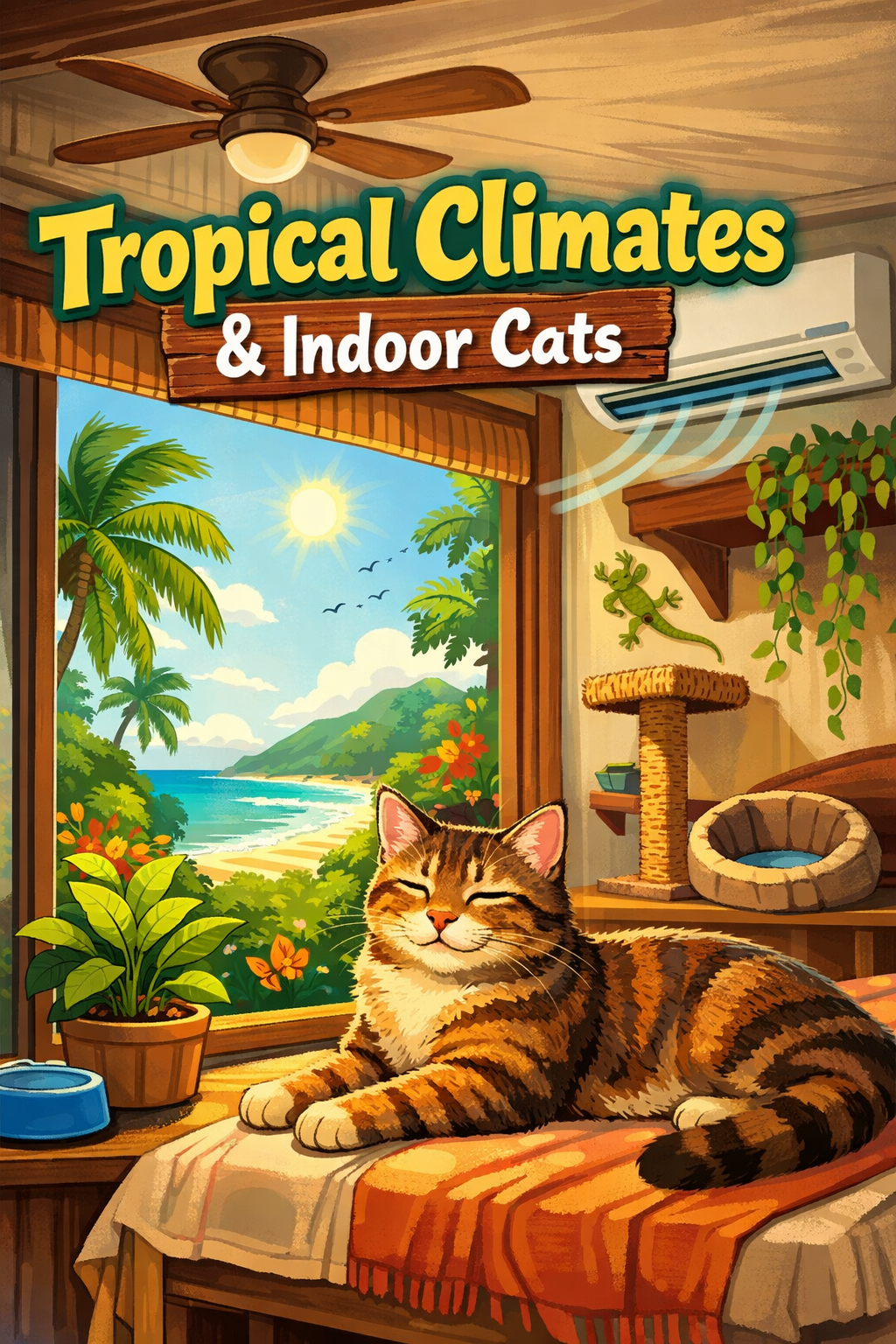
Living in a tropical region comes with sunshine, humidity, and long daylight hours. But if you share your home with a cat, you may wonder: how do tropical climates affect indoor cats?
While many people assume that staying indoors protects cats from heat stress, indoor environments in hot countries can still create hidden risks. From dehydration to behavioral changes, the tropical climate indoor cat lifestyle requires special attention.
This guide explores the impact of heat, humidity, and long daylight exposure on indoor cats, and how you can protect your feline companion.
🌡️ Heat Stress in Indoor Cats
Even inside apartments or houses, temperatures in tropical regions can rise significantly — especially without constant air conditioning.
Unlike humans, cats do not sweat efficiently. They regulate temperature mainly through:
- Seeking cool surfaces
- Panting (rare but possible in overheating)
- Grooming (evaporation from saliva)
Signs of Heat Stress in Indoor Cats:
- Reduced appetite
- Seeking tiles or bathroom floors
- Drooling
- Rapid breathing
- Lethargy
If you’re researching “can indoor cats overheat in hot climates?”, the answer is yes — particularly in poorly ventilated homes.
💧 Hydration Challenges in Tropical Climates
Hydration is one of the most overlooked aspects of indoor cat care in hot weather.
Cats naturally have a low thirst drive because their ancestors evolved in arid environments. However, tropical heat increases fluid loss through respiration and grooming.
Why Dehydration Is Common in Indoor Cats:
- Lack of movement leading to reduced thirst cues
- Warm water bowls (less appealing)
- Dry kibble diets
To improve hydration:
- Offer moisture-rich food
- Consider water fountains for stimulation
- Use ceramic or stainless steel bowls (cooler retention)
- Provide multiple water stations
Chronic low-level dehydration can impact kidney health over time — especially in strictly indoor cats.
🌞 Long Daylight Exposure & Sleep Cycles
Tropical regions often experience strong, consistent daylight patterns. While cats are crepuscular (most active at dawn and dusk), excessive artificial lighting combined with natural sunlight may subtly alter their rest cycles.
Searches for “do indoor cats sleep less in hot weather?” are increasing — and there’s logic behind the concern.
High temperatures may:
- Increase nocturnal zoomies
- Shift play behavior to late night
- Reduce daytime activity
If your indoor cat becomes more active after midnight during hot seasons, it may simply be avoiding daytime heat.
🧠 Behavioral Changes in Hot Climates
Heat doesn’t just affect the body — it affects mood and behavior.
In tropical apartments, indoor cats may:
- Show mild irritability
- Seek isolated cool spots
- Become less playful
- Hide more often
Humidity can also intensify discomfort, particularly for long-haired breeds.
If you notice behavioral changes during hot months, ask:
- Is sunlight overheating specific rooms?
- Is the litter box in a warm area?
- Is airflow sufficient?
Small environmental adjustments can significantly improve feline comfort.
🥩 Appetite & Metabolism in Heat
Hot weather often reduces appetite in both humans and animals.
If you’re searching “why does my indoor cat eat less in summer?”, temperature may be the cause.
Lower appetite during heat waves is normal — but:
- Avoid leaving wet food exposed too long
- Ensure water intake remains stable
- Monitor weight regularly
Food spoils faster in humid environments, which can also reduce interest.
🏠 Indoor Air Quality & Ventilation
In many tropical countries, homes rely on fans rather than central cooling systems. Poor air circulation may trap heat and humidity.
Improving ventilation can help:
- Provide elevated sleeping areas for airflow
- Keep resting zones away from direct sun
- Use cross-ventilation when possible
- Open windows safely with screens
Indoor cats in tropical climates benefit
greatly from micro-climate adjustments inside the home.
🐾 Special Considerations for Tropical Regions
Indoor cats in tropical climates may face additional factors such as:
- High humidity impacting litter freshness
- Power outages affecting cooling systems
- Mosquito presence near windows
Regular monitoring is key. Unlike outdoor cats, indoor cats cannot naturally seek shaded outdoor zones — their comfort depends entirely on indoor adjustments.
🏆 How to Protect Indoor Cats in Tropical Heat
Here’s a simple action checklist:
✔ Provide constant access to fresh, cool water
✔ Encourage vertical rest spaces with airflow
✔ Use blackout curtains during peak heat
✔ Schedule active play sessions during cooler hours
✔ Monitor subtle behavior changes
The goal is not to eliminate heat entirely — but to reduce cumulative stress.
Conclusion
Yes — indoor cats can thrive in tropical climates. But heat, humidity, and long daylight exposure require mindful management.
If you live in a hot region, understanding how tropical climates affect indoor cats gives you a significant advantage in preventing dehydration, behavioral shifts, and long-term stress.
Indoor life protects cats from many outdoor dangers — yet climate remains an invisible factor that owners must actively manage.
With proper hydration, ventilation, and environmental awareness, your indoor cat can remain comfortable, healthy, and behaviorally balanced — even under tropical skies.
These topics may interest you :



 Fresh Cat News: Trusted Updates for Cat Lovers & Responsible Owners
Do you found this guide useful, please leave a comment.