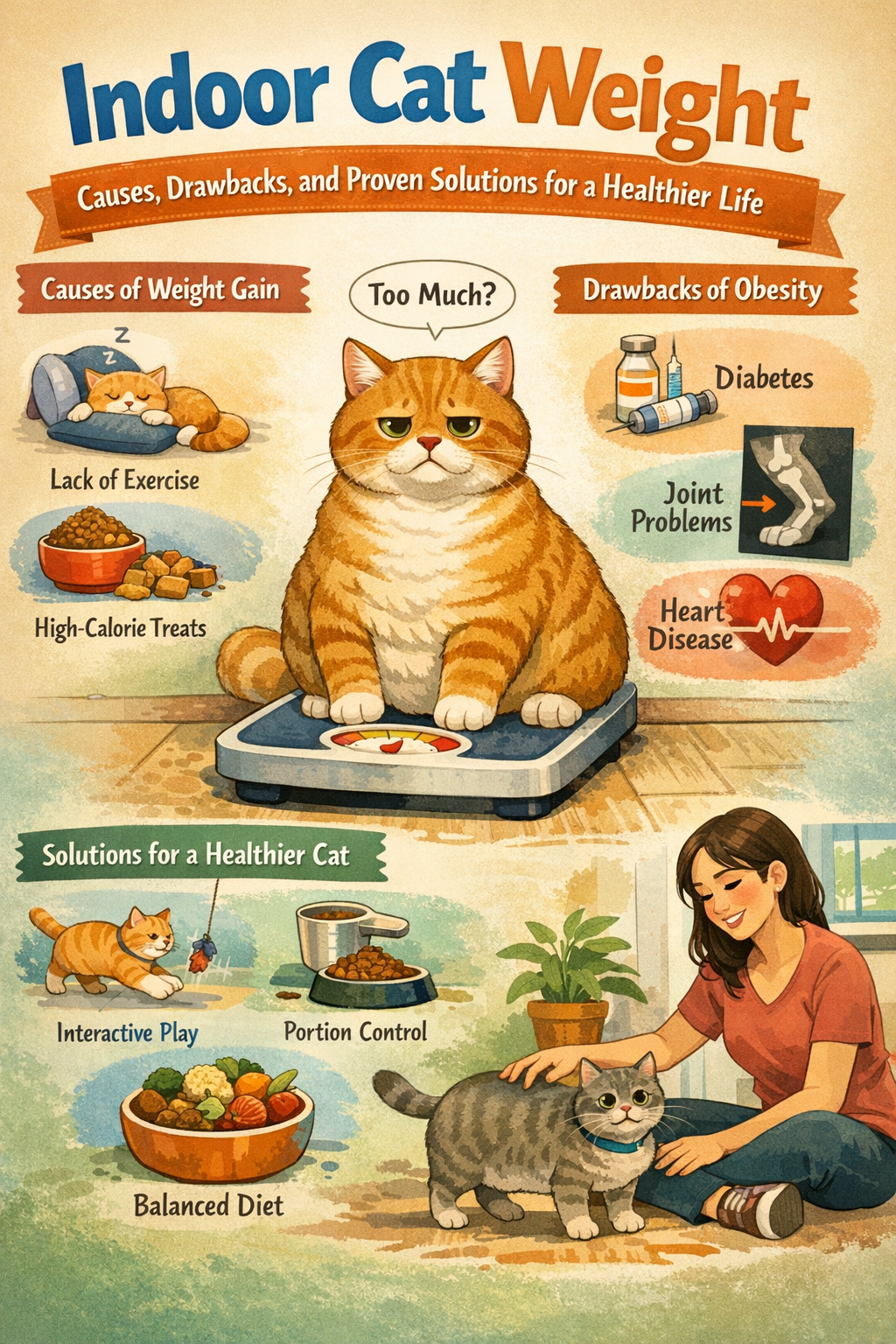
Indoor cats live longer, safer lives than outdoor cats. They avoid traffic, predators, infectious diseases, and territorial fights. But there’s a hidden risk many cat owners underestimate: weight gain in indoor cats.
If your cat rarely goes outside, sleeps most of the day, and has constant access to food, weight gain can happen quietly — and quickly.
In this comprehensive guide, you’ll learn:
- Why indoor cats gain weight
- The real health risks of excess weight
- Early warning signs of obesity
- Science-based solutions that actually work
- A step-by-step plan to help your cat slim down safely
Let’s dive in.
What Is Considered Overweight for an Indoor Cat?
A cat is considered overweight when it weighs 10–20% more than its ideal body weight. Obesity is typically defined as 20% or more above ideal weight.
However, weight alone is not the best indicator. Breed, bone structure, and body length matter.
Veterinarians use the Body Condition Score (BCS) system, usually on a 1–9 scale:
- 1–3: Underweight
- 4–5: Ideal
- 6–7: Overweight
- 8–9: Obese
For example :
- A Ragdoll can also be larger without being overweight
- Large breeds like the Maine Coon may naturally weigh 6–8 kg
- A healthy adult domestic short-haired cat often weighs between 3.5–4.5 kg
The key is not the number on the scale — it’s body fat distribution and muscle tone.
Main Causes of Indoor Cat Obesity Gain
Domestic cats gain weight for multiple reasons. Most of them are lifestyle-related.
- Low physical activity
In the wild, cats hunt multiple small prey per day. Hunting requires:
a. Climbing
b. Stalking
c. Sprinting
d. Pouncing
Home cats rarely replicate this behavior. Without structured play, they may sleep 16–20 hours daily.
Less movement = fewer calories burned.
2. Free Feeding (Food Always Available)
Leaving dry kibble out all day encourages overeating.
Indoor cats often eat out of boredom, not hunger.
High-calorie commercial diets combined with unlimited access create a constant calorie surplus. To learn more about kitten feeding clic on kitten Feeding
3. Leaving dry kibble out all day encourages overeating.
After spaying or neutering:
- Activity levels may drop
- Appetite may increase
- Metabolism may decrease by up to 20%
This does not mean neutering causes obesity — but it increases the risk if feeding is not adjusted.
4. Boredom and Emotional Eating
Indoor cats without stimulation: eat more, sleep more, groom excessively and develop food-seeking behaviors.
5. High-Carbohydrate Diets
Many dry foods contain : corn, wheat, rice and fillers.
Cats are obligate carnivores. Excess carbohydrates are stored as fat.
6. Age-Related Metabolism Slowdown
As cats age : their muscle mass decreases, energy needs drop and their activity reduces.
Without adjusting calories, weight gain becomes inevitable.
The Hidden Drawbacks of Indoor Cat Obesity
Obesity is not just cosmetic. It dramatically reduces quality of life.
a) Diabetes Mellitus
Overweight cats are much more likely to develop insulin resistance.
Feline diabetes requires: Daily insulin injections, Frequent veterinary monitoring and strict diet control.
b) Joint Problems and Arthritis
Excess weight stresses: spine, hips and knees.Over time, this leads to chronic pain and reduced mobility.
c) Heart and Respiratory Strain
Fat accumulation in the chest and abdomen makes breathing harder.
Obese cats: avoid climbing, tire easily and pant after minimal effort.
d) Liver Disease (Hepatic Lipidosis)
Rapid weight loss in obese cats can trigger a dangerous liver condition called hepatic lipidosis.
That’s why weight loss must always be gradual.
e) Reduced Lifespan
Studies show overweight cats may live 2–3 years less than lean cats.
Indoor life increases longevity — but obesity can cancel that advantage.
Early Warning Signs of Weight Problems
Watch for:
- Heavy breathing after light activity
- Increased sleeping
- Reduced jumping ability
- Difficulty grooming back area
- Belly sagging or swinging
- No visible waist
If you can’t feel ribs without pressing firmly, your cat is likely overweight.
How to Help Your Indoor Cat Lose Weight Safely
Now the good news: weight gain is reversible. You can use : a kitchen scale, a measured scoop and Vet-recommended calorie plan.
Even 10 extra kibbles daily can add significant weight over time.
Switch to Higher-Protein, Lower-Carb Diets
Cats thrive on: high animal proteins, moderate-fat and very low carbohydrates. Wet food often contains fewer carbs and more moisture, which increases satiety.
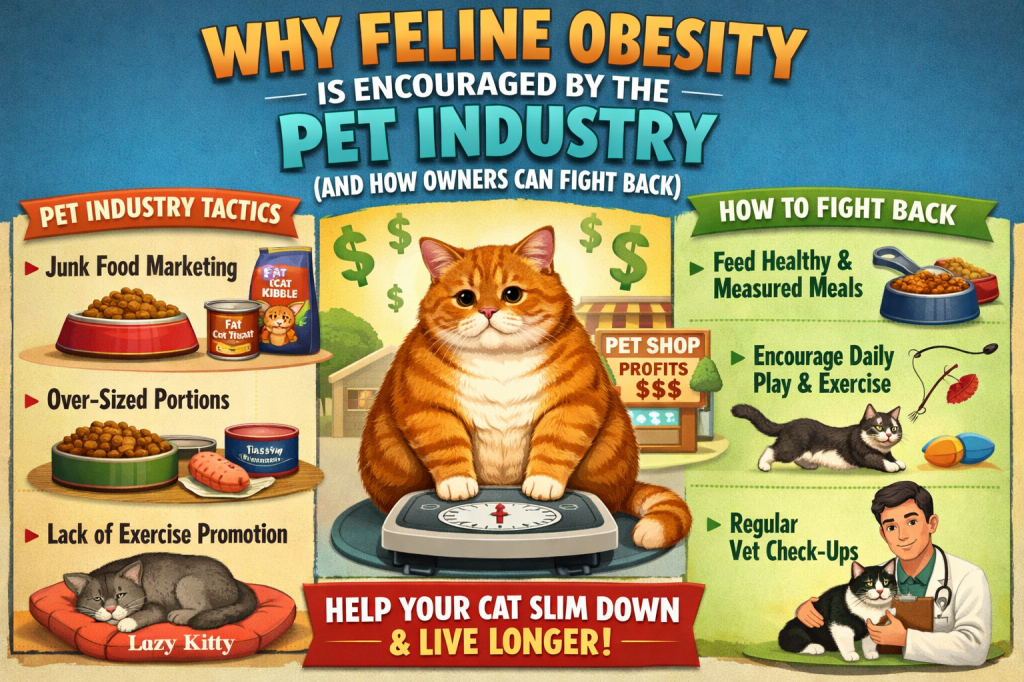
Stop Free Feeding
Feed 2–3 measured meals per day.
Scheduled feeding:
- Reduces boredom eating
- Mimics natural hunting rhythm
- Controls intake
Increase Daily Play (The Game Changer)
Here your aim should focus on 2-3 sessions per day, 10-15 minutes each and high intensity burst. You can use climbing trees, wand toys, Ball chasers and Laser pointers (finish with physical toy).Think like prey. Make your cat stalk, chase, and pounce. cat enrichment
Use Puzzle Feeders
Instead of bowl feeding how don’t you encourage movement, scatter small portions and hide food in puzzle toys. This turns eating into exercise.
Increase Vertical Space
Cats love heigh so, install window perches, cat trees and wall shelves. Climbing burns calories and builds muscle.
Monitor Progress Weekly
You should weight your cat weekly and observe a healthy weight loss rate (0.5–2% of body weight per week).
Never rush it.
Sample Indoor Cat Weight Loss Plan (8 Weeks)
Week 1–2:
- Measure current intake
- Reduce calories by 10%
- Start 10 minutes play daily
Week 3–4:
- Increase play to 20 minutes
- Introduce puzzle feeders
- Remove free feeding
Week 5–6:
- Reassess weight
- Adjust portions slightly if needed
- Add vertical climbing spa
Week 7–8:
- Maintain structured meals
- Continue interactive play
- Celebrate visible waistline
Consistency is more important than intensity.
Common Mistakes to Avoid
- Comparing your cat to online “ideal” body images
- Ignoring treats (they count!)
- Relying only on “light” kibble
- Skipping meals
- Cutting food too drastically
Healthy weight is about function, not appearance.
How Many Calories Does an Indoor Cat Really Need?
General rule:
Resting Energy Requirement (RER) =
70 × (Body weight in kg ^ 0.75)
But most indoor neutered cats need roughly:
- 180–220 kcal/day (average 4–5 kg cat)
Always confirm with your veterinarian.
Psychological Benefits of Weight Loss
Lean indoor cats:
- Sleep more comfortably
- Have improved mood
- Show more playful behavior
- Jump confidently
- Groom better
Weight loss often reveals your cat’s true personality again.
Prevention Is Easier Than Weight Loss
If you have a young indoor kitten:
- Avoid free feeding from the start
- Encourage daily structured play
- Choose protein-rich diets
- Weigh monthly
Healthy habits early prevent obesity later.
Final Thoughts: Indoor Doesn’t Have to Mean Overweight
Indoor cats can live incredibly long, healthy lives — often 15–20 years.
But indoor lifestyle requires intentional management.
Weight gain is not laziness.
It’s a mismatch between environment and biology.
By:
- Measuring food
- Increasing play
- Choosing better nutrition
- Monitoring progress
You can dramatically improve your cat’s health, energy, and lifespan.
Your indoor cat depends entirely on you to simulate the natural world they evolved for.
And with small daily adjustments, you can give them the lean, active life they deserve.




 Fresh Cat News: Trusted Updates for Cat Lovers & Responsible Owners
Do you found this guide useful, please leave a comment.