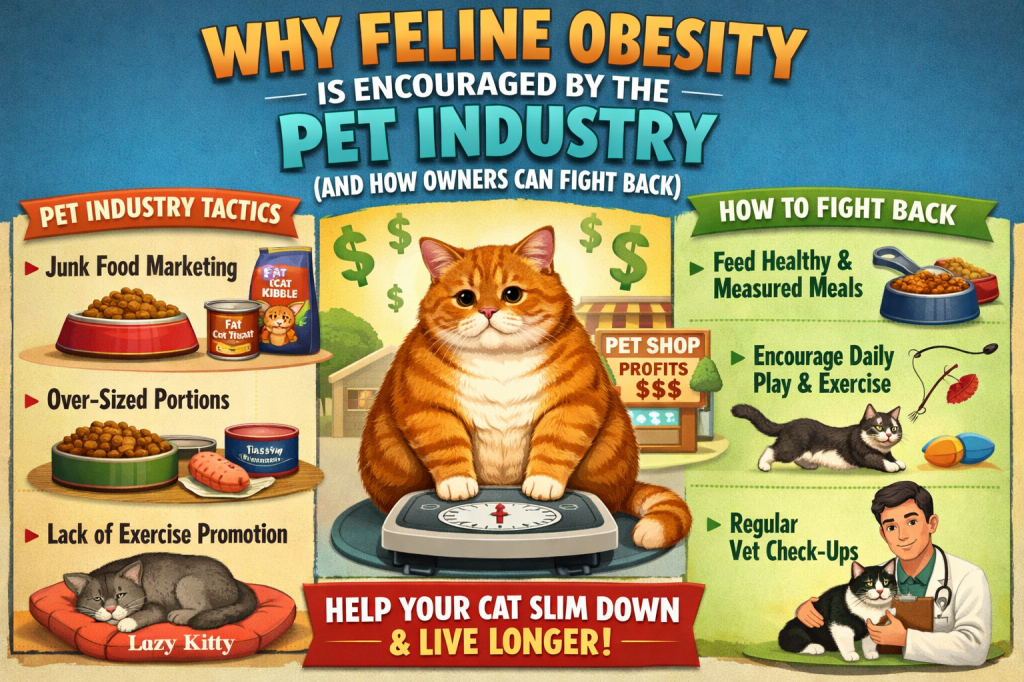
Feline obesity is rising fast. Discover how pet food marketing, feeding guidelines, and industry profits encourage overweight cats.
Introduction: An Epidemic Hiding in Plain Sight
Feline obesity is no longer a rare veterinary concern—it’s an epidemic. Today, over half of domestic cats are overweight or obese in many industrialized countries. While owners are often blamed for overfeeding or lack of playtime, the reality is far more complex.
Behind the scenes, the pet food and pet products industry plays a significant role in shaping how cats are fed, how much they eat, and how owners perceive “healthy” nutrition. From misleading marketing to inflated feeding guidelines, industry practices quietly encourage overeating—while positioning the consequences as the owner’s fault.
This article breaks down why feline obesity is encouraged by the industry, how it happens, and what cat guardians can do to protect their companions.
1. The Evolutionary Mismatch: Carnivores Fed Like Omnivores
Cats are obligate carnivores. Their bodies evolved to eat:
- Minimal carbohydrates
- High animal protein
- Moderate fat
Yet much of the commercial cat food industry—especially dry kibble—relies heavily on plant-based carbohydrates because they are cheap, shelf-stable, and profitable.
Many dry foods contain 30–50% carbohydrates, even though cats have:
No biological requirement for carbs
Limited ability to metabolize them efficiently
📌 According to veterinary nutrition research, high-carbohydrate diets are linked to weight gain and insulin resistance in cats (VCA Hospitals; NIH).
Despite this, these foods are aggressively marketed as:
- “Premium nutrition”
- Vet approved”
- “Complete and balanced”
The result? Cats consume more calories than they can burn, while owners believe they are feeding responsibly.
2. Feeding Guidelines That Sell More Food—Not Health
One of the least discussed contributors to feline obesity is portion recommendations on food packaging.
These feeding charts often:
- Ignore indoor-only lifestyles
- Assume high activity levels
- Overestimate daily calorie needs
An indoor cat sleeping 16–18 hours a day does not need the same calories as a roaming outdoor cat—but the industry rarely makes that distinction clear.
Veterinary studies have shown that many feeding guidelines exceed a cat’s actual caloric requirements, sometimes by 20–30%.
Why does this matter?
- Overfeeding becomes normalized
- Owners trust labels
- More food eaten = more food sold
Free-feeding kibble all day—an industry-friendly habit—almost guarantees weight gain.
3. Treat Culture and Emotional Marketing
The pet industry has successfully transformed treats from occasional rewards into daily rituals.
Treats are marketed using emotional language:
- Happiness in every bite”
- Because they deserve it”
- Show your love”
But most cat treats are:
- Rarely counted in daily intake
- Nutritionally incomplete
- High in calories
Even “healthy” or “grain-free” treats can significantly increase a cat’s caloric load. According to the World Small Animal Veterinary Association (WSAVA), grain-free does not mean low-calorie or species-appropriate.
Owners are rarely told that treats should make up less than 10% of daily calories—a fact that would dramatically reduce sales.
4.Confusing Labels and Weak Regulation
Terms like:
“Natural”
“Holistic”
“Ancestral”
“Biologically appropriate”
have no strict regulatory definition in many countries.
This allows brands to:
Use appealing language without scientific backing
Hide excessive calories behind vague claims
Shift responsibility onto owners
Without strong education, consumers make decisions based on marketing—not feline physiology.
5. Profit Incentives Built Into the Pet Food Industry
The pet industry is a multi-billion-dollar business. From a business perspective, obesity is not a failure—it’s an opportunity.
Consider this cycle:
- Overfeeding leads to weight gain
- Obese cats develop health problems
- Specialized “weight management” foods are sold
- Long-term dependence on prescription diets follows
Additionally:
Subscription food services encourage constant consumption
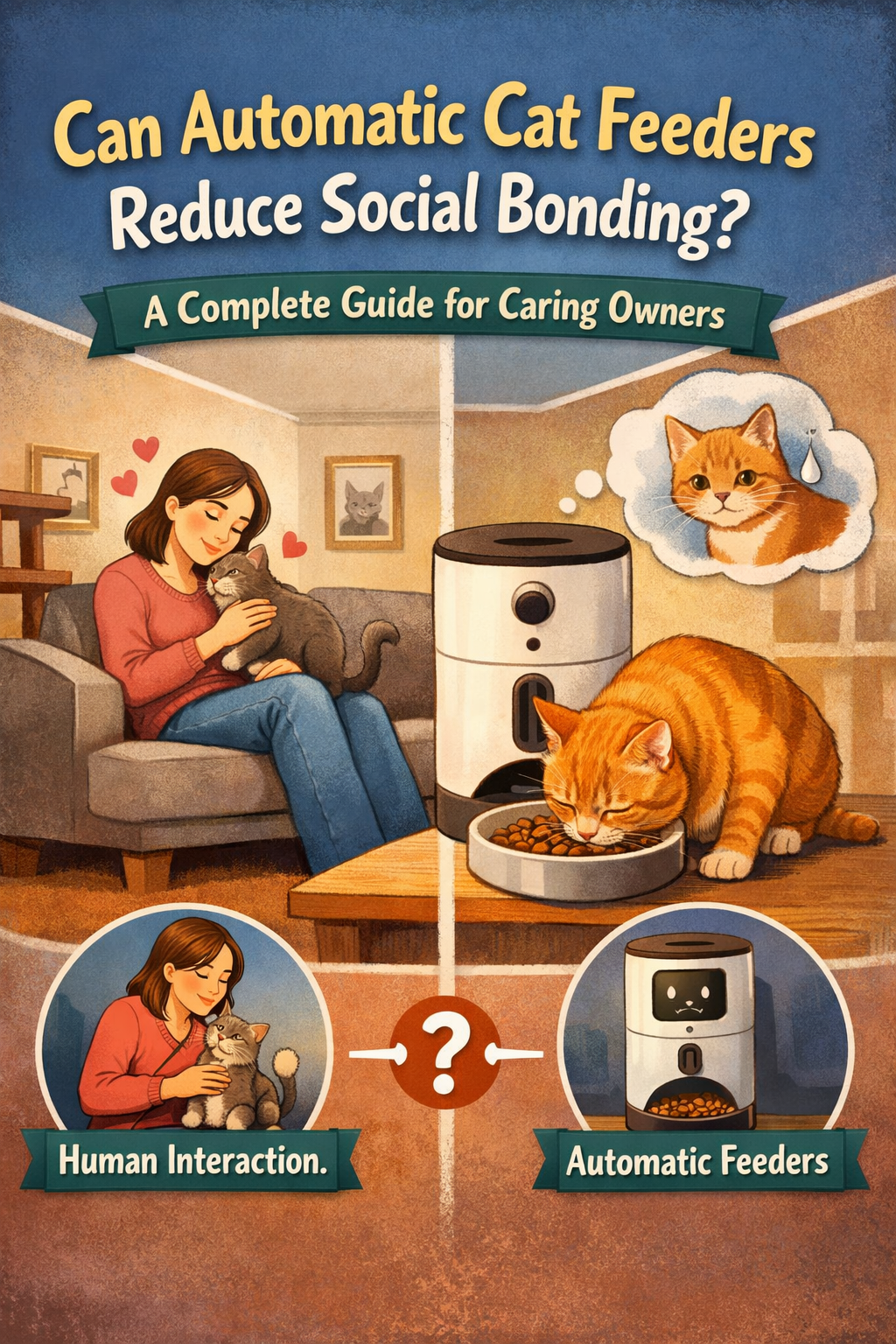
Automatic feeders promote frequent eating
Flavor-enhanced foods stimulate overeating
No company explicitly says, “Make your cat obese.”
But the system rewards higher
The Real Consequences of Feline Obesity consumption, not optimal health.
Feline obesity is not cosmetic—it is life-shortening.
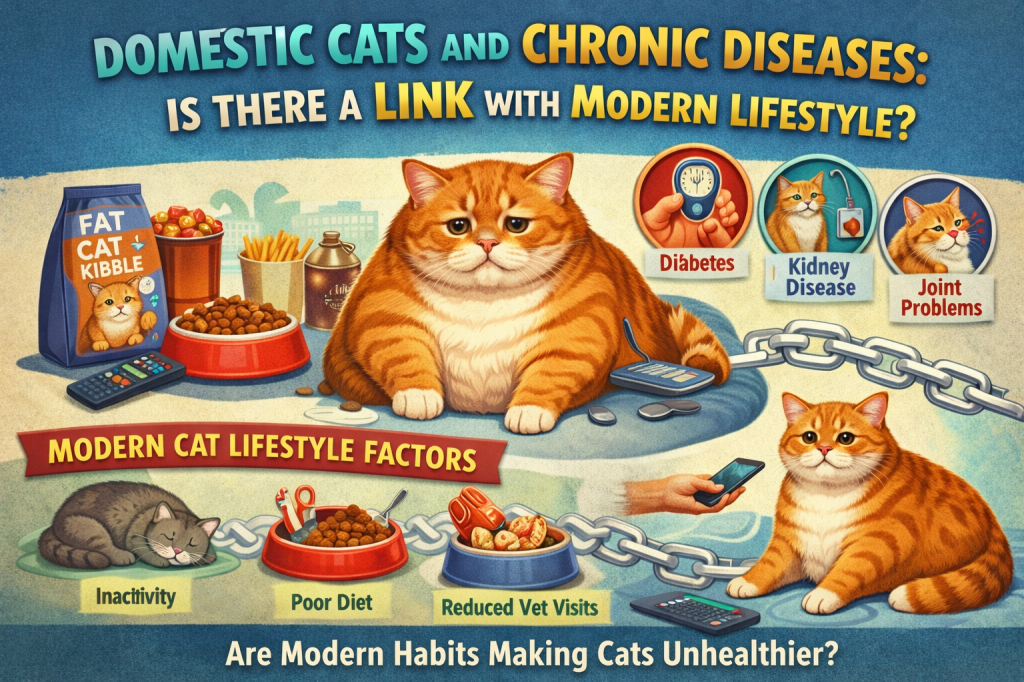
Health risks include:
- Lower quality of life
- Reduced lifespan
- Heart and respiratory issues
- Arthritis and joint degeneration
- Type 2 diabetes
What Cat Owners Can Do to Break the Cycle
You don’t need to boycott the pet industry—but you do need to outsmart it.
Actionable Steps
✅ Calculate calories, not cups
✅ Prefer high-protein, low-carb foods
✅ Avoid free-feeding
✅ Limit treats and count them
✅ Encourage daily play and movement
✅ Question marketing claims
A veterinarian or certified feline nutritionist can help determine your cat’s true caloric needs, not the industry’s estimate.
Conclusion: Awareness Is the First Step
Feline obesity isn’t just the result of lazy cats or careless owners. It’s the predictable outcome of an industry designed to sell more food, more often, with minimal transparency.
By understanding why feline obesity is encouraged by the industry, cat guardians can reclaim control—making choices based on biology, not branding.
Your cat’s health should never be collateral damage in a profit-driven system.
💬 Do you think the pet food industry should be more transparent about feline nutrition? Share your opinion in the comments and help raise awareness.
For more informations how don’t you visit these sites :
- Association for Pet Obesity Prevention (APOP) – https://www.petobesityprevention.org/
- VCA Hospitals – Feline Nutrition Basics – https://vcahospitals.com/know-your-pet/cat-nutrition-fundamentals
- WSAVA Nutrition Toolkit – https://wsava.org/global-guidelines/global-nutrition-guidelines/


 Fresh Cat News: Trusted Updates for Cat Lovers & Responsible Owners
Do you found this guide useful, please leave a comment.