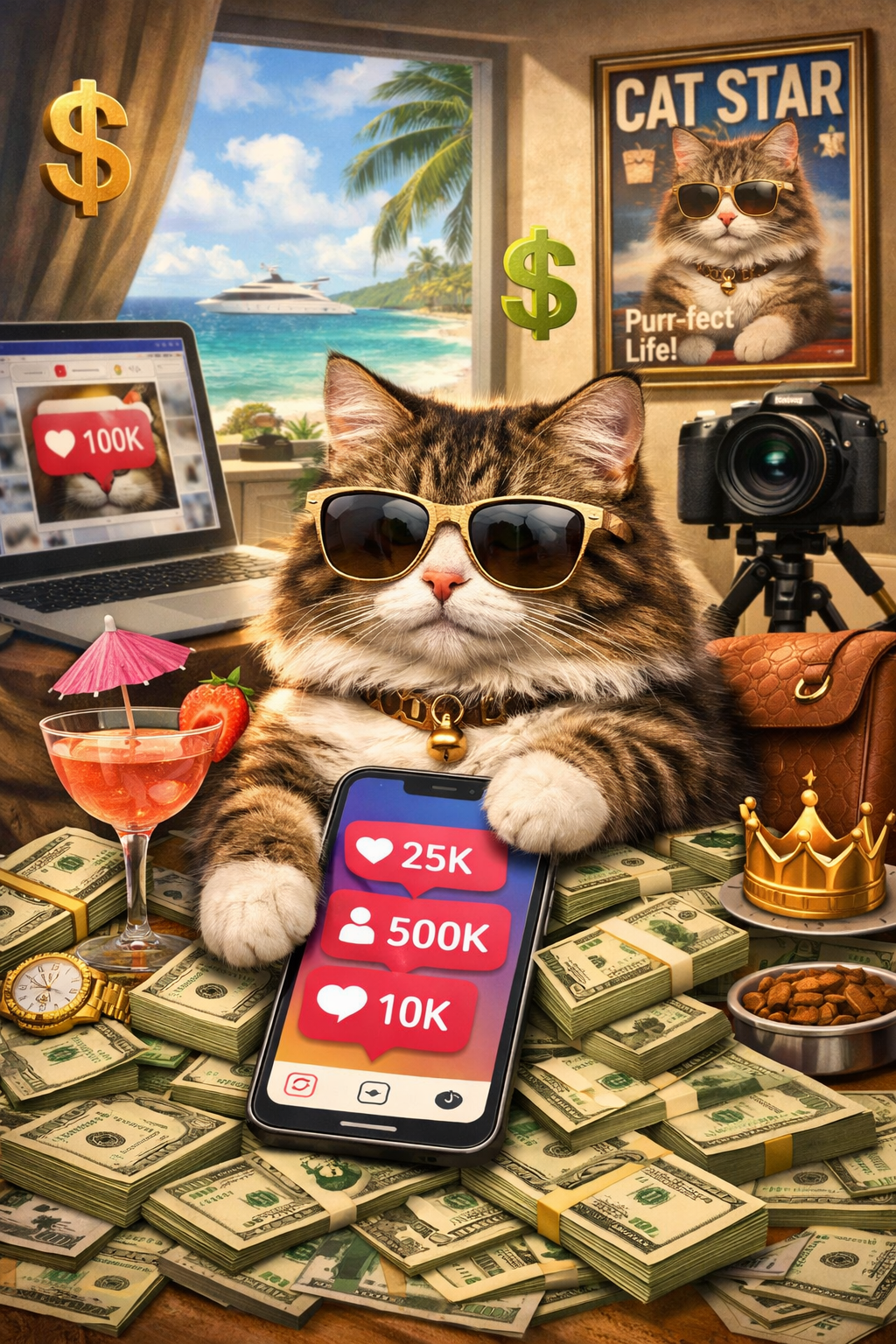
The Rise of the Instagram Cat Economy
Instagram didn’t just change how humans show off their lives—it created an entirely new economy for pets. Cats, in particular, thrive on the platform. Their unpredictable behavior, expressive faces, and natural meme-worthiness make them perfect content machines.
Some famous feline accounts have follower counts that rival celebrities. What started as casual photos shared by proud owners has turned into a structured industry with:
- Book deals and licensing
- Media appearances
- Merchandise sales
- Affiliate marketing
- Brand sponsorships
In short: Instagram cats are no longer just pets. They are brands.
How Instagram Cats Make Money ?
Let’s break down the main income streams. Not every cat uses all of them, but top accounts often combine several.
Sponsored Posts
This is the most visible source of income. Brands pay cat accounts to feature their products—food, litter, toys, carriers, tech gadgets, even human products marketed “for pet lovers.”
A sponsored post typically includes:
- Sometimes a discount code
- Tags and hashtags
- A caption with brand messaging
- A photo or reel featuring the product
Estimated earnings per sponsored post:
- 1M+ followers: $10,000–$50,000+
- 200k–1M followers: $1,500–$10,000
- 50k–200k followers: $300–$1,500
- 10k–50k followers: $50–$300
Merchandise and Licensing
Big-name Instagram cats often sell:
- Plush toys or figurines
- Calendars and planners
- T-shirts, mugs, phone cases
Some license their cat’s image to third-party brands, earning royalties without directly managing sales.
Affiliate Marketing
Some accounts earn commissions rather than flat fees. They promote products using trackable links or codes and get a percentage of each sale.
This is especially common for:
- Furniture and cat trees
- GPS trackers
- Grooming tools
- Cat food subscriptions
Affiliate income is less predictable but can become very profitable with a loyal audience.
Appearances and Media Deals
At the highest level, famous cats appear in:
- Books and children’s media
- Films or animated content
- Online ads
- TV commercials
These deals can be worth tens or even hundreds of thousands of dollars over time.
Who Actually Gets the Money?
Let’s clear up a crucial illusion.
The cat does not control the money.
The cat does not sign contracts.
The cat does not choose brands.
All income goes to the person behind the project. .
Sometimes that person reinvests in the cat’s care, environment, and health. Sometimes they save the money. Sometimes the account becomes their primary job.
This creates an ethical gray zone: the cat is the asset, but has no say in how that asset is used.
The Time and Work Behind “Effortless” Cat Content
From the outside, it looks easy. Take a photo, post it, collect money.
In reality, successful Instagram cat accounts require intense work—often daily.
What Owners Actually Do
- Responding to followers and brands
- Tracking analytics and performance
- Managing emails and deadlines
- Writing captions and hashtags
- Editing photos and videos
- Negotiating contracts
- Planning content calendars
Many owners report spending 20–40 hours per week managing a popular pet account. That’s a full-time job built around an animal that never asked for one.
The Impact on the Cat’s Daily Life
This is where things get uncomfortable.
Photoshoots vs. Natural Behavior
Some cats enjoy attention and novelty. Others tolerate it. Some hate it.
Yet content demands consistency:
- Forced interaction with props
- Retakes
- Bright lights
- Outfit changes
- Repeated poses
Even if no harm is intended, frequent disruption of a cat’s routine can create chronic stress.
Travel and Relocation
Famous cats often travel for:
Brand events
Photoshoots
Media appearances
Cats are territorial animals. Frequent travel can lead to anxiety, digestive issues, and behavioral changes—even if the cat appears “calm” on camera.
Cats are territorial animals. Frequent travel can lead to anxiety, digestive issues, and behavioral changes—even if the cat appears “calm” on camera.
Are Instagram Cats Really Happy?
This is the question everyone avoids.
A cat’s happiness is not measured by:
- Comments calling them “goals”
- Luxury items
- Likes
- Follower count
It’s measured by:
- Minimal stress
- Adequate rest
- Freedom to choose interaction
- Safe territory
- Predictable routines
Some Instagram cats genuinely live excellent lives because their owners put welfare first and content second.
Others live highly managed, overstimulated existences designed around algorithms—not instincts.
When Cat Content Crosses Ethical Lines
Not all Instagram cat fame is harmless.
Red Flags to Watch For
Cats dressed in restrictive outfits frequently
Videos showing clear discomfort or avoidance
Forced interactions with other animals
Prank content that startles or scares
Exploiting illness or distress for views
When engagement matters more than consent, the line has already been crossed.
Why Humans Are So Obsessed with Famous Cats
Part of the appeal isn’t the cat—it’s us.
Instagram cats allow humans to:
Escape stress
Project fantasies of wealth and ease
Experience success without personal risk
Feel connected without responsibility
They are symbols of a life we wish were simpler. But that simplicity is often an illusion created by careful editing.
The Pressure to Monetize Pets
As more accounts succeed, others feel pressure to follow.
Pet owners are increasingly encouraged to:
“Build a brand”
“Monetize your pet”
“Turn cuteness into income”
This mindset subtly shifts the relationship from companionship to productivity.
A cat stops being just a cat and becomes content.
Can Instagram Fame Be Done Responsibly?
Yes—but it requires boundaries.
Responsible Practices Include
Letting the cat opt out naturally
Limiting photoshoot duration
Avoiding costumes and forced poses
Prioritizing routine over trends
Turning down deals that don’t align with welfare
Using income for veterinary care and enrichment
When guardians treat fame as secondary and the cat as primary, success doesn’t have to be harmful.
Is the Life of an Instagram Cat Enviable?
From a human perspective: maybe.
From a feline perspective: not necessarily.
A cat doesn’t want fame.
A cat doesn’t care about reach.
A cat doesn’t need validation from strangers.
What a cat wants is stability, safety, autonomy, and respect.
If Instagram fame provides that, fine.
If it takes it away, no amount of money makes it enviable.
Conclusion : Admire With Awareness
Instagram cats can be entertaining, inspiring, and sometimes genuinely heartwarming. But they are not lifestyle goals—they are animals living inside a human system designed for profit and attention.
The next time you see a cat “living better than you,” ask a quieter question:
Is this life built for the cat—or built around us?
Because the answer changes everything.
If this article made you rethink the reality behind famous Instagram cats, share it with other cat lovers and start the conversation. 💬
Drop a comment below and tell us: do you see pet influencer life as a dream—or a hidden problem?


 Fresh Cat News: Trusted Updates for Cat Lovers & Responsible Owners
Do you found this guide useful, please leave a comment.