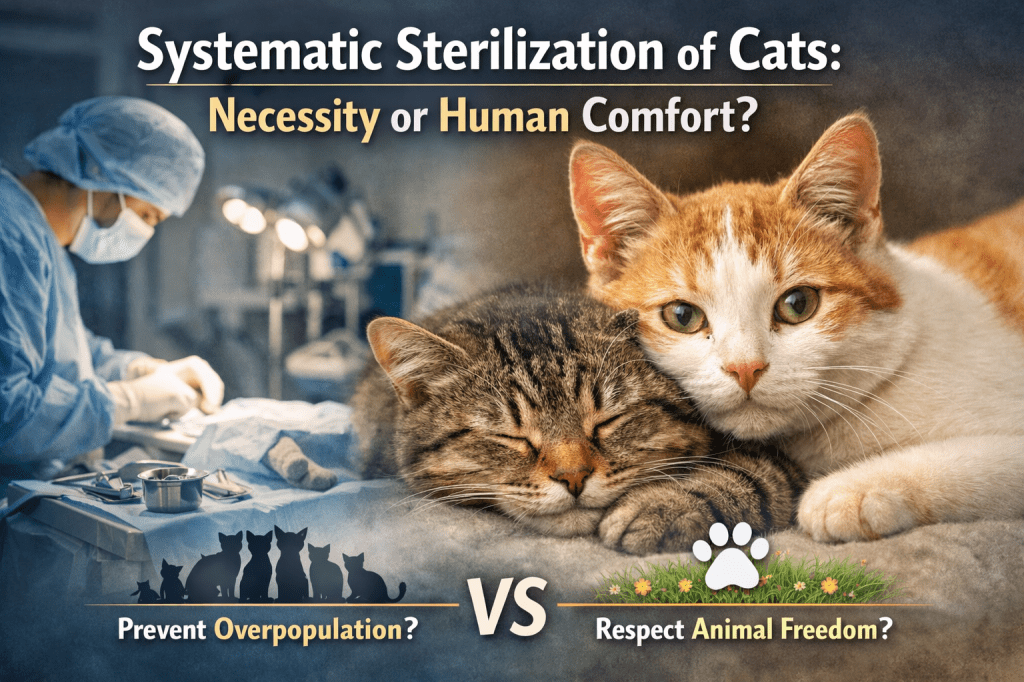
Systematic sterilization of cats is often treated as an unquestionable good — almost a religious decree in modern pet culture. “Fix your cat or you’re irresponsible.” “Sterilization saves lives.” These slogans are repeated so often that questioning them feels taboo.
But is widespread surgical sterilization truly an act of mercy, or is it primarily about human comfort and convenience at the expense of genuine cats welfare?
This article doesn’t sugarcoat. It dares to challenge mainstream narratives, push back on emotional rhetoric, and pull in real external references so readers can decide for themselves whether mass sterilization is necessary, or just socially comfortable.
The Mammoth Narrative: Population Control and Shelter Overload
One of the most commonly cited reasons for sterilization is cats population control. Official agencies estimate that a single unspayed cat and its offspring can produce thousands of kittens in just a few years, exacerbating stray populations and shelter overcrowding. Cats population control
In France, shelters and municipal programs see untold numbers of surrendered cats and kittens every year, fueling a public belief that sterilization is the only solution.
But here’s the twist: population control through sterilization is effective only if it’s widespread and continuous — especially among free-roaming cat colonies. Experts analyzing control techniques emphasize that community engagement and long-term strategic planning matter just as much as the surgeries themselves.
This means that sterilization alone does not magically fix cat population issues. It’s part of an ecosystem of interventions — including education, adoption programs, and responsible pet ownership — that actually make a difference.
Health Benefits Sold as Moral Imperatives
Veterinary sources confidently list health benefits of spaying and neutering cats:
- Significantly reduced risk of mammary tumors, especially if done before the first heat cycle.
- Reduction in aggression, roaming, and marking behaviors among males.
- Elimination of uterine infections (pyometra) that can be life-threatening in unspayed females.
These findings are widely cited and form the backbone of sterilization advocacy. And yes, in many cases, they are true when viewed individually.
But here’s the aggressive challenge: benefit does not equal necessity.
Health benefits exist — absolutely — but they’re not universal across every individual cat. Making sterilization mandatory without discussing alternate approaches ignores biological nuance in favor of convenience.
The Human Comfort Factor: Behavior Modification or Animal Modification?
One unarguable fact: sterilized cats are easier to manage.
They roam less.
They don’t go into heat.
They mark less.
They fight less.
These are human-friendly outcomes.
And make no mistake — pet culture values convenience. Quiet cats, predictable behavior, fewer stink issues, fewer surprises. That’s what many owners want.
But does that mean it’s ethically justified to surgically alter an animal’s body as the default choice? Convenience is not morality. It’s preference.
This is where the mainstream narrative often stops the conversation:
We accept that altered behavior is better for us, and then call it better for the cat.
That’s a logical leap that deserves scrutiny.
Hormonal Reality: We Ignore the Invisible Systems
Anyone who’s studied biology understands that hormones are far more than sexual chemicals. They influence:
- Behavioral regulation
- Brain chemistry
- Immune function
- Metabolism
- Growth and bone density
Permanent removal of reproductive organs permanently alters internal physiology. Yet most sterilization discussions ignore this complexity, focusing instead on surface behaviors.
There is some evidence that sterilized cats can live longer on average. Veterinary analyses suggest spayed or neutered animals may have an increased lifespan compared to their intact counterparts.
But longer lifespan isn’t the same as better quality of life — especially if that life includes increased susceptibility to obesity or metabolic disease when diet and activity aren’t carefully managed.
The Invisible Cost: Weight Gain, Obesity, and Long-Term Health
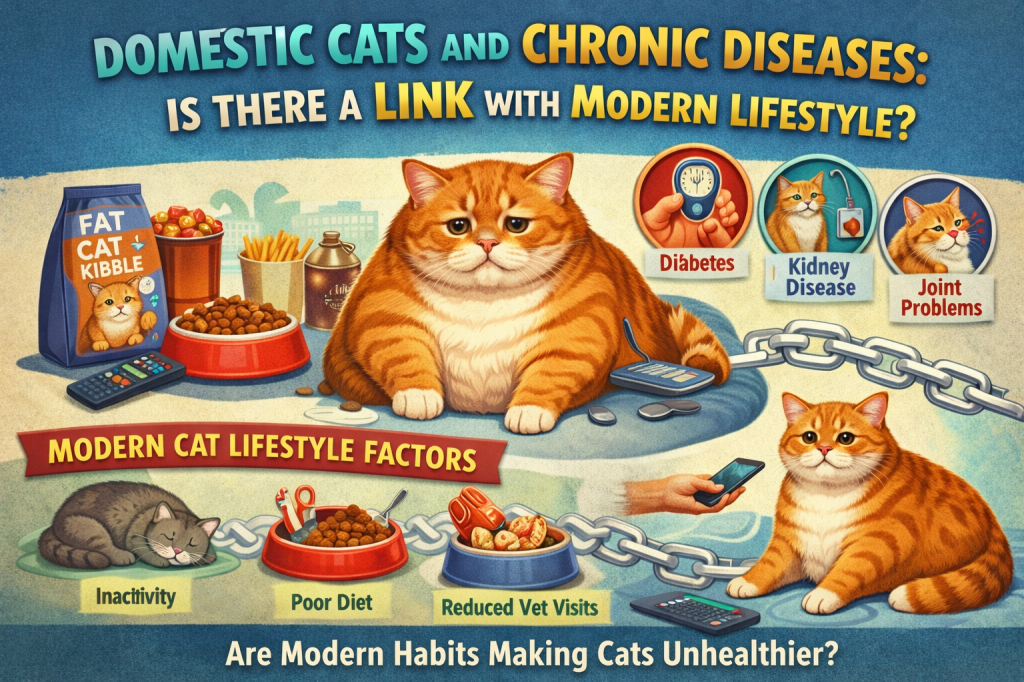
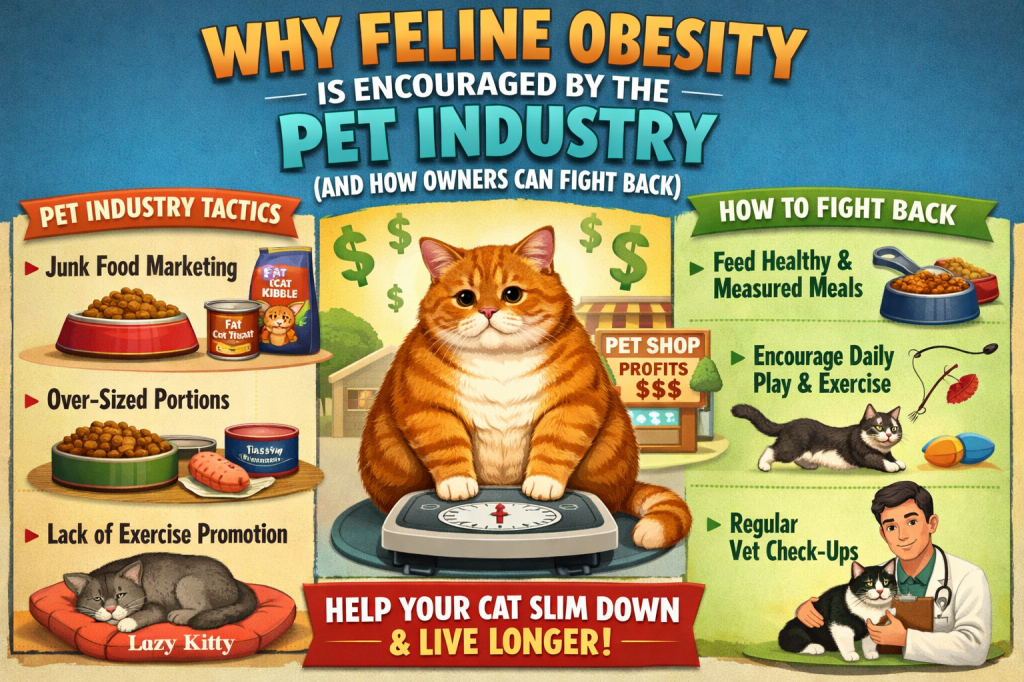
One of the most commonly under-reported consequences of sterilization is weight gain. Multiple reputable sources acknowledge that sterilized cats are more likely to become overweight — a condition linked to diabetes, urinary problems, and shorter quality of life if not properly addressed.
This isn’t cosmetic. Obesity is a real health risk.
Yet the dominant narrative rarely mentions it except as a footnote — “adjust the diet” — as though a change in kibble automatically neutralizes the consequence of a surgically altered endocrine system.
If veterinarians and advocacy groups are going to promote sterilization as a universal good, the full suite of physiological changes deserves equal airtime.
Alternatives? What Alternatives?
Mainstream discourse portrays sterilization as the only viable option. That’s a false framing.
Other potential approaches include:
- Managed breeding programs within ethical guidelines
- Reversible contraceptive research
- Community awareness and responsible ownership education
- Sanctuary and adoption networks that house and socialize animals
- Trap-Neuter-Return (TNR) programs for free-roaming cats
Some countries already experiment with alternatives and complementary strategies. Yet these are rarely highlighted because they require investment, policy change, and community coordination — elements that demand more effort than signing a surgical consent form.
When Sterilization Is Truly Justified
So let’s separate ideology from reality.
Sterilization is often justified when:
✔ The cat is at high risk of reproductive cancers.
✔ The cat has outdoor access with high danger from roaming.
✔ Unwanted breeding could lead to abandonment or suffering.
santevet.com
ipet.ch
agriculture.gouv.fr
But these are contextual, case-by-case decisions — not universal mandates.
Not every cat needs it on schedule. Not every environment demands it. Not every owner situation is the same.
Ethics Beyond Surgery: Animal Autonomy and Moral Laziness
Here’s a bombshell:
Animals — even domesticated ones — have a form of autonomy.
They aren’t machines.
They aren’t objects.
They possess natural drives and behaviors that serve biological purposes.
Completely erasing those drives through surgery is not inherently wrong — but it is a profound ethical action. It deserves debate — not dogma.
In the current cultural landscape, questioning sterilization is often met with accusations of irresponsibility or cruelty, rather than curiosity or compassion. This is not ethical maturity — it is reflexive moral judgment.
Real Responsibility Requires Real Discussion
If society truly cares about cats, it must:
- Invest in holistic solutions beyond surgery
- Address human negligence as a root cause
- Acknowledge ethical complexity
- Discuss both benefits and drawbacks openly
- Discuss both benefits and drawbacks openly
The claim that sterilization is the moral baseline because it “saves lives” is insufficient. Saving lives is not the same as understanding lives.
Final Verdict: Necessity or Comfort?
Systematic sterilization has undeniable practical and health benefits. But that doesn’t make it objectively necessary in every case — nor does it make the practice immune to ethical scrutiny.
When the dominant narrative becomes shorthand for moral virtue, it becomes dangerous. We stop asking real questions. We stop considering nuance. We start equating obedience with compassion.
That’s not ethics. That’s social convenience disguised as morality.
True compassion demands critical thinking, not slogans.
Stop Obeying. Start Thinking.
If this article made you uncomfortable, good.
Discomfort is the first sign that a belief system is being challenged.
You have two choices:
You can keep repeating slogans you’ve never examined.
Or you can start asking real questions about what “responsible pet ownership” actually means.
Stop blindly accepting that cutting healthy organs out of animals is automatically virtuous.
Stop letting institutions think for you.
Stop equating silence with kindness.
Talk about this.
Share this article with people who assume sterilization is beyond debate.
Argue with it.
Criticize it.
Refute it.
But do not ignore it.
Because the moment a society decides certain practices are no longer open to questioning, that society has stopped being ethical — and started being obedient.
If you truly claim to love cats, prove it by doing more than following instructions.
Prove it by demanding nuance.
Prove it by demanding transparency.
Prove it by thinking.
The cats don’t get a voice.
You do.
Use it.



 Fresh Cat News: Trusted Updates for Cat Lovers & Responsible Owners
Do you found this guide useful, please leave a comment.