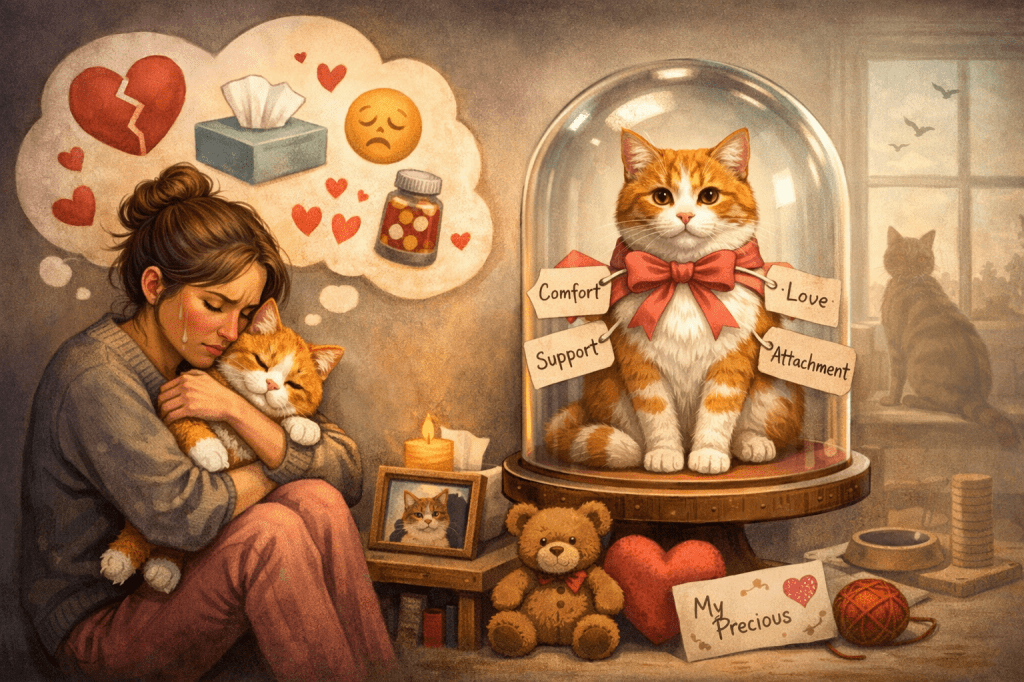
In recent years, the way humans relate to cats has changed dramatically. Once seen primarily as independent companions that shared our homes, cats are now often treated as emotional substitutes—stand-ins for relationships, therapy tools, or even human children. Social media, loneliness, and the commodification of pet ownership have quietly transformed many cats from living animals into emotional objects.
This shift may feel harmless or even loving. But beneath the surface, it raises serious questions about animal welfare, psychological projection, and the ethical boundaries between care and control.
This article explores what happens when a cat stops being respected as a cat—and starts being used as something else.
What Does It Mean to Turn a Cat Into an Emotional Object?
An emotional object is something a person uses to regulate their feelings, identity, or loneliness. It becomes psychologically necessary, not because of what it is, but because of what it provides emotionally.
When a cat becomes an emotional object, the human is no longer primarily asking:
“What does this animal need?”
But instead:
“What does this animal give me?”
This subtle shift changes everything.
The cat becomes:
- A cure for loneliness
- A replacement for human intimacy
- A way to feel loved unconditionally
- A source of validation
- A stabilizer for anxiety or sadness.
Psychologists call this emotional displacement—when unmet human needs are redirected onto something that cannot say no.
According to Psychology Today, pets can become emotional crutches when people rely on them to fulfill psychological needs normally met by human relationships or internal stability.
https://www.psychologytoday.com/us/basics/pets
Cats, because of their quiet affection and dependency, are especially vulnerable to this.
Why Modern Society Encourages This
1. Loneliness Has Reached Epidemic Levels
In 2023, the U.S. Surgeon General declared loneliness a public health crisis. Chronic loneliness is linked to increased risk of heart disease, depression, and early death.
https://www.hhs.gov/sites/default/files/surgeon-general-social-connection-advisory.pdf
People are not turning to cats because they love animals more than before. They are turning to cats because they have fewer human connections than ever.
Pets become safer than people. They don’t leave, judge, or challenge us.
But safety is not the same as health.
2. Social Media Humanizes Cats
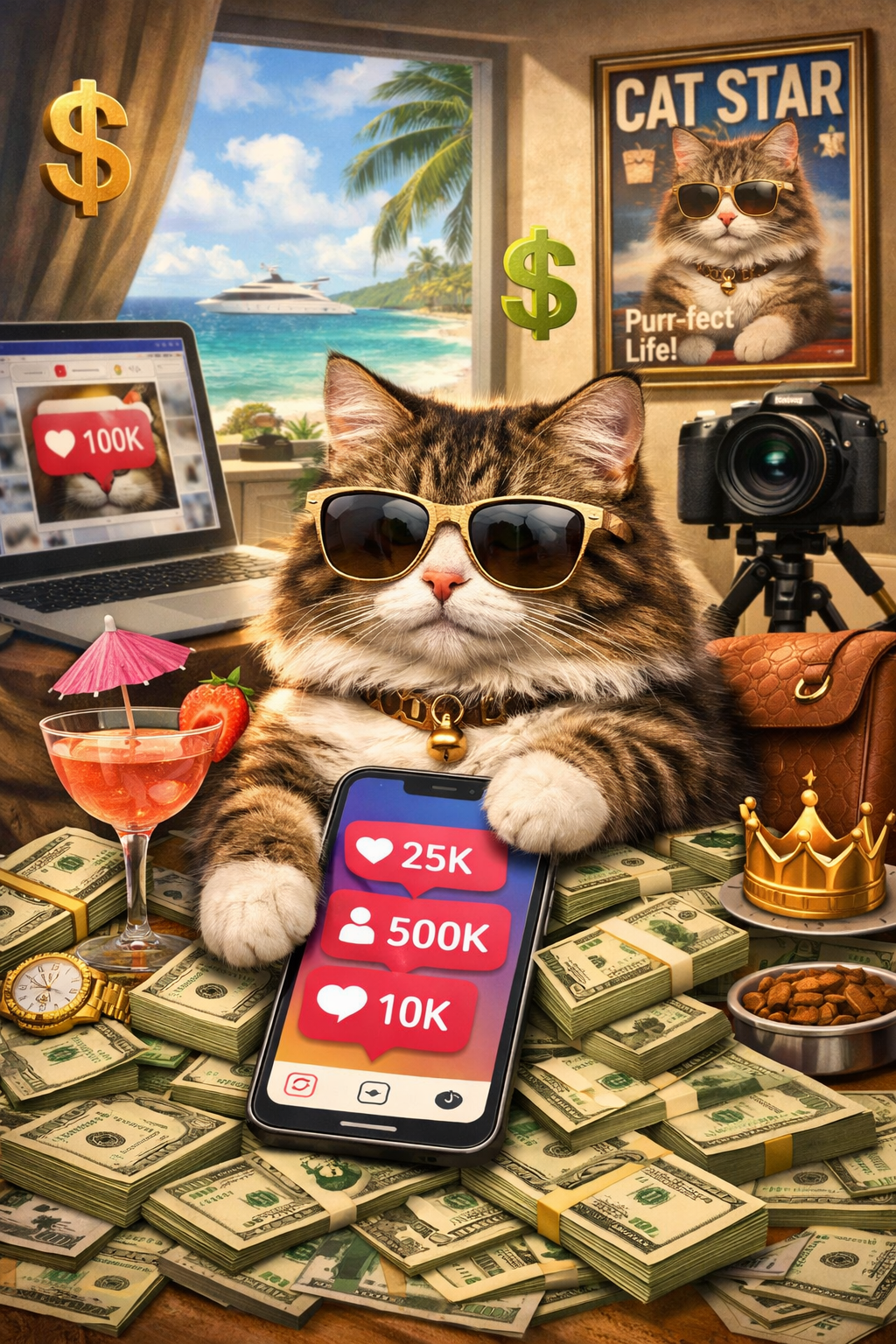
Platforms like Instagram and TikTok have transformed cats into emotional brands. They have personalities, voices, costumes, storylines, and roles.
This blurs the line between animal and emotional projection.
When a cat is presented as:
- My child
- My therapist
- My soulmate
- The only one who understands me,
It stops being a cat. It becomes a psychological role.
The American Veterinary Medical Association warns that anthropomorphizing pets can lead to inappropriate care, stress, and misunderstanding of animal behavior.
https://www.avma.org/resources-tools/animal-health-and-welfare/animal-welfare/anthropomorphism
The Hidden Cost for the Cat
Cat evolved to be:
- Territorial
- Solitary hunter
- Independent
- Sensitive to overstimulation
- Driven by instinct, not emotional obligation
When they are treated as emotional support devices, their nature is often violated.
1. Forced Closeness
Many emotionally dependent owners insist on:
- Constant cuddling
- Sleeping on command
- Tolerating touching when overstimulated
- Being followed everywhere.
Cats tolerate a lot—but tolerance is not comfort.
Chronic forced interaction leads to:
- Stress
- Behavioral problems
- Aggression
- Withdrawal
According to International Cat Care, stress is one of the most common causes of feline illness and behavioral disorders.
https://icatcare.org/advice/stress-in-cats/
2. The Cat Loses Its Autonomy
cat that exists to emotionally regulate a human is no longer allowed to be:
- Bored
- Independent
- Irritable
- Needing space
Every behavior becomes interpreted through the owner’s emotional lens.
A cat that walks away is “rejecting me.”
A cat that hides is “being ungrateful.”
A cat that scratches is “being bad.”
The animal is punished for being an animal.
The Psychology Behind Emotional Pet Ownership
People who emotionally fuse with pets are not bad people. They are often people who are:
- Isolated
- Grieving
- Emotionally neglected
- Chronically anxious
- Traumatized.
But trauma does not give us the right to emotionally colonize another being.
Dr Nick Haslam, a psychologist at the University of Melbourne, explains that emotional over-reliance on animals can lead to objectification, where the animal is valued primarily for its emotional utility rather than its intrinsic nature.
https://www.psychologytoday.com/us/blog/denying-the-grave/201401/objectification-what-is-it
The cat becomes a tool.
How This Shows Up in Real Life
You can often tell when a cat has become an emotional object by these patterns:
- The owner avoids human relationships but says “my cat is enough”
- The owner interprets the cat’s behavior as emotional messages
- The cat is expected to be constantly affectionate
- The owner refuses to leave the house without the cat
- The owner panics when the cat is not nearby
This is not healthy love.
It is emotional outsourcing.
They did not evolve to:
- Absorb human anxiety
- Regulate loneliness
- Provide emotional stability
They evolved to hunt, sleep, explore, and exist.
When a cat is turned into an emotional object, it carries psychological weight it was never designed to hold.
And the human becomes more fragile, not stronger.
The Illusion of “Unconditional Love”
One of the most dangerous myths about pets is that they offer unconditional love.
Cats do not love unconditionally.
They bond conditionally—based on safety, comfort, and trust.
When humans project unconditional love onto cats, they ignore:
- Stress signals
- Fear
- Withdrawal
- Boundaries
This leads to misinterpretation and neglect.
The ASPCA notes that misunderstanding cat body language is a leading cause of bites, scratches, and abandonment.
https://www.aspca.org/pet-care/cat-care/common-cat-behavior-issues
You Can Love a Cat Without Using It
There is a quiet but important difference between:
“I love my cat.”
and
“I need my cat so I don’t fall apart.”
One is affection.
The other is emotional burden.
If losing your cat would destroy your ability to function, the relationship has crossed into psychological dependency.
That is not fair to either side.
What Healthy Cat Ownership Looks Like
A healthy relationship with a cat is based on mutual respect, not emotional dependency.
Healthy owners:
- Accept that the cat is not there to fix them
- Don’t force affection
- Read body language
- Allow cats to have space
- Have full human lives
The cat becomes a companion—not a coping mechanism.
Why This problem Is So Rarely Discussed
The pet industry profits from emotional attachment.
Pet food brands, influencers, and social media thrive when people believe:
- Their pet replaces human relationships
- Their pet is their baby
- Their pet completes them.
But ethical care is quieter than emotional fantasy.
And it is less profitable.
Conclusion
Cats are not here to heal us.
They are here to be cats.
They deserve:
- Care without emotional exploitation
- Autonomy
- Respect and safety.
When we allow animals to be animals, relationships become deeper—not weaker.
Love is not possession.
Care is not emotional dependency.
And a cat is not a human heart replacement.
If this article made you uncomfortable, that’s a good sign. It means you’re thinking — not just about cats, but about the kind of relationship you want with the living beings in your care.
Loving a cat is not about needing them.
It’s about respecting who they are.
Before adopting, before projecting, before turning an animal into an emotional solution, take a moment to ask yourself:
Am I ready to care for a cat — or am I looking for something to fill a space in myself?
If you care about animal welfare, honest pet ownership, and breaking the myths that harm both humans and cats,
Share this article with someone who loves cats — not because it’s easy to read, but because it matters.
And if you’re ready to build a healthier, more respectful relationship with animals, stay with us.


 Fresh Cat News: Trusted Updates for Cat Lovers & Responsible Owners
Do you found this guide useful, please leave a comment.