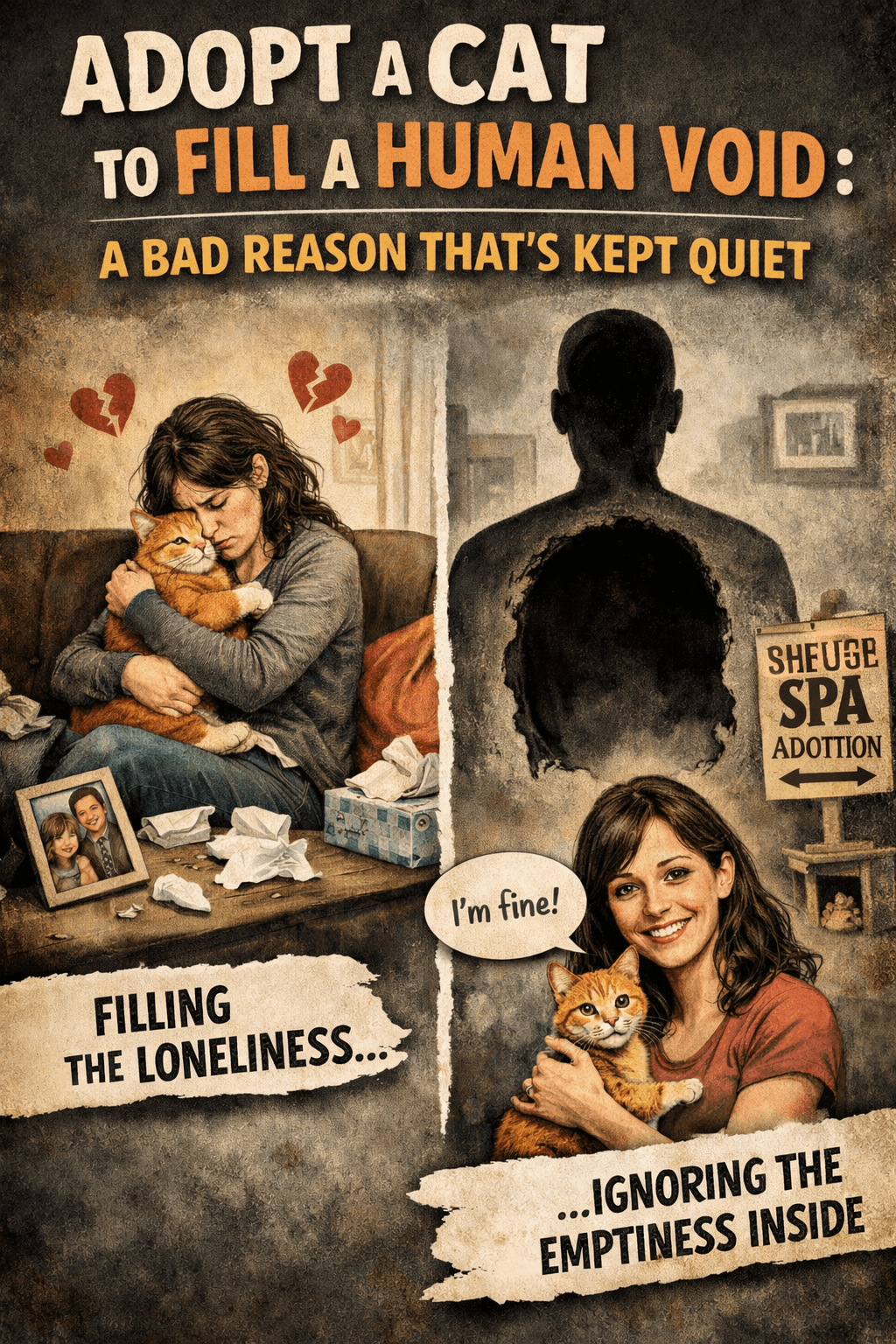
Every year, million of cats are adopted from shelters, rescue organizations, and rehoming networks around the world. On the surface, this seems like a universally positive story: a homeless animal finds a loving home, and a human gains a loyal companion. In countless blog posts, animal welfare sites, and pet-lover forums, the focus is on why adopting a cat makes sense—emotional benefits, companionship, asylum for animals in need, and even physical health advantages like reduced stress.
And yet, there’s one reason people often keep quiet about: adopting a cat primarily to fill a human emotional void—whether stemming from loneliness, grief, or life transitions. Beneath the feel-good narrative lies a complex set of ethical, emotional, and practical challenges that are rarely discussed in depth. This article explores why that reason is problematic, how it impacts both humans and cats, and what ethical adopters should consider before making such a life-changing decision.
1-The Human Void: What Does It Really Mean?
Most people use phrases like “I feel lonely,” “I need a companion,” or “I’m grieving” to describe some kind of internal emotional emptiness. When life circumstances change—loss of a partner, the death of a previous pet, a breakup, retirement, children leaving home—some people look for an emotional lifeline in the form of a four-legged friend.
In a survey about pet adoption motivations, up to 31% of people adopted a cat to help break loneliness during the COVID-19 pandemic. Many personal accounts online echo this theme: people talk about adopting a kitten so they wouldn’t come home to an empty house, or after losing someone meaningful in their life.
From the outside, this reasoning isn’t hard to understand. A cat can be warm, comforting, and present. For many people, that presence has helped them rebuild resilience and emotional stability.
But equating a cat with emotional fulfillment comes with real risks—for both the human and the animal.
There’s solid evidence that pets, including cats, can play a positive role in human emotional health. Touching or petting a cat releases hormones like oxytocin that reduce stress and anxiety, and many studies link pet ownership with enhanced mood.
Rescue animal blogs often celebrate these stories: cats can lower blood pressure, reduce loneliness, and even offer a sense of meaning through daily care routines. Some owners report that their cat’s steady presence helped them regain purpose during another major life stressor.
These benefits are real. But they’re not universal nor are they guaranteed, especially when the decision to adopt is driven mainly by the need to “fill a void.”
3-Why Filling a Void With a Cat Is a Risky Premise
a-A Cat Is Not a Substitute for Human Relationships
Cats may offer companionship, but they are not a replacement for meaningful human relationships. When someone brings a cat into their life in hopes of replacing a partner, a child who moved away, or close friendships that have faded, the outcome often doesn’t match the expectation.
In online forums, many people share experiences where the emotional burden they hoped a pet would ease didn’t magically disappear. Some realized too late that their internal challenges required more than a feline companion—it needed professional support or community connection.
When a person expects a cat to fill a deep emotional need, it unintentionally puts strain on the animal. Cats are sentient beings with their own personalities, needs, and limits—not emotional outlets or therapeutic tools. If a cat can’t live up to human expectations (such as constant interaction or emotional “healing”), both sides can suffer.
Some adopters find that a cat’s behavior—such as independence, aloofness, or unpredictability—can make loneliness feel worse, not better.
felinefriendsnc.com
4-Real Stories From Real People
Across many cat-advice and pet forums, you’ll find people describing how they adopted cats to combat loneliness or grief. Some stories are heartwarming, others sobering:
- One person adopted a kitten to cope with moving out of their childhood home, only to find the experience emotionally taxing rather than soothing.
Reddit - Another shared that adopting a cat during a bout of anxiety didn’t provide the comfort they expected—and added stress about caring for the animal properly.
- Others discuss the emotional complexity of adopting a new cat shortly after losing a longtime companion, and the guilt that can accompany such a choice.
These stories illustrate that while pets frequently offer joy and connection, they are not reliable emotional band-aids for deep psychological issues.
5-Practical Challenges That Are Often Overlooked
When people adopt to fill an emotional void, they often gloss over the practical realities of cat ownership. Caring for a cat is a long-term commitment—often up to 15–20 years.
TF1 INFO
Here are some realities worth knowing:
- Time and Attention: Cats still require daily feeding, play, and health monitoring—even if you’re busy or emotionally drained.
- Veterinary Care: Vaccinations, check-ups, and potential treatments are ongoing expenses.
- Behavioral Needs: Cats have natural instincts, like scratching, climbing, and exploring, which must be managed patiently.
Taking on these responsibilities while emotionally fragile can be overwhelming and may lead to regret or burnout.
6-When Adopting a Cat for Emotional Support Can Work
That said, adopting a cat to enhance life can be beautiful when it complements, rather than replaces, human support systems.
a-With Intention and Preparedness
If someone approaches adoption with full awareness—understanding the responsibilities, asking for the right type of cat to suit their lifestyle, and combining pet companionship with broader emotional support like therapy or community engagement—then a cat can be a wonderful member of the family.
For guidance on choosing the right animal and preparing responsibly, you can read this resource on why thoughtful compatibility matters: Why Adopt Cats for Adoption?
b-With Professional Support
If emotional voids are linked to depression, grief, trauma, or major life changes, connecting with mental health professionals can help address the underlying cause more effectively than relying solely on a pet.
7-Ethical Adoption: What Responsible Pet Owners Do
A responsible adopter doesn’t just think about what the cat can do for them; they think about what they can do for the cat. This includes:
- Considering the cat’s temperament and matching it with the owner’s lifestyle.
- Researching realistic expectations of behavior and care.
TF1 INFO - Preparing for long-term commitments and veterinary care.
- Exploring alternatives like volunteering or cat-sitting (if not ready for full adoption).
Cat in a Flat
This mindset prevents impulsive decisions—and reduces the risk of emotional or practical fallout later.
8-Alternatives to Adoption for Emotional Fulfillment
If the main goal is companionship and emotional support, there are healthy alternatives to immediately adopting:
- Volunteering at animal shelters — spend time with cats without full ownership responsibilities.
Cat in a Flat. - Fostering animals — a temporary way of offering care and bonding.
- Joining social groups — community cat clubs, pet-lover meetups, or online forums.
- Therapeutic activities (non-animal) — art, exercise classes, or meditation groups.
Each of these can help reduce loneliness while building meaningful connections in your life.
9-Conclusion: Adopt With Your Whole Heart and Mind
Adopting a cat can be one of the most rewarding experiences in life. Cats offer unique companionship, subtle emotional support, and can genuinely enrich a home.
But making the decision to adopt solely to fill a human emotional void is a complex and often risky premise. When a cat becomes an emotional substitute rather than an addition to a balanced life, both human and animal can suffer in silence.
True ethical adoption comes from aligning your motivations with an understanding of a cat’s needs—a respectful, compassionate partnership that enhances both lives without placing unrealistic expectations on either side.
You have liked this article, please share it, leave a comment or subscribe. 🙏🙏🙏



 Fresh Cat News: Trusted Updates for Cat Lovers & Responsible Owners
Do you found this guide useful, please leave a comment.