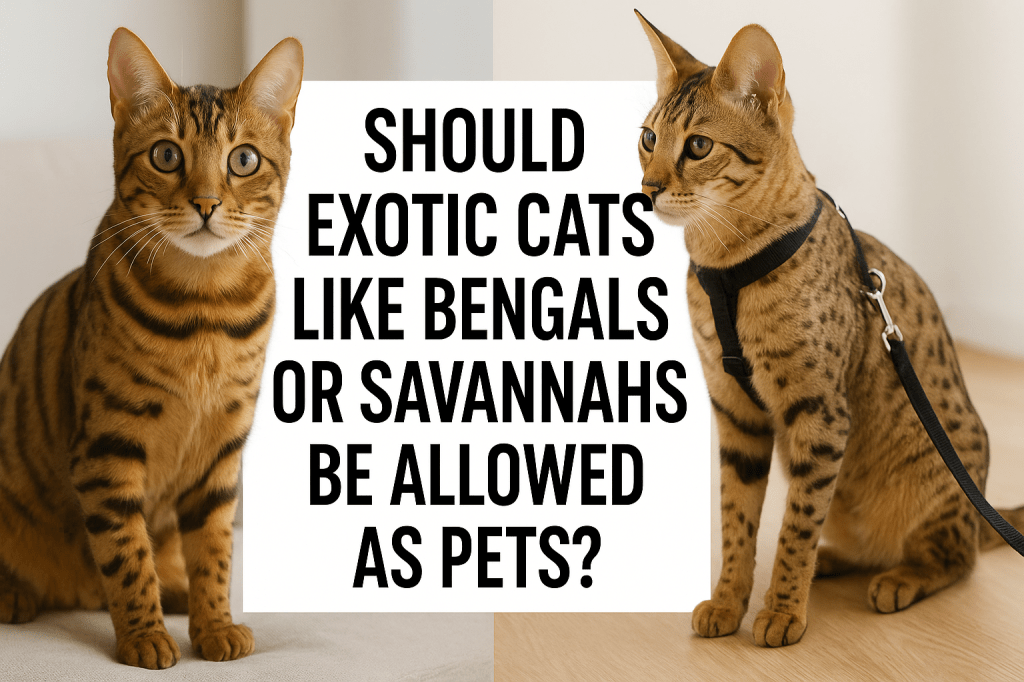
Exotic cats are captivating with their wild appearance and exceptional intelligence. But behind their beauty lie complex needs, ethical considerations, and strict regulations. Should cats like Bengals or Savannahs really be allowed as pets? This comprehensive and well-reasoned article helps you understand the advantages, risks, and responsible alternatives.
Introduction
For the past few years, exotic cats have enjoyed a meteoric rise in popularity. The Bengal, with its leopard-like coat, or the Savannah, sometimes as large as a small dog, fascinate feline lovers worldwide. On social media, they embody a perfect blend of wild and domestic, giving the illusion of living with an extraordinary animal… without ever leaving your living room.
Yet, this trend raises numerous questions. Are these cats truly suited to family life? Is keeping them safe for both humans and the animals themselves essential ? Can the breeding of hybrids from wild cats be morally justified? And above all: should exotic cats be allowed as pets? Between admiration, the excesses of the pet trade, behavioral risks, and legal concerns, the debate is far from simple. In this in-depth article, we will objectively analyze the advantages, disadvantages, legal framework, ethical issues, and responsible alternatives, so that everyone can form an informed opinion.
What really an exotic cat is ?
An exotic cat generally refers to a hybrid cat, resulting from a cross between a domestic cat and a wild feline. Unlike classic domestic breeds, these cats retain a greater or lesser degree of wild instincts.
Bengal cat

A Savannah cat
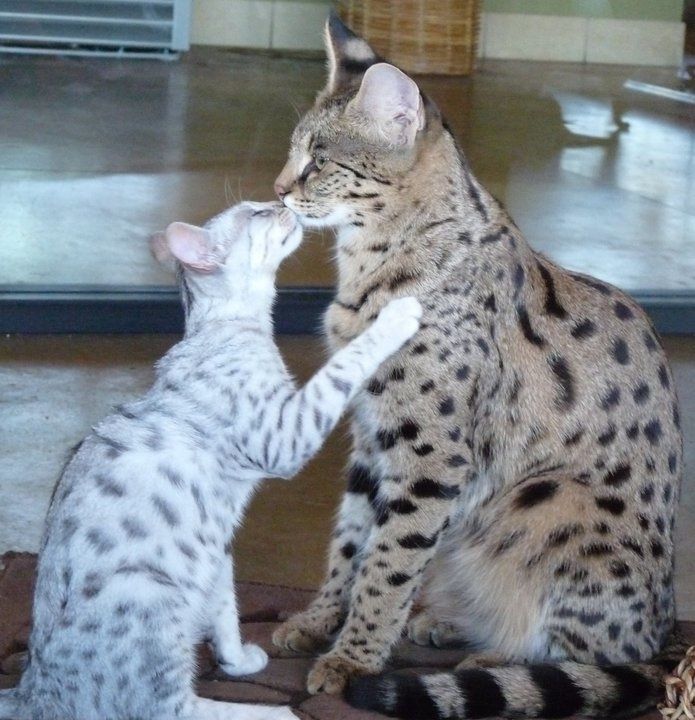
Hybrid generations can be distinguished as follows:
- F1 direct wild relative (e.g., serval or
- Asian leopard cat)
- F2 to F4. increasingly close to domestic behavior
- F5 and above: often considered as domestic cats by certain laws
The closer the generation is to the wild parent, the more complex its needs and behaviors are.
The famous exotic cats
There are many crossbreed like :
Bengal crossbreed with the Asian leopard cat; Savannah crossbreed with the African serval; Chausie crossbreed with the marsh cat and Caracat which is rare and highly controversial hybrid
Why such enthusiasm?
The reason for this enthusiasm are :
A spectacular and wild appearance, a
Strong interaction with humans,
An image of prestige and exclusiveness and the massive influence of social media.
What are the pros of owning an exotic cat ?
Exotic cats have exceptional intelligence and curiosity. They are often described as intellectually brilliant. They learn quickly, solve complex problems, and get bored easily.
For instance, they are able to open doors and cupboards, to walk on a leash
Understand complex routines.
This intelligence can be fascinating… but also exhausting for an unprepared owner.
A strong bond with their owners.
Unlike some independent cats, Bengals and Savannahs, actively seek attention,
Follow their owners around the house,
Form a very close bond with one person.
Many owners describe a “dog-cat” relationship, full of play, communication, and constant companionship.
An extraordinary beauty
It’s difficult to deny their esthetical appearance, spotted or marbled coats, their Impressive feline gait and spectacular size in the Savannah.
For some, living with an exotic cat is a true sensory experience.
The major drawbacks and risks
Exotic cats are extremely active:
They need to run, climb, and jump.
They require large cat trees and secure spaces.
They do not adapt well to life in a typical apartment.
Without sufficient stimulation, they become destructive (to furniture, curtains, and walls).
Unpredictable Behaviors
Despite partial domestication, certain instincts persist:
Highly developed hunting instinct
risks to small animals and children.
Bites or scratches are more serious than in a typical cat.
In generations closely related to their wild ancestor, these behaviors can pose real safety problems.
High Financial Cost
Purchase price: from $7,50 to over $50,000
High-protein diet (sometimes raw)
Specialized veterinarians are scarce.
Insurance is sometimes impossible and
an exotic cat represents a significant long-term financial commitment.
The legal framework: allowed or not?
Highly variable legislation
Depending on the country and even the region, regulations differ:
Some completely prohibit F1 to F4 generations. Others require permits, certificates, and declarations.
Some countries only tolerate F5+ generations.
Ignoring the law can lead to:
Confiscation of the animal, heavy fines and
Criminal prosecution.
Why so many restrictions? The reasons are :
Protection of public safety.
Preservation of local wildlife.
Combating animal trafficking.
For the well-being of the animals themselves, many governments believe that these cats should not be considered mere pets.
Ethical Issues and Animal Welfare
The Question of Captivity
Even cats born in captivity:
Retain strong natural needs.
Can suffer from chronic stress.
Develop behavioral problems.
Beauty should never take precedence over well-being.
The Abuses of Breeding
Intensive breeding leads to
Early separation of kittens, commercial exploitation of “wild” cats.
The exotic cat market sometimes attracts unscrupulous breeders.
Abandonment and Sanctuaries
Many owners underestimate the difficulty: here are some
- Specialized shelters are overflowing
- Abandoned cats become unmanageable
- High costs for their care.
Responsible Alternatives to Exotic Cats
Domestic Breeds with a Wild Look
Toyger: Resembles a miniature tiger
Ocicat: Wild look, sociable temperament.
Egyptian Mau: Elegant and very active.
These cats offer the beauty without the major risks.
Many shelter cats:
Are intelligent and active.
Are looking for an experienced family.
Offer an equally strong bond.
Adopting means saving a life without encouraging controversial practices.
Honest Self-Assessment
Before dreaming of an exotic cat: these are questions you must ask.
Do I have enough space?
Am I home every day?
Do I have the necessary budget?
Am I ready for a 15- to 20-year commitment?
Verdict: Should exotic cats be allowed?
The answer isn’t simply yes or no.
Arguments FOR:
Exotic cats fascinate owners with wild beauty, intelligence, strong bonds, educational value, conservation awareness, and unique companionship when responsibly cared for.
Arguments AGAINST:
Exotic cats pose safety risks, require specialized care, raise ethical and welfare concerns, threaten wildlife, and often suffer in captivity.
👉 Authorization should be strictly regulated, limited to certain generations, and reserved for qualified owners.
Conclusion
Exotic cats like the Bengal or the Savannah are fascinating, but they are not ordinary pets. Their intelligence, beauty, and attachment to humans come with complex needs, real risks, and significant responsibilities.
Before considering adoption, it is important to look beyond the trend and consider their long-term well-being. For most households, domestic alternatives exist that allow for a rich and respectful relationship with a cat, without compromising animal welfare.
What do you think about keeping exotic cats at home?
Share your opinion in the comments.
📢 If this article was helpful, please share it with others.
🐾 Subscribe to our newsletter to receive reliable content on feline well-being and responsibility.





 Fresh Cat News: Trusted Updates for Cat Lovers & Responsible Owners
Do you found this guide useful, please leave a comment.