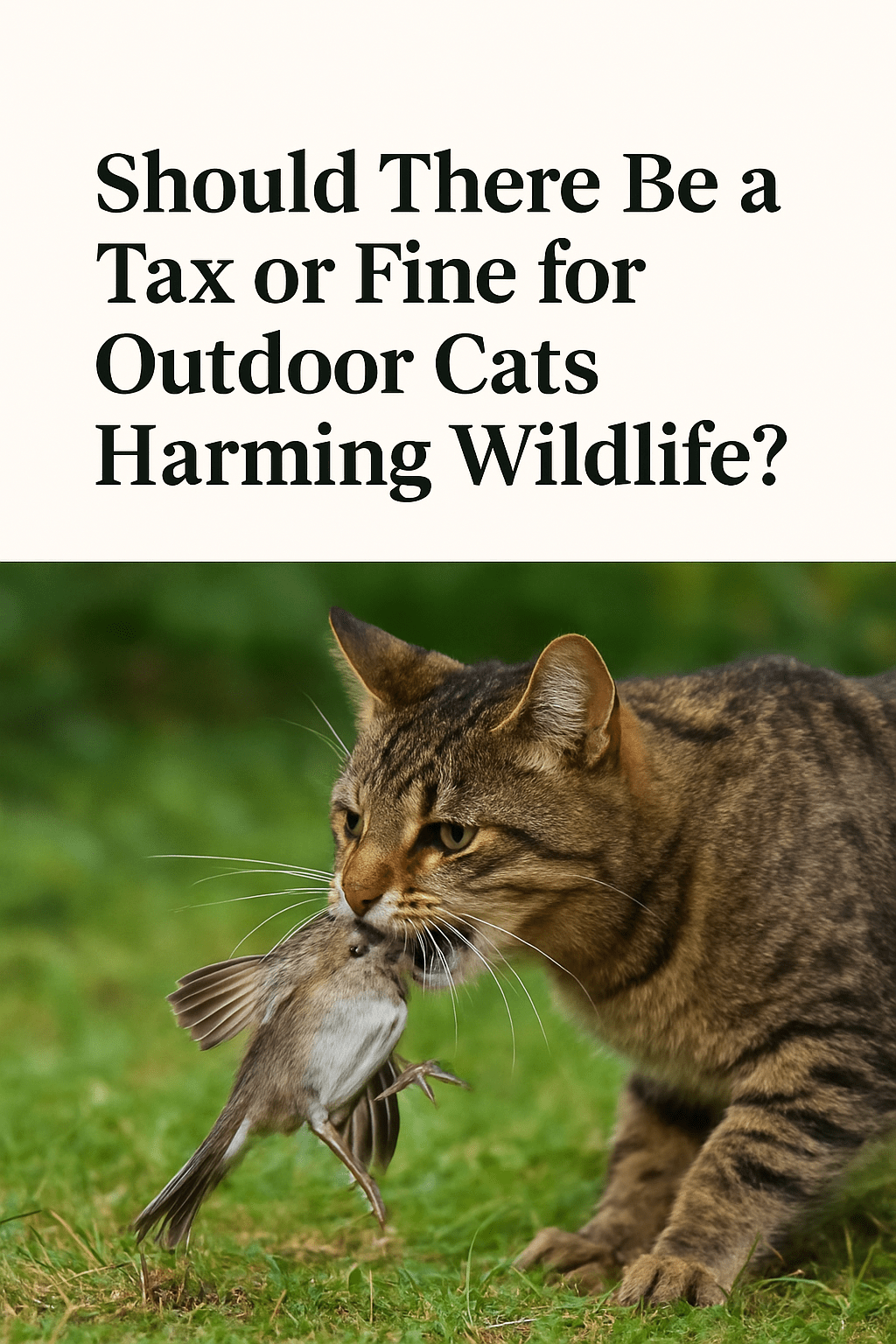
Outdoor cats kill billions of native animals in the United States each year — but should cat owners pay a tax or be fined when their pets harm wildlife? This in-depth, balanced article explores scientific evidence, real policy examples, ethics, equity, and practical solutions for cats lovers.
The Scope of the Problem
Research shows that free-roaming domestic cats kill an enormous number of wild animals every year. One widely cited study estimates that outdoor cats in the U.S. kill 1.3–4.0 billion birds and 6.3–22.3 billion mammals annually, with most deaths caused by unowned or feral cats. These numbers place cats among the most significant human-associated threats to wildlife in many regions of USA.
Because of this impact, conservation groups, policymakers, and environmental advocates are asking a difficult question: If outdoor cats cause measurable harm to wildlife, should owners pay a tax or be fined for allowing their cats to roam?
Understanding the Policy Options: Taxes vs. Fines
1. Taxes or Annual Fees
A tax would be a recurring fee — similar to a pet license — that funds conservation efforts, subsidized spay/neuter programs, public education, or humane feral cat management. Some proposals suggest higher fees for unneutered cats or discounts for indoor-only pets.
2. Fines
Fines are penalties issued when an owner violates a rule, such as allowing a cat to roam during a curfew or failing to keep the cat on their property. The goal is deterrence, not revenue.
Both policies aim to reduce wildlife harm but work in different ways: taxes generate funding, while fines punish risky behavior.
Existing Examples in the Real World
While the U.S. has no nationwide policy on this topic, several regions globally have experimented with fines, containment rules, and cat curfews.
- Australia has strict cat-management laws in some states, including nighttime curfews, required microchipping, and fines for roaming pets.
- New Zealand has debated cat registration fees and stronger restrictions due to its vulnerable native wildlife.
- Some cities in Europe and Africa have discussed annual cat taxes to support local animal control programs.
However, enforcement can be expensive, and shelters report that strict penalties sometimes increase cat abandonment if owners fear fines or impound fees.
Arguments in Favor of Taxes and Fines
1. Fairness: The “Polluter Pays” Principle
If a behavior creates environmental damage, it’s reasonable to require those responsible to cover some of the cost. Free-roaming cats impose a public ecological cost, so a fee or fine helps balance the scales.
2. Encouraging Responsible Ownership
Taxes and fines make it more likely that owners:
- keep cats indoors,
- use identification,
- spay/neuter their pets,
- reduce or eliminate outdoor roaming.
These are proven ways to decrease wildlife predation and protect cats themselves.
3. Funding for Wildlife and Welfare Programs
Revenue from taxes or fines could pay for:
- wildlife rehabilitation,
- subsidized spay/neuter,
- trap-neuter-return (TNR) programs,
- microchip clinics,
- educational outreach.
This reduces the burden on nonprofits and local governments.
Arguments Against Taxes and Fines
1. Enforcement Challenges and Inequity
Outdoor-cat fines require monitoring, staff time, and resources that many communities lack. There’s also a risk of disproportionate impacts on low-income residents.
2. Misplaced Blame
Research shows that feral and unowned cats are responsible for most wildlife kills. Penalizing responsible pet owners may have limited benefit if feral-cat populations aren’t addressed simultaneously.
3. Risk of Cat Abandonment
Harsh penalties can create fear. Some owners may surrender their pets or abandon them outdoors to avoid fines, which ultimately increases the feral population and the wildlife impact.
4. Potential Community Backlash
People love their pets, and punitive policies can generate political resistance and undermine trust between residents and local authorities.
If Policies Are Adopted, They Must Be Designed Well
If a city or state decides to implement taxes or fines, the system must be fair, humane, and effective. Here are key principles:
1. Focus on the Right Population
Policies should distinguish between:
- owned, microchipped cats
- unowned, feral cats
The majority of wildlife harm comes from feral cats, so programs should target that population first.
2. Dedicate Revenue to Solutions
Any money collected should be required by law to fund:
- low-cost spay/neuter,
- feral-cat management,
- microchipping programs,
- wildlife protection initiatives.
3. Ensure Compliance Is Accessible
Communities should offer:
- sliding-scale fees,
- free or low-cost microchipping,
- affordable veterinary services,
- clear education on requirements.
4. Use Behavior-Based Rules
Rules should focus on actions — like allowing cats to roam freely during sensitive wildlife hours — rather than simply owning a cat. Cat curfews, brightly colored predation-reduction collars, and keeping cats indoors at night can be effective compromises.
5. Collect Data and Review Results
Pilot programs help determine whether a policy:
- reduces wildlife kills,
- lowers feral-cat numbers,
- improves shelter outcomes,
- increases community compliance.
Policies should be adjusted based on real-world results, not assumptions.
Humane Alternatives and Complementary Approaches
Before turning to punitive measures, communities can adopt effective, non-punitive strategies:
1. Subsidized Spay/Neuter Programs
These reduce feral-cat populations over time and prevent unwanted litters.
2. Microchipping and Registration
Improves return-to-owner rates and encourages responsible care.
3. Public Education Campaigns
Teach cat owners:
- why indoor living is safer,
- how to reduce predation,
- how to enrich indoor environments.
4. Support for Humane Feral-Cat Control
Programs like TNR — when done in combination with community education and targeted removal from sensitive wildlife zones — can reduce long-term colony sizes.
5. Wildlife-Friendly Home Modifications
Tools such as Birdsbesafe® collars, bells, or supervised outdoor time in a “catio” can reduce predation without criminalizing pet owners.
Ethical Dimensions
This issue sits at the intersection of:
- pet welfare,
- wildlife conservation,
- cultural attitudes,
- individual rights,
- environmental responsibility.
Some communities, especially in biodiversity-rich areas, view roaming cats as a serious threat that requires strict regulation. Others believe strongly in the freedom of pets and reject government intervention.
Creating good policy means balancing compassion for cats with respect for native wildlife — and ensuring that people, especially the most vulnerable residents, aren’t unfairly penalized.
Final Verdict: No Simple Answer
The question of whether there should be a tax or fine for outdoor cats harming wildlife does not have a universal solution.
A few conclusions can be drawn:
- In areas with vulnerable native wildlife, stricter rules — including fines — may be justified.
- In dense urban areas where feral cats cause most of the harm, taxes on owners would be ineffective or unfair.
- Any policy must include support programs, not just penalties.
- Humane, preventive measures often outperform punitive ones.
The most effective approach combines education, accessible veterinary care, responsible pet ownership, and targeted feral-cat management — with taxes or fines used only when ethically and practically justified.
Conclusion
If you care about both wildlife and the welfare of domestic cats:
Subscribe and share this post.
- Support community spay/neuter efforts.
- Encourage friends and neighbors to microchip and keep cats indoors.
- Ask local officials how they plan to balance biodiversity protection with humane animal care.
- Participate in community discussions and advocate for fair, science-based solutions.




 Fresh Cat News: Trusted Updates for Cat Lovers & Responsible Owners
Do you found this guide useful, please leave a comment.