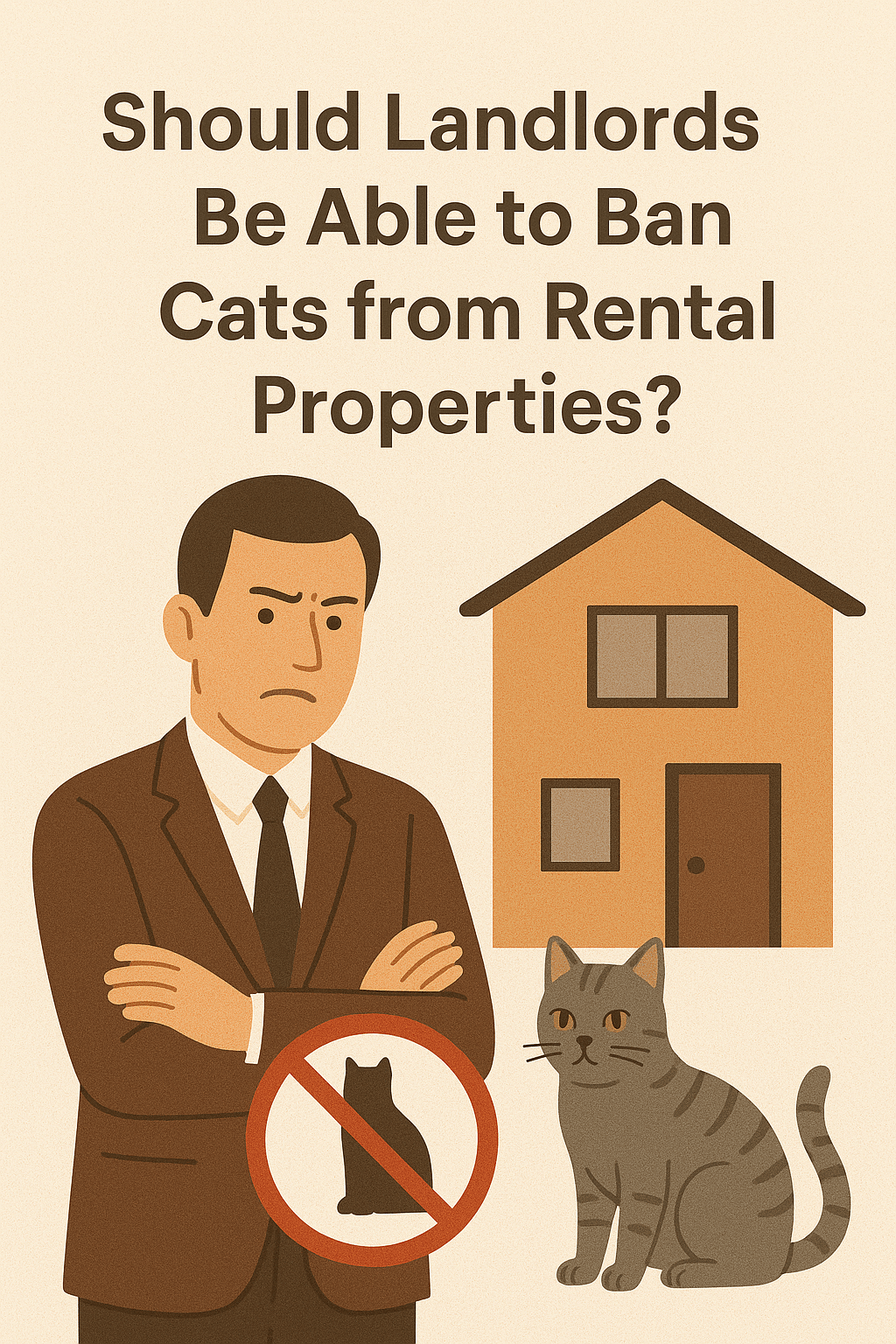
In the world of rental housing, one recurring friction point is pet policy. For many renters, pets—particularly companion animals like cats—are an important part of home life. For landlords, however, animals can present potential risks: property damage, noise, allergies, or conflicts with other tenants. The question we’ll explore here is whether landlords should have the right to ban cats from their rental properties, or whether such a blanket ban is unfair, unwise, or even obsolete in modern tenancy law and social norms.
The Landlord Perspective: Why a “No Cats” Policy Exists
From a landlord’s vantage point, banning cats (or pets in general) can seem pragmatic:
- Property damage and maintenance risk. Scratched carpets, clawed furniture, litter box odors, pet-related wear and tear—these are all concerns that a landlord might associate with cats. If the rental unit is furnished or has delicate finishes, a landlord may feel the liability is higher.
- Insurance and liability issues. Some insurers may impose higher premiums for properties that allow pets, or may exclude certain pet-related damage. Landlords may worry that allowing cats increases their exposure.
- Tenant turnover and nuisance complaints. A pet-free policy may (in the landlord’s view) reduce the number of variables that might lead to disputes: e.g., complaints from neighbors about smells or animal behaviour, increased likelihood of a tenant moving out, or needing more frequent refurbishments.
- Perceived control and standardisation. Many landlords operate with standard lease forms and want to minimise variation. A blanket “no pets” clause is administratively simple. It avoids the need to vet each tenant’s pet, set behavioural standards, inspect etc.
Given these concerns, the idea of banning cats (or excluding pets generally) can appear as a legitimate business decision. But is it fair, is it legally enforceable, and is it good policy?
The Tenant / Pet Owner Perspective: Why a Cat Ban Can Seem Unreasonable
On the flip side, for a tenant who wishes to live with a cat, a “no cats” rule may feel arbitrary or unfair. Key arguments include:
- Pets as part of home life. Many renters consider a cat to be a genuine family member, providing companionship, emotional support and stability. Preventing pets may limit their choice of housing or force them to relinquish a beloved companion.
- Under-utilisation of rental housing. With many rental properties advertising “no pets”, prospective tenants with cats can find their options severely limited—reducing competition, causing relocation or even abandonment of pets. According to one UK charity, many cats are surrendered to rescue centres because of housing restrictions.
- Pro-tenant and pro-animal welfare arguments. Some advocates argue that responsible pet ownership can actually be beneficial: less tenant turnover, more stability, higher tenant satisfaction. For example, a landlord who permits pets may retain a good tenant for longer, reducing void periods and re-letting costs.
- Changing societal norms and legal frameworks. As pet ownership becomes more common (including among renters), there is growing pressure for changes in rental law and policy to reflect the reality that many people rent long-term—and want the companionship of a pet.
Thus, while landlords have some valid concerns, the blanket exclusion of cats may impose an undue burden on tenants and ignore the possibility of responsible pet ownership.
What the Law Says: Can a Landlord Legally Ban Cats?
This depends heavily on jurisdiction—but some broad principles emerge.
United Kingdom (England & Wales):
- Currently, landlords can include “no pets” or “no cats” clauses in tenancy agreements. However, there is a growing push to limit blanket bans. For example, the draft Renters’ Reform Bill proposes that tenants should have the right to request a pet in the property, and that landlords may not unreasonably refuse.
- According to the charity Cats Protection, the Model Tenancy Agreement (updated 2021) removed standard blanket bans on pets for landlords who adopt it—but not all landlords use the model agreement.
- Until new law comes fully into force, a landlord may still refuse pets, though the trend is towards requiring “reasonable” conditions rather than blanket exclusion.
New Zealand:
- Under the Residential Tenancies Act 1986, pets are not specifically regulated—but there is case law indicating that a clause forbidding all pets may not be enforceable in some circumstances.
Belgium (Brussels-Capital Region):
- As of 1 November 2024, a new rule states that a lease clause which outright prohibits the keeping of companion animals is deemed “unwritten” in the Brussels region; meaning such a clause is invalid.
France:
- French law (Article 10 of the 1970 Rental Act) implies that a landlord cannot refuse a pet out of hand for standard flats—but there are exceptions (short-term furnished lets, dangerous dog breeds).
So: in multiple jurisdictions, the law is shifting away from blanket bans on pets, including cats, toward more balanced approaches.
The Practicalities: What Works in Good Rental Relationships
Rather than an absolute “ban cats vs allow cats” framework, many landlords and tenants find a middle path works best. Some practical recommendations:
- Case-by-case evaluation: Instead of blanket “no cats”, a landlord might allow pets with conditions: e.g., one cat only, must be neutered/spayed, microchipped, litter trained, tenant to provide references or pay a small pet deposit. Charities like Cats Protection provide “Pet CV” templates for tenants.
- Clear pet clause in lease: Define responsibilities of the tenant regarding the pet (cleaning, damage, noise, pest control), and clarify consequences if the pet causes issues. This gives both parties certainty.
- Insurance and deposit: Landlords can request that tenants take out pet liability insurance, or increase the security deposit to cover possible pet-related damage. This helps mitigate risk without outright exclusion.
- Proper property suitability: A small studio may genuinely be less appropriate for certain pets; limitations may be reasonable. Also, building rules (e.g., shared walls, allergies of neighbours) may justify restrictions.
- Tenant screening and education: Vetting cat-owning tenants, checking that the cat is well-behaved, and informing them of expectations (e.g., avoiding damage, managing litter, controlling fleas) can reduce landlord concerns.
- Advertising pet-friendly to attract stable tenants: As noted by Cats Protection, allowing pets can actually attract responsible tenants who stay longer, reducing turnover cost.
This “responsible pet policy” approach strikes a balance between the rights of tenants and the legitimate interests of landlords.
The Case for Prohibition: When a Ban Might Be Justified
Despite the arguments for allowing cats, there are circumstances where a landlord banning cats might be justified and prudent:
- High-risk property: For example, a furnished rental with antiques, high-grade carpets, or finishes that would be very costly to repair if damaged. The landlord might reasonably deem the risk too high.
- Building or tenancy restrictions: The leasehold or condominium rules may forbid pets, or local zoning/housing rules may apply (such as in public housing or buildings with many shared walls).
- Known allergy or nuisance risk: If previous tenancy history shows cats have caused damage or complaints, or neighbouring tenants are allergic and these issues cannot be mitigated, a ban may be reasonable.
- Short‐term/furnished holiday lets: Some jurisdictions allow stricter bans in short-term or furnished lettings where turnover is high and inspection times limited. (See the French context.)
In those cases, a ban may not be unreasonable—but it should still be justified and clearly documented.
The Case Against Prohibition: Why Blanket Bans Are Problematic
Conversely, there are strong reasons to challenge blanket bans:
- Unfair discrimination against responsible pet owners. A well-behaved indoor cat may pose far less risk than a large untrained dog, yet a blanket ban treats all cat-owners as equal risk.
- Reduced housing options and pet welfare implications. Tenants with cats may find it far harder to locate rentals, affecting stability, increasing cost, or forcing pet surrender. Charities report a high number of cats given up because of housing restrictions.
- Missed opportunity for landlords. By refusing all pets, landlords may exclude a large segment of prospective tenants. Given that tenants with pets may stay longer, this may be a self-defeating policy.
- Legal risk of being out of step with evolving law. As jurisdictions move toward limiting blanket bans (see Brussels, UK draft reforms), landlords may face more challenge from tenants or regulatory scrutiny.
- Social value of pet companionship. In modern society, pets offer emotional and psychological benefits—especially for renters who may live alone. The ability to keep a cat can contribute to wellbeing, and rental policy that systematically excludes pets may be seen as outdated.
Conclusion: A Balanced Approach Is Best
In summary, while landlords may currently have the contractual and legal ability in many places to ban cats from rentals, the trend is clearly moving toward more nuanced, regulated, and fair treatment of pet ownership in rental housing. A blanket ban on cats is increasingly less defensible—both ethically and commercially.
Thus, my view is: yes, landlords have at present the right (in many places) to ban cats based on their lease terms—but they should not use blanket bans as the default. Instead, the best approach is for landlords to adopt a responsible pet policy: vet pets, set clear conditions, require tenant accountability, but allow well-behaved cats under appropriate terms. This way landlords manage risk while tenants enjoy the companionship of a cat.
For tenants, if you wish to keep a cat in a rental, you should carefully review the lease agreement, check for “no pets” or “cats not allowed” clauses, and open a discussion with the landlord—offering assurances (neutered/spayed, micro-chipped, litter trained, responsible references) can go a long way. Charities like Cats Protection provide helpful templates and guidance.
Ultimately, rental housing policy needs to reflect contemporary life: pets are part of many households, and rental markets that fail to adapt may face higher turnover, unhappy tenants, and negative welfare outcomes for animals.
External Links for Further Reading
- “New Pet-Friendly Renters’ Rights a ‘Huge Step Forward’” – Cats Protection (UK)
- “Can landlords refuse pets in a rented property?” – MoneyHelper (UK)
- “Renting With Cats – Advice for Tenants & Landlords” – CatChat.org





 Fresh Cat News: Trusted Updates for Cat Lovers & Responsible Owners
Do you found this guide useful, please leave a comment.