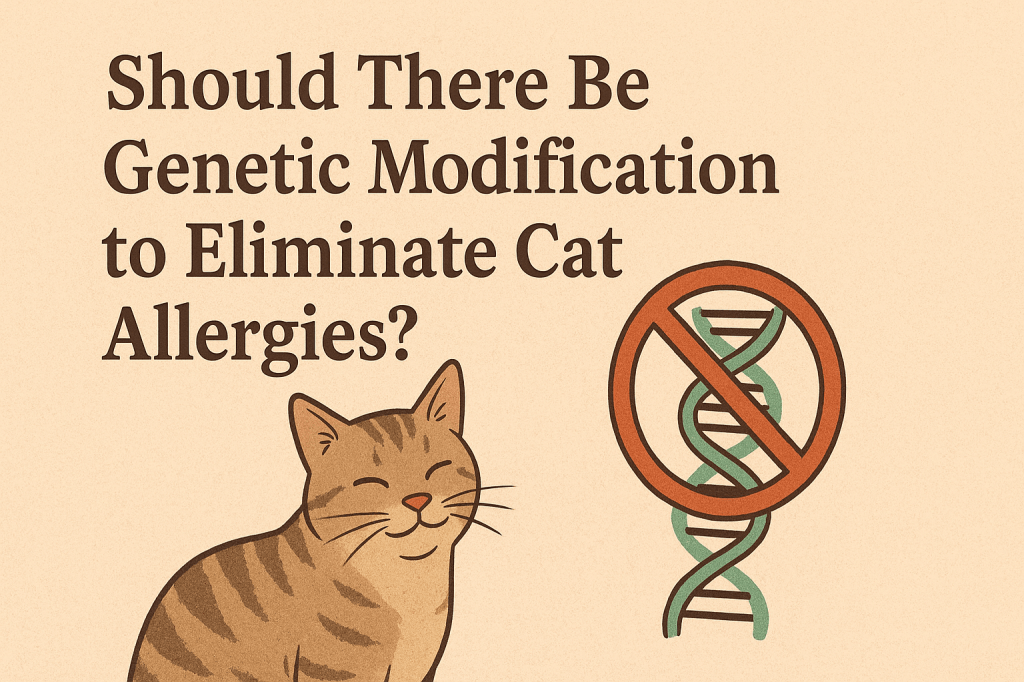
Can science eliminate cat allergies forever? Discover the pros, cons, and ethical debates around genetic modification in cats — and whether it’s the future of allergy-free companionship.
Introduction: A Dream for Cat Lovers With Allergies
For millions of cat lovers, sneezing, watery eyes, and itchy skin make feline companionship a daily struggle. Cat allergies affect about 10% to 20% of the global population, according to the Asthma and Allergy Foundation of America (source).
But what if we could eliminate cat allergies entirely — not by treating humans, but by genetically modifying cats themselves? This idea, once purely science fiction, is now being seriously explored thanks to biotechnology and gene-editing tools like CRISPR-Cas9.
The question is: Should we do it?
Understanding Cat Allergies
Cat allergies are primarily caused by a protein called Fel d 1, found in a cat’s saliva, skin glands, and fur. When cats groom themselves, the protein spreads through dried saliva and dander, becoming airborne and triggering immune reactions in sensitive individuals.
While some breeds — like the Siberian or Balinese — are marketed as “hypoallergenic,” no cat is completely allergy-free. The root cause lies in biology, not fur length or color.
That’s why genetic modification is now being considered as a potential long-term solution.
The Science Behind Genetic Modification
Modern science allows precise alterations in DNA to suppress or remove specific genes. In cats, researchers aim to disable or reduce the expression of the Fel d 1 gene using CRISPR technology.
In 2020, InBio (a U.S. biotechnology company) published promising results showing that it is possible to reduce Fel d 1 production in cat cells without harming their overall health.
If this success translates to living animals, future generations of cats could naturally produce little to no Fel d 1 protein — theoretically eliminating most allergic reactions.
The Benefits: Allergy-Free Companionship
1. Improved Quality of Life for Millions
Millions of people avoid adopting cats due to allergies. Genetic modification could allow those individuals to finally enjoy feline companionship without discomfort or medication.
2. Reduction in Cat Abandonment
Many cats are surrendered to shelters when family members develop allergies. Eliminating allergenic proteins could reduce this problem, potentially saving thousands of cats from abandonment or euthanasia.
3. Advances in Veterinary Science
If scientists can safely alter the genes responsible for Fel d 1, this technology could pave the way for disease-resistant cats or better control over hereditary conditions like heart disease or kidney failure.
4. Economic Opportunities
Pet biotechnology could become a new industry, supporting veterinarians, geneticists, and biotech firms. Allergy-free cats could become a premium market segment for breeders.
The Ethical Concerns: Playing with Nature
While the science is promising, it raises deep ethical questions.
1. Animal Welfare and Unknown Risks
Changing an animal’s genetics can have unintended side effects. We still don’t know the full role of Fel d 1 in cat biology — it may help regulate the immune system or skin health. Removing it could cause new health problems we haven’t foreseen.
2. Ethics of Genetic Engineering for Convenience
Is it morally acceptable to modify a living being to suit human comfort? Critics argue that instead of altering cats, people could develop better allergy treatments or accept the natural diversity of life.
Organizations like PETA and other animal rights groups warn against treating pets as customizable products.
3. Access and Inequality
If allergy-free cats are developed, they’ll likely be expensive at first. This could widen the gap between wealthy and average pet owners, turning allergy-free cats into a luxury item.
Environmental and Genetic Diversity Risks
A population of genetically modified cats could have unpredictable effects if released or bred with natural populations. Reduced genetic diversity might make cats more susceptible to future diseases, creating ecological imbalances.
Moreover, controlling and tracking modified cats would require global cooperation and strict regulation, which may be difficult to enforce across countries.
Alternatives to Genetic Modification
Before rewriting cat DNA, it’s worth considering existing allergy solutions:
🐾 1. Allergy Immunotherapy
Long-term treatments can help people build tolerance to allergens. Immunotherapy has been shown to reduce sensitivity over time for many allergy sufferers.
🧼 2. Allergen-Reducing Cat Products
Some companies have developed cat food that neutralizes Fel d 1 through antibodies in egg proteins, reducing allergens by up to 47% in studies. Products like Purina Pro Plan LiveClear are already available and may offer a middle ground.
🏡 3. Home Hygiene and Air Filtration
Frequent vacuuming, HEPA filters, and bathing your cat can significantly reduce allergen exposure without altering its genetics.
These solutions, though imperfect, suggest that gene modification may not be the only path forward.
Public Opinion: The Debate Among Cat Lovers
Cat owners and scientists remain divided. Some view gene editing as an act of compassion, freeing people from suffering and reducing animal abandonment. Others fear it represents another step toward commodifying life and prioritizing human desires over animal welfare.
Social media polls and pet forums reveal that most people would consider adopting a hypoallergenic genetically modified cat — if it were proven safe, ethical, and affordable.
The key challenge, therefore, is transparency and regulation: ensuring that scientific progress respects both cats and their human companions.
Conclusion: Should We Modify Cats to End Allergies?
The dream of an allergy-free cat is no longer a fantasy. Genetic modification could revolutionize pet ownership, making cats more accessible to millions.
However, science must tread carefully. Eliminating cat allergies through DNA editing is possible, but ethical, biological, and ecological concerns cannot be ignored.
Perhaps the better path is a balance between innovation and respect for nature — improving human-cat relationships without turning living beings into laboratory projects.
Until then, those who adore cats but suffer from allergies still have hope — in better treatments, allergen-neutralizing foods, and the growing love for felines that transcends biology.



 Fresh Cat News: Trusted Updates for Cat Lovers & Responsible Owners
Do you found this guide useful, please leave a comment.