Introduction
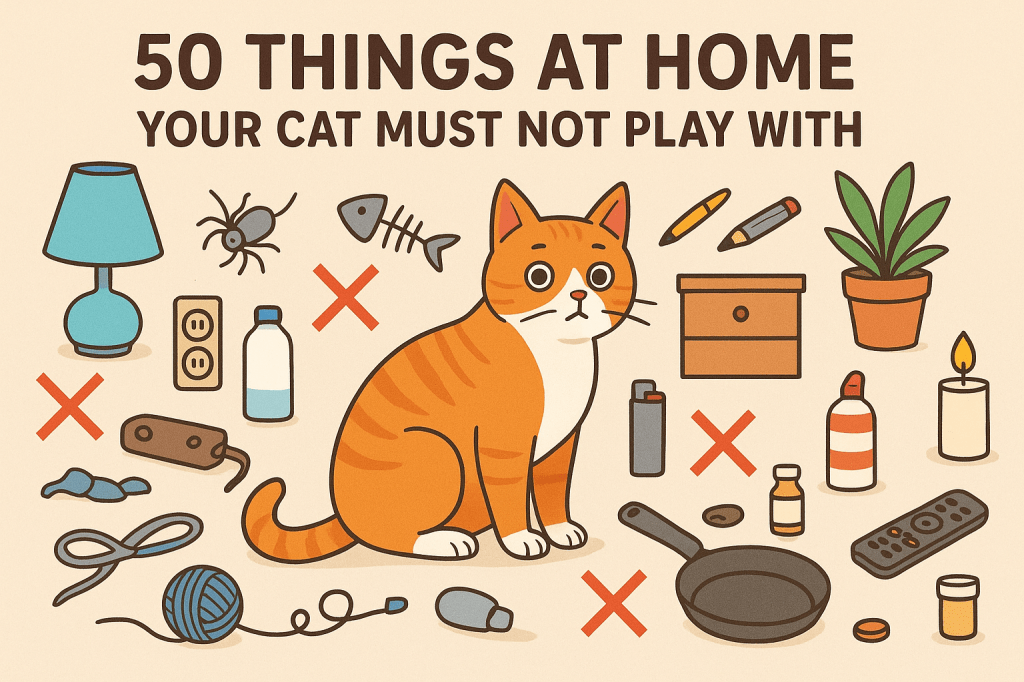
Cats are curious, playful, and often fearless. Their natural instinct to explore, bite, chew, and bat at everything within reach can put them in harm’s way. Some items in the home are dangerous because they’re toxic, others because they can choke, obstruct, injure, or otherwise harm. As a cat owner, your goal is to reduce risk by knowing what’s dangerous and taking steps to make your home safer.
Below are 50 items/things to keep away from cats. I group them by category (plants, food, chemicals, household objects, etc.) to help you mentally map where to be especially watchful.
1. Toxic Plants & Flowers
Many plants are non-obvious hazards. Cats may chew leaves, nibble on flowers, or drink water from vases.
- Lilies (Lilium species and Hemerocallis) – extremely toxic. Even a small bite, or pollen, or licking vase water can cause acute kidney failure in cats.
- Tulips / Daffodils – the bulbs are particularly dangerous; ingestion can lead to drooling, vomiting, diarrhea, and more severe effects.
- Azaleas, Rhododendrons – can cause vomiting, drooling, heart issues.
- Oleander – very toxic, can affect the heart.
- Peace Lily, Calla Lily – while not “true lilies,” still harmful: crystals that irritate, cause oral pain and upset.
- Cyclamen – especially the roots can be toxic.
- Hydrangea – toxic substances, ingestion leads to gastrointestinal upset.
- Sago Palm – very dangerous; even small ingestion can be serious.
2. Human Foods & Edibles
Cats’ metabolisms differ from ours. Some foods we eat easily are harmful or deadly to cats.
- Chocolate & cacao – contains theobromine and caffeine; can harm heart, nervous system.
- Onions, garlic, chives, shallots (Allium family) – lead to destruction of red blood cells (anemia).
- Grapes & raisins – kidney issues; unknown exactly which component, but some cases of acute kidney failure.
- Caffeinated drinks / substances (coffee, tea, soda, energy drink, caffeine pills) – overstimulation, heart and neurological effects.
- Chocolate & sweets containing xylitol (sugar alcohol) – xylitol can cause severe hypoglycemia and possibly liver failure. (More documented in dogs, but cats can also be vulnerable.)
- Alcohol – very dangerous even in small amounts.
- Bread dough (raw with yeast) – can expand in the stomach, produce ethanol; vomiting, bloating, even alcohol poisoning.
3. Medications & Supplements
Even small doses of certain drugs can be deadly to cats.
- Over-the-counter pain relievers (ibuprofen, aspirin, acetaminophen, naproxen) – very high risk. Cats lack certain enzymes to safely metabolize these.
- Human antidepressants / psychiatric medications – toxic if swallowed.
- Vitamin D3 / supplements (esp. those designed for humans) – overdosing can lead to hypercalcemia and kidney damage.
- Flea/tick treatments for dogs – many are not safe for cats, especially those with certain insecticide ingredients.
4. Household Chemicals & Cleaners
Many of these are found in every home. Keep them stored safely.
- Bleach – corrosive, harmful if ingested or when wet surfaces are licked.
- Ammonia-based cleaners – respiratory irritation, burns.
- Drain cleaners / oven cleaners – very caustic; can injure mouth, throat, stomach.
- Pesticides / rodent poisons – ingestion risk; strong toxicity.
- Antifreeze (ethylene glycol) – extremely dangerous; sweet-tasting so appealing to cats. Even small amounts can be lethal.
- Fabric softeners / dryer sheets – chemicals and strong fragrances; licking or chewing can irritate, toxins possible.
- Pool chemicals / chlorine – dangerous if ingested or spilled.
- Paints, solvents, varnishes – fumes, ingestion, skin contact all pose risks.
- Liquid potpourri / scented oils / essential oils – some essential oils are highly toxic to cats; inhalation or skin contact can be harmful.
5. Small Objects / Choking / Internal Damage Hazards
These are mostly about what a cat can swallow or get tangled in.
- String, yarn, loose thread / dental floss – can cause intestinal obstruction (“linear foreign body”).
- Rubber bands, hair ties – beloved by cats but easily swallowed; risk of blockage.
- Buttons, coins, small toy parts – choking hazard, risk of obstruction.
- Earplugs – small size, can get lodged internally.
- Batteries – especially button batteries; both chemical burns and poisoning if chewed or swallowed.
- Plastic bags / handles – suffocation risk, handles can catch around neck or limbs.
- Mylar / foil wrappers / chip bags – cats may chew, swallow, suffocation risk. Also clingy/bag-seal tight.
- Tinsel, holiday ribbons, decorative cords – very attractive to cats; ingestion can lead to serious internal injuries.
- Christmas tree decorations (ornaments, hooks, wires) – breakable, sharp pieces; metal hooks dangerous.
6. Appliances, Furniture & Physical Hazards
These are items which may physically injure a curious cat.
- Washing machines / dryers – cats may crawl inside; danger if turned on.
- Electrical cords / cables – cats may chew them; risk of electrocution; bare wires are even worse.
- Windows (open or with unsafe screens) – risk of falling. Some windows can trap or pinch cats.
- Hot surfaces / stoves – cats may jump onto stove tops or heating pads; burns possible.
- Open flames / fireplaces – cats drawn to heat, risk of getting too close or knocked in.
- Sharp or breakable decorations (e.g., glass figurines, chandeliers, mirrors) – broken glass can injure paws or mouth.
- Furniture that reclines or moves parts (like recliners, ottomans, sofa beds) – cats hiding inside can get trapped or crushed when moving parts engage.
7. Miscellaneous / Overlooked Items
These are maybe less obvious, but still high risk.
- Trash cans with open tops – cats rummage; can ingest harmful items, plastics, bones, wrappers, etc.
- Perfumes, deodorants, colognes – chemical fragrances may irritate skin, lungs; can be toxic.
- Air fresheners, plug-ins, scented candles – often contain strong chemicals or essential oils; inhalation risk.
- Mothballs – traditional pest control; vapors & ingestion are dangerous.
- Rodent baits / mouse poisons – temptation plus strong poisons = major danger.
- Lightbulbs, small bulbs, spare bulbs – especially those not stored safely; can roll, break, cat might chew. Porcelain/silica shards if broken.
Risk Details & What Can Happen
Here are some of the harmful outcomes from interacting with the above:
- Gastrointestinal upset: vomiting, diarrhea, drooling
- Obstruction: swallowed strings, rubber bands, plastic parts can block intestines, sometimes requiring surgery
- Chemical burns: from caustic cleaners, detergents, antifreeze
- Respiratory distress: fumes from strong cleaners, essential oils, perfumes, cleaning sprays
- Organ damage: kidney failure (lilies, grapes, antifreeze), liver damage (some essential oils, medications)
- Burns or injuries: broken items, hot surfaces, flames
- Poisoning: heavy metals (possibly from some bulbs, paints), chemicals, certain plant toxins
What You Can Do: Safety & Prevention Tips
Knowing what to avoid is only half the battle; you also need a plan.
- Store dangerous items out of reach: high shelves, closed cabinets, locked drawers.
- Choose cat-safe plants: research before bringing in new houseplants.
- Use cord covers & cable management: keep cords tidy and away from chewing.
- Supervise when using chemicals: Close doors; after cleaning, make sure surfaces are dry if the cat will touch them. Wash your hands to avoid transferring chemicals.
- Provide safe play alternatives: chew toys designed for cats, string toys with supervision, interactive toys, scratching posts. This helps redirect natural curiosity.
- Secure windows & balconies: use screens, guards; make sure windows don’t open wide enough for cats to fall through.
- Check laundry/washer/dryer before using: cats sometimes sleep inside.
- Be cautious around holiday decorations: store fragile or dangerous decorations out of reach; avoid tinsel, small hooks, breakable glass.
- Pet-friendly cleaning products: opt for milder agents when possible; avoid essential oils known to be unsafe.
- Know signs of poisoning or obstruction: vomiting, lethargy, difficulty breathing, loss of appetite, etc.—and have contact info for your vet or an animal poison hotline.
External Resources & Further Reading
- VCA Animal Hospitals – Household Hazards: https://vcahospitals.com
- AKC Pet Insurance blog – https://www.akcpetinsurance.com
- FDA – Potentially Dangerous Items for Pets: https://www.fda.gov
- Cats Protection (UK) – https://www.cats.org.uk



 Fresh Cat News: Trusted Updates for Cat Lovers & Responsible Owners
Do you found this guide useful, please leave a comment.