Introduction
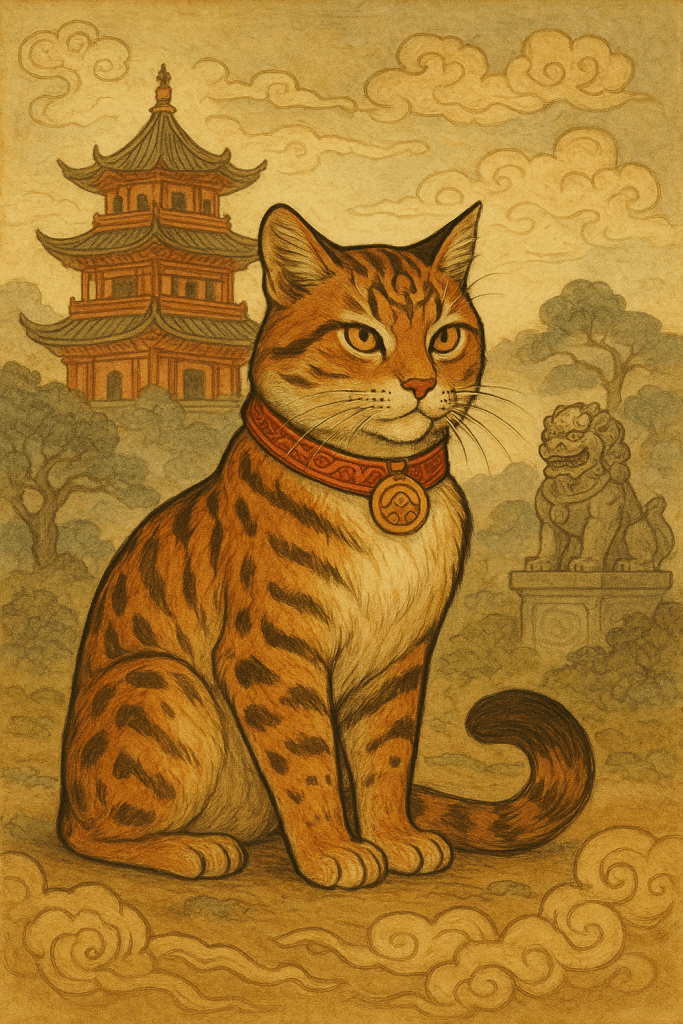
In Chinese culture, cats have often been regarded with a mix of reverence, caution, and curiosity. Unlike the West—where black cats are usually tied to misfortune—or Japan, where cats like the Maneki Neko beckon prosperity, Chinese folklore about cats is deeply nuanced, often rooted in Taoist beliefs, ancestral veneration, and ancient superstitions.
In this 2500-word exploration of famous cats in Chinese folklore, we’ll uncover the mythical, spiritual, and symbolic roles cats have played across dynasties, villages, temples, and ghost stories. These tales offer insight into China’s long-standing relationship with the feline world—one where cats were more than pets; they were omens, protectors, and even sacred beings.
1. 🐱 The Yin-Yang Cat: A Taoist Symbol of Balance
In Taoist cosmology, balance is everything—and few animals represent this principle better than the cat.
Feline Symbolism in Taoism
- Cats are nocturnal and thrive in stillness—traits aligned with Yin, the dark and passive force.
- However, cats are also agile, alert, and predatory—representing Yang, the bright and active force.
- In some Taoist schools of thought, the cat embodies both Yin and Yang, existing as a bridge between opposing energies.
Folklore Application
- Monks in mountain temples sometimes kept cats to “ward off evil energies.”
- Certain Taoist amulets depict cats curled in a spiral, a reference to cosmic duality and harmony.
This symbolic role has made cats central figures in spiritual practice, meditation, and even architecture in temple iconography.
2. 🧧 Cats and the Lunar Calendar: Guardians of the Night
In ancient China, cats were believed to be guardians of the night and protectors of time. Before alarm clocks, people relied on “Night Watchmen”, who patrolled the streets and temples, often accompanied by cats.
The Legend of the Timekeeping Cat
According to one folk tale:
“The Jade Emperor asked animals to keep track of time. The cat, being silent and vigilant, was entrusted with the darkest hours—from midnight to dawn.”
Role in Folklore
- Cats were believed to sense spiritual shifts in the hours before dawn, when Yin energy is strongest.
- Some households kept cats specifically for midnight protection during festivals like the Ghost Month or Qingming (Tomb-Sweeping Festival).
3. 👻 The Cat Who Sees Ghosts: Feline Mediums in Spirit Lore
Perhaps one of the most pervasive beliefs in Chinese folklore is that cats can see ghosts and spirits.
Popular Superstitions
- If a cat stares into an empty room, it is seeing a ghost.
- If a black cat jumps over a coffin, the deceased may rise again or become a restless spirit (gui).
- Cats left in a room with a corpse were often removed during funerals to prevent “spirit awakening.”
Famous Folklore Tale: The Cat and the Mourner
In a Qing Dynasty story, a man refused to follow the tradition of removing cats from the funeral hall. That night, the deceased “sat up,” possessed by something unseen. The cat had jumped across the body.
This story is used to teach respect for spiritual boundaries and the cat’s link to the afterlife.
4. 🏮 The Fortune Cat of the Southern Provinces
Though Japan popularized the Maneki Neko, many scholars believe its origins are linked to southern Chinese trade ports, especially Guangdong and Fujian.
Local Legends
In Guangdong, folk stories tell of:
- A stray white cat that lived outside a poor merchant’s tea shop.
- Every time the cat sat by the door, wealthy travelers would stop in.
- Eventually, the merchant sculpted a figurine of the cat, beginning a tradition now seen across Asia.
Chinese vs. Japanese Versions
- Chinese lucky cats tend to be white or gold, symbolizing purity and wealth.
- Their paws are often higher, reflecting the ambition to reach Heaven’s favor.
5. 🧵 The Cat and the Silkworm: Guardians of Prosperity
In rural Chinese villages, particularly in silk-producing regions, cats were historically valued not only for pest control but for spiritual protection of silkworms.
Folklore Connection
According to tradition:
“Mice feared cats, and silkworms feared death. The presence of a cat would calm the house and protect the silk threads from spiritual corruption.”
Families would:
- Offer fish or chicken heads to house cats before silkworm harvests
- Pray to the “Silk Cat” spirit, a mythical creature combining feline traits with long, flowing tails like silk ribbons
This legend persists today in certain embroidery guilds who honor cats with special embroidered symbols on their tools.
6. 🐉 The Tiger-Cat Hybrid in Imperial Myths
In Chinese mythology, tigers are divine beasts representing strength, royalty, and protection. In some folk stories, cats are seen as miniaturized tigers, embodying a tamed yet potent form of the same power.
The Myth of the Spirit Cat-Tiger
In Tang Dynasty scrolls, a creature known as the “Mao Hu” (猫虎) appears—described as:
- A cat with stripes like a tiger
- Small enough to perch on a shoulder
- Able to detect deceit and curse liars
It was said emperors kept Mao Hu carvings near their thrones to discern truth from falsehood.
7. 🛕 Temple Cats: Keepers of Sacred Space
Several temples across China are famous for their resident cats, many of which have become folk heroes in their own right.
The Cat of Wudang Mountains
At a Taoist temple in the Wudang range, a white cat named Bai Mao (“White Fur”) was said to:
- Appear before natural disasters
- Lead monks away from danger
- Disappear during ceremonial prayers, only to return after
Some believe Bai Mao was the incarnation of a mountain spirit sent to protect the temple.
Today, a shrine exists at the temple entrance, where visitors leave treats and blessings for the spirit of Bai Mao.
8. 🪞 Cats and Mirrors: Gatekeepers of the Spirit Realm
In some Chinese ghost stories, cats and mirrors are said to interact with the supernatural in unusual ways.
Traditional Belief
- A cat looking into a mirror at night might summon spirits.
- In ancient homes, mirrors were covered during funerals—especially if a cat was present.
The Tale of the Mirror Cat
A story from northern China tells of a young bride who received a mirror and a white kitten on her wedding day. At night, the cat stared into the mirror until a shadowy figure appeared behind it. The bride was said to be possessed for three days, only recovering when the mirror was broken.
This tale reminds people to respect the spiritual potential of everyday objects and the unseen sensitivity of cats.
9. 🏯 The Nine Lives Legend in Chinese Culture
While the “nine lives” trope is often associated with Western culture, China has its own numerological symbolism associated with cats.
The Lucky Number Nine
- The number 9 (九, jiǔ) sounds like the word for “long-lasting” or “eternity.”
- In southern China, some believe cats have nine souls, not lives—and each soul serves a purpose:
- Loyalty to family
- Mastery of darkness
- Sight into the spiritual realm
- Dream protection
- Home blessing
- Fire prevention
- Ghost detection
- Emotional healing
- Life after death guidance
Each of these “lives” or souls gives the cat its multi-layered spiritual identity in Chinese belief systems.
10. 🍚 The Kitchen Cat: Domestic Harmony and Fire Luck
In Chinese folklore, kitchens are sacred, ruled by the Kitchen God (Zao Jun). The presence of a cat in the kitchen was believed to enhance the spiritual harmony of the space.
Superstition and Ritual
- A cat meowing at the stove during a festival was a sign of unexpected guests or ancestors returning
- If the cat slept beside the stove, it indicated a prosperous lunar cycle
- Households placed small cat figurines near the hearth to keep fire spirits happy
11. 🪙 The Cat in Chinese Coin Lore
In some rare Ming Dynasty texts, lucky coins feature symbols of cats and rats together—a seemingly strange pairing.
Meaning of the Coin
In these depictions:
- The cat represents wealth protection
- The rat symbolizes wealth accumulation (as rats steal grain)
- Together, they show the cycle of gain and safeguarding
These coins were sometimes worn by merchants or gifted to newlyweds as a symbol of economic harmony and fertility.
Conclusion
The role of cats in Chinese folklore is as vast and mysterious as the feline itself. From temple guardians to ghost seers, from imperial protectors to household omens, cats are woven into the spiritual and cultural fabric of Chinese tradition.
What makes Chinese cat folklore unique is its multi-dimensional view of the cat:
- Both divine and dangerous
- Both household companion and cosmic guide
- Both sacred symbol and unpredictable force
These stories remind us that in Chinese culture, cats are not just animals—they are messengers, mediators, and magical beings.
So, the next time your cat meows at an empty hallway, curls around your stove, or purrs in your lap during a storm—remember: they may be echoing centuries of myth.





 Fresh Cat News: Trusted Updates for Cat Lovers & Responsible Owners
Do you found this guide useful, please leave a comment.