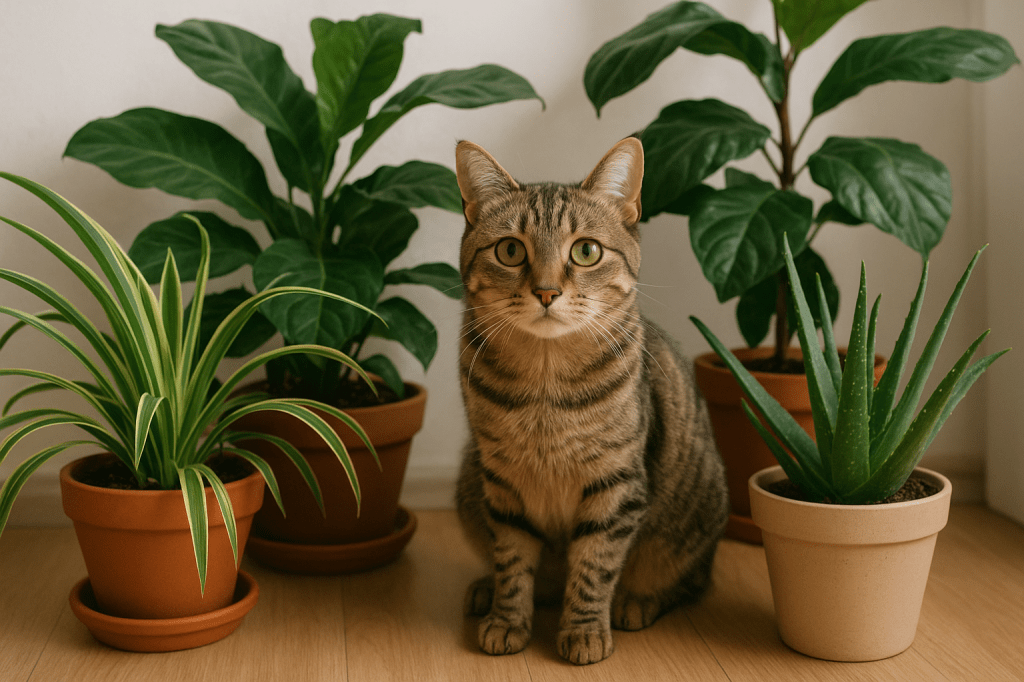
Creating a beautiful home filled with greenery and blossoms can be one of life’s simple joys. However, for pet parents, especially those with curious cats and playful dogs, not every flower or houseplant is safe. Some plants may look harmless but can be toxic, causing digestive issues, neurological problems, or worse. That doesn’t mean you need to give up your indoor jungle or blooming garden. With the right knowledge, you can design a vibrant, plant-filled home that keeps your furry friends healthy and safe.
In this comprehensive guide, we’ll explore pet-safe flowers, houseplants, and garden plants, and also highlight plants you should avoid. By the end, you’ll have the tools to create a cat-friendly haven where paws and petals live in harmony.
Why Choosing Pet-Safe Plants Matters
Cats are naturally curious. Cats often nibble on leaves and flowers, while dogs may chew plants out of boredom or play. Unfortunately, many common plants are toxic, even deadly, to cats.
- Toxic reactions can range from mild vomiting to organ failure.
- Cats are especially sensitive to lilies, which can cause kidney failure.
- Dogs often chew larger leaves or dig around roots, increasing exposure.
- Small pets like rabbits or guinea pigs are also at risk indoors.
The ASPCA (American Society for the Prevention of Cruelty to Animals) provides an updated database of toxic and non-toxic plants, but many homeowners don’t consult it before purchasing plants. That’s why awareness is key.
Pet-Safe Flowers
If you want to brighten your home or garden with flowers, here are some safe options that bring color without risk:
1. Roses
- Pet-Safe Factor: Non-toxic to dogs and cats.
- Tips: Remove thorns before bringing indoors to prevent scratches.
- Why They Work: Classic, elegant, and widely available.
2. Gerbera Daisies
- Pet-Safe Factor: Bright, cheerful, and completely safe.
- Tips: Keep in a sunny windowsill for vibrant blooms.
3. Sunflowers
- Pet-Safe Factor: Non-toxic and striking in appearance.
- Tips: Their seeds are safe in moderation but avoid salted or flavored varieties.
4. Orchids
- Pet-Safe Factor: Popular houseplant, safe for both cats and dogs.
- Tips: Requires indirect light and humidity—perfect for indoor design.
5. Zinnias
- Pet-Safe Factor: Safe annual flower that adds pops of color.
- Tips: Great for summer gardens or bouquets.
Pet-Safe Houseplants
Houseplants are essential for purifying indoor air, boosting mood, and adding beauty. Here are some you can keep without worry:
1. Spider Plant (Chlorophytum comosum)
- Pet-Safe Factor: Non-toxic and resilient.
- Care: Thrives in indirect light, grows quickly, and easy to propagate.
- Note: Cats may love to bat at its arching leaves.
2. Areca Palm (Dypsis lutescens)
- Pet-Safe Factor: Non-toxic palm perfect for tropical vibes.
- Care: Needs bright, indirect light and regular watering.
3. Calathea (Prayer Plant family)
- Pet-Safe Factor: Stunning patterned leaves, completely safe.
- Care: Prefers humidity and low to medium light.
4. Parlor Palm (Chamaedorea elegans)
- Pet-Safe Factor: Elegant and safe for pets.
- Care: Thrives in low light—ideal for apartments.
5. Boston Fern (Nephrolepis exaltata)
- Pet-Safe Factor: Non-toxic and lush.
- Care: Loves humidity, perfect for bathrooms or kitchens.
6. Polka Dot Plant (Hypoestes phyllostachya)
- Pet-Safe Factor: Colorful and safe.
- Care: Requires indirect sunlight and regular watering.
Plants to Avoid in a Pet-Friendly Home
Just as important as knowing what’s safe is understanding what’s dangerous. Here are some plants toxic to cats and dogs:
- Lilies (extremely toxic to cats; even pollen can be fatal)
- Aloe Vera (soothing for humans, dangerous for pets)
- Snake Plant (Sansevieria) (causes nausea and diarrhea)
- Peace Lily (Spathiphyllum) (irritating to mouth and stomach)
- Sago Palm (highly toxic, can cause liver failure)
- Philodendron & Monstera (calcium oxalate crystals cause irritation and swelling)
- Tulips and Daffodils (bulbs especially toxic)
Tip: If you have these plants, keep them out of reach or rehome them to a pet-free household.
Outdoor Plants and Herbs for Pet-Friendly Gardens
A garden can be both beautiful and beneficial to your pets. Consider these options:
Safe Outdoor Flowers
- Marigolds (safe and pest-repelling)
- Snapdragons
- Impatiens
Safe Herbs
Many herbs are safe and even beneficial for pets:
- Basil – great for cooking and safe for pets.
- Thyme – safe and aromatic.
- Rosemary – non-toxic and hardy.
- Parsley – safe in small amounts.
- Catnip & Cat Grass – not only safe but loved by cats.
Safe Vegetables & Edibles
- Carrots
- Green beans
- Cucumbers
- Pumpkins
These are safe if your pets decide to sample them, and they double as healthy snacks.
Designing a Pet-Friendly Indoor Jungle
When designing your indoor greenery, consider these tips:
- Place plants strategically – High shelves, hanging baskets, or plant stands keep plants out of reach.
- Use heavy pots – Prevents tipping by curious paws.
- Choose non-toxic soil and fertilizers – Avoid chemical fertilizers, opt for organic.
- Distract with pet-friendly greens – Plant cat grass or catnip to redirect chewing habits.
- Observe your pets’ behavior – Some animals ignore plants, while others nibble constantly. Adjust accordingly.
Training Pets to Leave Plants Alone
Even with safe plants, you may not want chewed leaves everywhere. Training can help:
- Provide alternatives – Give cats scratching posts and grass pots.
- Use deterrent sprays – Citrus scents can repel pets from plants.
- Reward good behavior – Reinforce ignoring plants with treats.
- Block access – Use plant cages, shelves, or closed rooms.
Creating a Calming Environment with Plants
Safe plants do more than decorate—they improve your pets’ lives:
- Air Purification: Plants like spider plants and palms filter toxins.
- Stress Reduction: Greenery reduces anxiety in pets and humans.
- Enrichment: Cats enjoy batting at ferns, dogs may rest under large leaves.
- Natural Scents: Herbs like rosemary and basil freshen the air without chemicals.
Seasonal and Holiday Plant Warnings
During holidays, some plants are particularly dangerous:
- Christmas: Poinsettias (mildly toxic), mistletoe, and holly.
- Easter: Lilies are common gifts but deadly for cats.
- Valentine’s Day: Roses are safe, but baby’s breath and some filler greens may cause stomach upset.
Always check bouquets before bringing them into a pet-friendly home.
Emergency Tips if Your Pet Eats a Toxic Plant
If you suspect your pet ingested a toxic plant:
- Remove any plant material from their mouth.
- Identify the plant – Take a picture or sample.
- Call your vet immediately – Or contact an animal poison hotline (ASPCA Animal Poison Control: +1-888-426-4435).
- Do not induce vomiting unless instructed by a professional.
Building a Pet-Friendly Plant Wishlist
Here’s a quick reference of top safe plants you can shop for:
- Flowers: Roses, sunflowers, orchids, zinnias.
- Houseplants: Spider plant, calathea, parlor palm, Boston fern.
- Herbs: Basil, thyme, rosemary, parsley, catnip.
- Outdoor Plants: Marigolds, snapdragons, impatiens.
Conclusion
Creating a home full of greenery and blossoms doesn’t have to come at the expense of your pets’ health. By choosing safe plants, avoiding toxic ones, and designing your space thoughtfully, you can enjoy the best of both worlds: a lush, vibrant living space and happy, healthy pets.
A pet-friendly home is more than just stylish—it’s safe, sustainable, and enriching for every family member, furry ones included. With this guide, you’re well on your way to making sure paws and petals coexist beautifully.






 Fresh Cat News: Trusted Updates for Cat Lovers & Responsible Owners
Do you found this guide useful, please leave a comment.