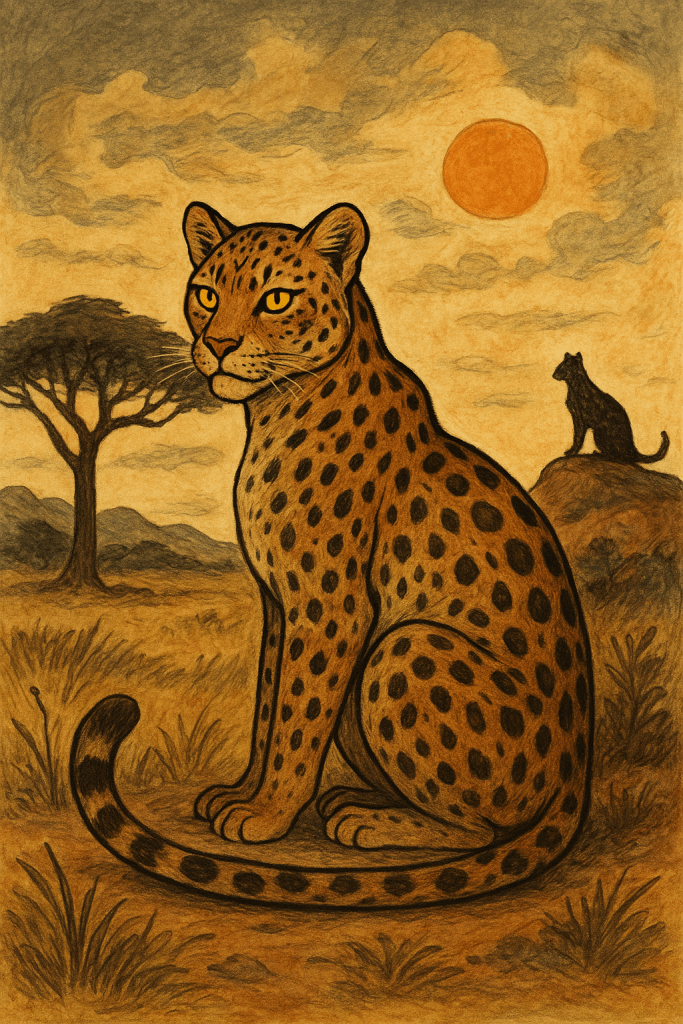
Explore the legendary cats of African folklore — from Egyptian goddesses to West African tricksters. Discover how cats shaped myth, magic, and identity across Africa.
Introduction
Cats hold a revered and complex place in African folklore. From the ancient temples of Egypt to the deep forests of West Africa and the deserts of the Sahel, cats are more than just animals — they are symbols of power, guardians of the spiritual world, and sometimes, mysterious tricksters. This blog post explores the legendary cats of Africa’s rich and diverse folklore traditions, their roles in mythology, and their continuing cultural significance.
Table of Contents
- The Origins of the Cat in African Folklore
- Bastet: The Ancient Egyptian Cat Goddess
- African Wildcat: Nature’s Whispering Spirit
- Cat as a Trickster in West African Tales
- Feline Protectors in Central African Legends
- Cats and Witches: Southern African Superstitions
- Cat Totems and Ancestral Spirits
- The Role of Cats in African Proverbs and Oral Poetry
- Influence of Cats on African Art and Culture
- Modern-Day Beliefs and Legacy
- Conclusion: The Enduring Mystery of Cats in African Folklore
1. The Origins of the Cat in African Folklore
The earliest domestication of cats is traced back to the African wildcat (Felis lybica), a small, elusive feline found across much of Africa. As early humans observed these agile hunters, they began to associate cats with grace, independence, and mystery. These traits became the foundation of folklore and oral traditions that spread across tribes and nations.
Cats in African lore are not simply animals; they often stand at the crossroads between the physical and the spiritual world, acting as messengers, guardians, or shape-shifters.
2. Bastet: The Ancient Egyptian Cat Goddess
No discussion of cats in African folklore is complete without Bastet, one of the most iconic deities of Ancient Egypt. Worshipped as far back as the Second Dynasty (c. 2890 BCE), Bastet evolved from a fierce lioness goddess to a more docile, protective figure with the head of a domestic cat.
Attributes of Bastet:
- Protector of women and children
- Guardian of the home
- Embodiment of grace and fertility
- Warrior spirit in early mythology
Temples dedicated to Bastet, especially in the city of Bubastis, were centers of massive cat cults. Mummified cats were offered as sacrifices, and harming a cat — even accidentally — could be punishable by death. Cats became sacred symbols, walking freely among royals and peasants alike.
3. African Wildcat: Nature’s Whispering Spirit
In sub-Saharan cultures, the African Wildcat is often seen as a spirit animal — shy, watchful, and aware of unseen dangers. Tribes such as the San (Bushmen) believed cats had the ability to sense spiritual disturbances and alert humans through their behavior.
These cats, often seen only briefly in the wild, were treated with deep respect. Folktales describe them as “the eyes of the night”, revealing truths that others miss and acting as scouts between the realms of the living and the ancestors.
4. Cat as a Trickster in West African Tales
Many West African cultures feature the cat as a trickster, similar to the spider Anansi. In tales passed down by griots (oral historians), the cat uses cunning and charm to outsmart larger, more powerful animals.
A popular story:
In a Yoruba tale from Nigeria, a clever cat challenges the king’s lion to a game of wits. By pretending to be weak and mild, the cat tricks the lion into a trap, winning freedom for smaller animals. This story is often used to teach lessons about humility, intelligence, and patience.
In other regions like Ghana, the Ashanti people tell stories where cats take on the role of advisors to kings, whispering strategies into their ears, unseen by others.
5. Feline Protectors in Central African Legends
In Congo and Gabon, some tribes believe in forest spirits that appear as large black cats to protect sacred groves or ancestral sites. These spirit cats are believed to chase away evil and ward off trespassers who come with ill intentions.
The Leopard Connection:
The leopard, often mistaken in folklore for a large mystical cat, plays a dual role — protector and predator. It is sometimes said that domestic cats are the children of the leopard, sent to homes to keep negative spirits away.
6. Cats and Witches: Southern African Superstitions
In many Southern African cultures — especially among the Zulu and Xhosa — cats are deeply connected to witchcraft, both feared and respected.
- Black cats are often seen as familiars of witches.
- Cats disappearing or behaving strangely at night is believed to signal spiritual interference or bewitchment.
- Healers and diviners may use cat-related rituals to cleanse a home or detect malevolent energy.
However, this association with dark magic has led to the persecution of cats in some communities, especially black ones, creating a mix of awe and superstition.
7. Cat Totems and Ancestral Spirits
Several African tribes practice totemism, where animals represent clan identities or ancestral spirits. In certain Bantu-speaking cultures, the cat totem is believed to embody agility, independence, and a powerful link to the otherworld.
Families with a cat totem:
- Must never harm a cat.
- Believe cats in dreams are messages from ancestors.
- Use carved symbols of cats in spiritual ceremonies.
These totems form part of initiation rites, personal names, and tribal emblems. A dream of a talking cat, for example, is interpreted as a serious message from an elder spirit.
8. The Role of Cats in African Proverbs and Oral Poetry
African oral traditions are rich with proverbs and idioms involving cats, often used to teach moral lessons or reflect human behavior.
Examples:
- “The cat that chases two mice catches none.” (Swahili proverb)
- “When the cat’s away, the mice hold council.” (West African proverb)
- “A cat does not tell a lion it is hunting.” – A proverb reflecting humility and discretion.
In poetry, cats are compared to warriors, seducers, mystics, and mothers — their feline qualities woven into metaphors for love, battle, and secrecy.
9. Influence of Cats on African Art and Culture
Across the continent, cats appear in traditional African art, often carved in wood, molded in bronze, or painted on ritual objects.
Examples:
- Benin bronze plaques sometimes feature felines as protectors.
- Dogon masks include cat-like figures in ceremonies about life and death.
- Egyptian tomb art heavily depicts cats lounging under chairs, eating fish, or walking beside deities.
In modern African textile design, stylized cats are popular motifs on cloth used for storytelling garments and ceremonial dress.
10. Modern-Day Beliefs and Legacy
Even in urbanized African societies today, old cat myths still linger. Some communities treat stray cats with reverence or fear. Beliefs such as:
- A cat entering your house is a sign of good fortune.
- A cat meowing repeatedly at night signals spiritual danger.
- A cat that follows someone is believed to be a reincarnated soul or a spiritual guide.
At the same time, younger generations, influenced by global culture and education, are reclaiming the image of the cat not as a creature of fear but as a pet and a powerful cultural symbol.
11. Conclusion: The Enduring Mystery of Cats in African Folklore
From goddess worship in Ancient Egypt to spirit guardians in Congo and tricksters in Nigeria, cats have walked through the pages of African folklore as mystical, multifaceted beings. Their dual nature — gentle yet wild, loyal yet elusive — has made them ideal vessels for stories passed down for generations.
In Africa, the cat is never just a pet. It is a symbol of survival, a link to the ancestors, a mirror of human cunning and power, and sometimes, a divine presence watching from the shadows.
As we rediscover and preserve Africa’s oral traditions, these feline legends remind us of the deep spiritual connection between people and animals — one that continues to shape identity, belief, and culture across the continent.




 Fresh Cat News: Trusted Updates for Cat Lovers & Responsible Owners
Do you found this guide useful, please leave a comment.