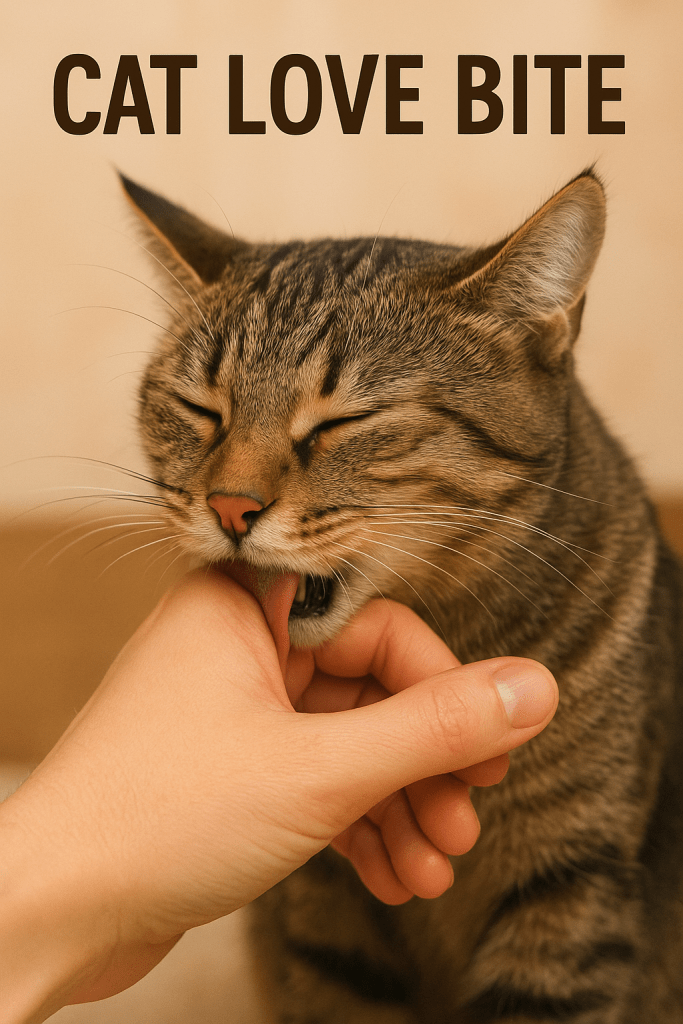
Discover why cats love bites, what they really mean, and how to respond without hurting your bond. Expert tips for happy, bite-free cuddles.”
Introduction
Cats are fascinating creatures—full of quirks, mystery, and unexpected behaviors. One of the more puzzling things cat owners encounter is the so-called “love bite”. You might be petting your cat, enjoying a sweet cuddle, when suddenly—nip! It’s not hard enough to break skin, but it’s enough to make you pause and wonder: Why did my affectionate furball just bite me?
If you’ve ever asked yourself what to do with a cat that bites, why cats love bite, or what it means, this comprehensive article about cats’ bites will answer your questions. We’ll cover the reasons, the science, the emotional meaning, and practical tips for responding—without damaging the trust and bond between you and your cute cat.
1. Understanding the “Cat Love Bite”
A love bite is a gentle, controlled bite that typically occurs during petting or play. It’s very different from an aggressive bite. A love bite:
- Doesn’t break the skin
- Is not accompanied by hissing or growling
- Often comes out of nowhere during a calm moment
Cats have subtle communication systems, and love bites are part of their social language. To humans, it can seem contradictory—biting during affection—but in cat world, it’s not.
2. Why Do Cats Love Bite?
Cats love bite for many reasons, often related to communication and sensory stimulation.
2.1. Overstimulation During Petting
Petting feels good to cats, but too much can overwhelm their sensitive nerve endings. Think of it like scratching an itch—pleasant at first, but if someone keeps scratching, it can become irritating.
Signs of overstimulation before a bite:
- Tail flicking
- Ears turning sideways
- Skin twitching
- Restlessness
2.2. Play Behavior
Cats, especially young ones, use their mouths in play. When kittens play together, they bite and wrestle as a form of social bonding and skill practice. Some cats keep this habit into adulthood, even during gentle interactions with humans.
2.3. Attention-Seeking
Some cats bite lightly as a way of saying, “Hey, pay attention to me!” This can happen if you stop petting them or seem distracted.
2.4. Affection Expression
It sounds strange, but biting can be a way for cats to express fondness. In feline social grooming, cats use their teeth gently to nibble on each other’s fur—a behavior called allogrooming. Your cat might be treating you like another cat.
2.5. Communication of Boundaries
A love bite can also be your cat’s way of saying, “I’m done now.” It’s not a punishment—it’s just a feline “period” at the end of a sentence.
3. The Meaning Behind the Bite
3.1. Emotional Meaning
A love bite is often a complex mix of affection and mild irritation. It’s your cat’s way of balancing closeness with personal comfort.
3.2. Relationship Signal
Cats that give love bites generally feel safe with you. It’s a sign they see you as part of their social circle. In the cat world, only trusted companions receive this kind of close-contact behavior.
3.3. Sensory Feedback
Cats have whiskers and nerve endings that are highly sensitive. Love bites can be a form of sensory release when stimulation peaks.
4. How to Tell a Love Bite from Aggression
It’s crucial to know the difference so you respond appropriately.Love aggressive Bite, gentle pressure, hard pressure, can break skin No hissing or growling Often accompanied by hissing, growling, or flattened ears Relaxed body posture Tense muscles, arched back Often during petting or play Often during fear, pain, or threat
If your cat’s bite is aggressive, it’s important to address the root cause—fear, pain, or stress—before trying to fix the behavior.
5. What to Do When Your Cat Love Bites
Responding the right way ensures you don’t punish natural communication while keeping your cat’s behavior safe.
5.1. Stay Calm
Don’t yell, hit, or flick your cat’s nose—these can damage trust.
5.2. Pause Interaction
If your cat love bites, stop petting and give them space. This teaches them that biting ends the interaction.
5.3. Learn Their Signals
Pay attention to early signs of overstimulation—tail flicks, ear movements—and stop before the bite.
5.4. Redirect to Toys
If your cat bites during play, use toys instead of your hands to satisfy their hunting instincts.
5.5. Train Bite Inhibition
Use gentle “time-outs” when they bite too hard. Walk away for 30–60 seconds so they learn biting stops fun.
6. How to Reduce Love Bites Over Time
6.1. Control Petting Sessions
Instead of long strokes, try shorter, slower petting in areas cats prefer—like under the chin or behind the ears.
6.2. Respect Boundaries
If your cat walks away, let them. Forced affection often leads to more biting.
6.3. Offer Mental Stimulation
Bored cats can bite more. Use puzzle feeders, climbing trees, and interactive play sessions.
6.4. Use Positive Reinforcement
Reward gentle interactions with treats and praise.
7. Special Cases: When a Love Bite Might Not Be “Love”
Sometimes, what seems like a love bite is actually a warning sign.
- Medical issues: Dental pain, arthritis, or skin irritation can make a cat more sensitive to touch.
- Stress triggers: New pets, loud noises, or environmental changes can cause tense biting.
- Past trauma: Cats with a history of rough handling may mix affection with defensive habits.
If bites become more frequent or intense, consult a vet to rule out medical causes.
8. Building a Stronger Bond Despite Love Bites
Love bites don’t mean your cat dislikes you. In fact, they can be a sign of deep trust. But to keep your relationship healthy:
- Respect their communication—don’t ignore their signals.
- Engage in regular play to release energy.
- Establish routines—cats love predictability.
- Provide safe spaces—like high perches or hideouts.
9. Myths About Cat Love Bites
Myth 1: Love bites are a sign of aggression
Not true—most love bites are harmless communication.
Myth 2: You should punish a cat for love biting
Punishment can break trust and make the behavior worse.
Myth 3: Cats bite because they don’t like you
In reality, many cats bite the people they like most.
10. FAQs About Cat Love Bites
Q1: Why does my cat bite me gently then lick me?
This is a grooming behavior—your cat is treating you like another cat.
Q2: My cat only love bites at night—why?
Some cats get playful or overstimulated during nighttime cuddle sessions.
Q3: Can I train my cat to stop love biting completely?
You can reduce it, but some cats will always use gentle nips as part of their communication.
Q4: Do kittens love bite more than adults?
Yes—kittens are still learning bite control.
Q5: Is a love bite dangerous?
Not usually, unless it breaks skin. Always clean any puncture wound to prevent infection.
11. Step-by-Step Plan to Handle Love Bites
- Recognize the signs → Watch for overstimulation cues.
- Pause before the bite → Stop petting when cues appear.
- Redirect energy → Use toys to satisfy play urges.
- Reward gentle behavior → Treats, praise, and continued play for soft paws and no biting.
- Stay consistent → Mixed signals confuse cats.
12. Real-Life Examples
- Milo the lap cat: Milo would bite after 5 minutes of petting. His owner learned to stop at 4 minutes and avoid the bite entirely.
- Luna the playful biter: Luna love bit during play. Switching to wand toys saved her owner’s hands.
- Tiger the rescue cat: Tiger’s bites were stronger due to past trauma. With slow trust-building and gentle handling, his bites softened over time.
13. When to Seek Professional Help
If your cat’s biting:
- Breaks skin regularly
- Is accompanied by fear or aggression
- Happens without warning … then it’s time to consult a veterinarian or feline behaviorist.
14. Final Thoughts
Love bites are part of the rich, sometimes confusing language of cats. They can mean:
- “I like you.”
- “That’s enough for now.”
- “Let’s play.”
By learning to read your cat’s cues, respecting their limits, and responding calmly, you can keep your bond strong and enjoyable—teeth and all.
Key Takeaways:
- Love bites are gentle, controlled nips, often during affection.
- They’re usually a sign of trust, not aggression.
- Understanding cat body language is the best way to prevent unwanted bites.
- Respect boundaries and use positive reinforcement for better behavior.






 Fresh Cat News: Trusted Updates for Cat Lovers & Responsible Owners
Do you found this guide useful, please leave a comment.