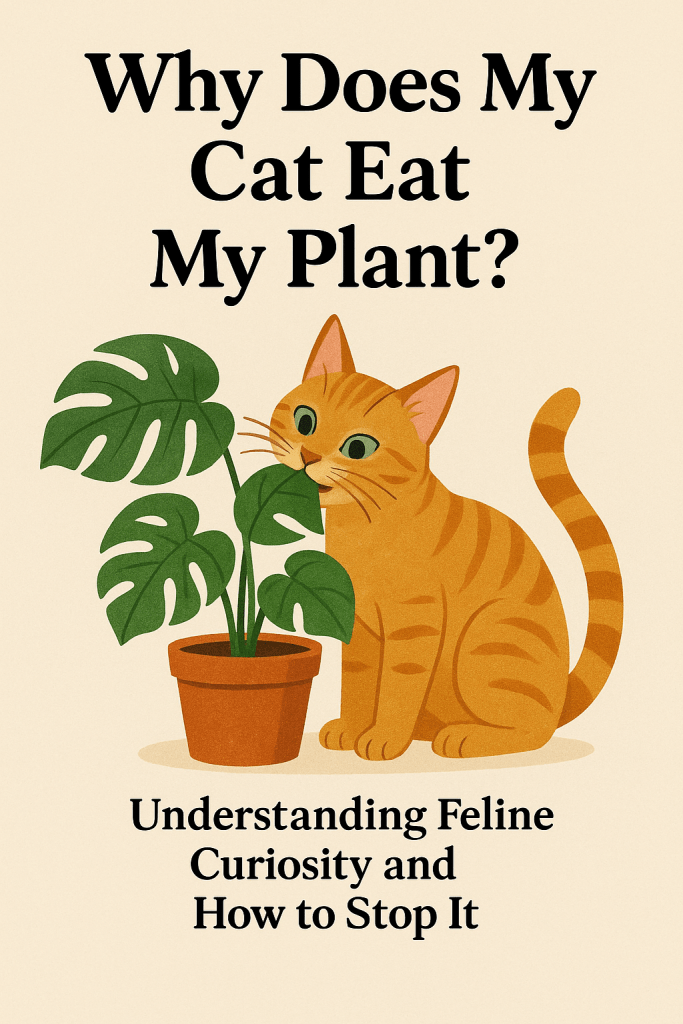
If you’re a cat owner and a plant lover, you’ve likely experienced the frustration of finding your favorite fern or pothos half-chewed or knocked over. But why does your cat eat your plant? Is it boredom, instinct, or something more serious?
In this post, we’ll explore the top reasons cats are drawn to plants, the risks involved, and safe strategies to stop the behavior while protecting both your greenery and your feline friend.
1. Cats Are Naturally Curious Creatures
Cats interact with the world using all their senses—sight, smell, taste, and touch. Your houseplants might resemble grass or other natural textures cats encounter in the wild. Chewing or nibbling on leaves may just be a way for your cat to explore its surroundings.
Scent also plays a role. Some plants, like catnip or spider plants, emit odors that can be particularly stimulating to cats. Even if a plant is not toxic, its aroma may encourage nibbling.
2. Instinctual Grass-Eating Behavior
In nature, felines are known to chew on grass. Although they are obligate carnivores, grass can aid in digestion, help them pass furballs, or even trigger vomiting to remove indigestible material.
Indoor cats may try to mimic this behavior using your houseplants—especially if they don’t have access to grass alternatives. This is a natural but potentially dangerous habit, especially if your plants are toxic.
3. Boredom and Lack of Stimulation
An under-stimulated or bored cat may turn to houseplants simply because they’re available and provide something to do. Chewing leaves, batting at hanging vines, or digging in the dirt can be highly entertaining to a curious kitty.
Signs your cat may be bored:
- Destructive behaviors like scratching furniture or chewing cords
- Excessive grooming
- Overeating or sleeping too much
Adding toys, puzzles, or climbing towers can divert their attention from your precious pothos to more appropriate activities.
4. Nutritional Deficiencies or Gut Issues
Though rare, some cats chew on plants to compensate for missing nutrients or to self-soothe gastrointestinal discomfort. Eating plant matter may help them feel better temporarily.
If your cat shows signs of:
- Frequent vomiting
- Lethargy
- Diarrhea
- Pica (eating non-food items)
…it’s best to consult a veterinarian. There may be an underlying health issue prompting the plant-eating habit.
5. Certain Plants Are Just Too Tempting
Some popular houseplants are more likely to be targeted by cats than others:
- Spider plant: Contains compounds similar to catnip.
- Mint and basil: Strong-smelling and edible, they attract many cats.
- Parlor palm and bamboo: Soft, grassy textures mimic natural cat grass.
Unfortunately, many common houseplants are toxic to cats, including lilies, pothos, dieffenbachia, aloe vera, jade plant, and peace lilies.
🛑 Always check the ASPCA’s list of toxic and non-toxic plants before bringing greenery into a home with cats.
How to Stop Your Cat From Eating Your Plants
Now that you know why your cat is nibbling your ficus, here’s how to safely deter the behavior:
1. Provide Safe Alternatives
- Offer cat grass, wheatgrass, or catnip in a pot.
- Try cat-safe herbs like parsley or thyme.
- Consider a mini indoor garden just for your feline.
2. Make Your Plants Unappealing
- Use citrus peels or diluted lemon juice around the base—cats dislike the smell.
- Try bitter sprays (safe deterrents from pet stores).
- Cover the soil with pinecones or stones to prevent digging.
3. Add Vertical Stimulation
- Install cat trees or wall shelves to keep them busy climbing.
- Use window perches so they can watch birds instead of bothering your plants.
4. Use Barriers
- Place plants in hanging baskets or high shelves out of reach.
- Use terrariums for delicate species.
5. Train with Positive Reinforcement
- Clap or use a firm “no” when they approach the plant.
- Redirect to a toy or treat.
- Reward when they choose the toy over the plant.
When to See a Vet
If your cat is eating plants obsessively, or showing signs of illness (vomiting, lethargy, constipation, or diarrhea), consult your vet immediately. Toxic ingestion can lead to serious complications—even death in some cases.
Also, consider a veterinary consult if:
- Your cat has frequent cravings for odd items (fabric, plastic, soil).
- There are persistent digestive issues.
- You notice behavioral changes linked to chewing.
Final Thoughts
Cats eat plants for a mix of instinctual, environmental, and psychological reasons. While some behavior is natural and harmless, the real danger lies in the toxicity of many common houseplants.
The good news? With a little knowledge and some creative solutions, you can enjoy the best of both worlds—a lush green home and a healthy, curious cat.





 Fresh Cat News: Trusted Updates for Cat Lovers & Responsible Owners
Do you found this guide useful, please leave a comment.