Here is what you will sea during your reading :
1. Introduction
2. What Is Feline Mounting?
3. Is It Normal or a Problem?
4. Why Cats Hump Blankets
5. Male vs. Female Behavior Differences
6. Should You Stop It? (Yes/No Cases)
7. What Not to Do
8. When to Seek Professional Help
9. Real Owner Success Stories
10. Conclusion + Checklist
11. FAQs
12. External Resources (3 links provided)
1. Introduction
If your cat has ever strutted across your bed to hump your favorite blanket (or even your leg!), you’re definitely not alone. Many cat owners encounter this behavior and feel embarrassed or concerned—but it’s actually rather common. In this guide, we’ll explore why cats engage in mounting behavior and offer respectful, evidence-based strategies to manage it.
2. What Exactly Is Feline Mounting?
Feline mounting refers to behaviors like pelvic thrusting, grinding against objects, kneading combined with thrusts, or biting fabric while thrusting. It’s different from playful kneading or aggressive behavior—this is more sexualized or stress-driven.
3. Is This Normal? Or Should You Be Concerned?
Such behavior can be completely normal in kittens exploring their bodies, teenage cats experiencing hormonal surges, or during periods of excitement. However, if mounting becomes frequent, obsessive, or is accompanied by stress signals (like hiding, aggression), it could signal underlying issues that need attention.
4. Common Reasons Why Cats Hump Blankets
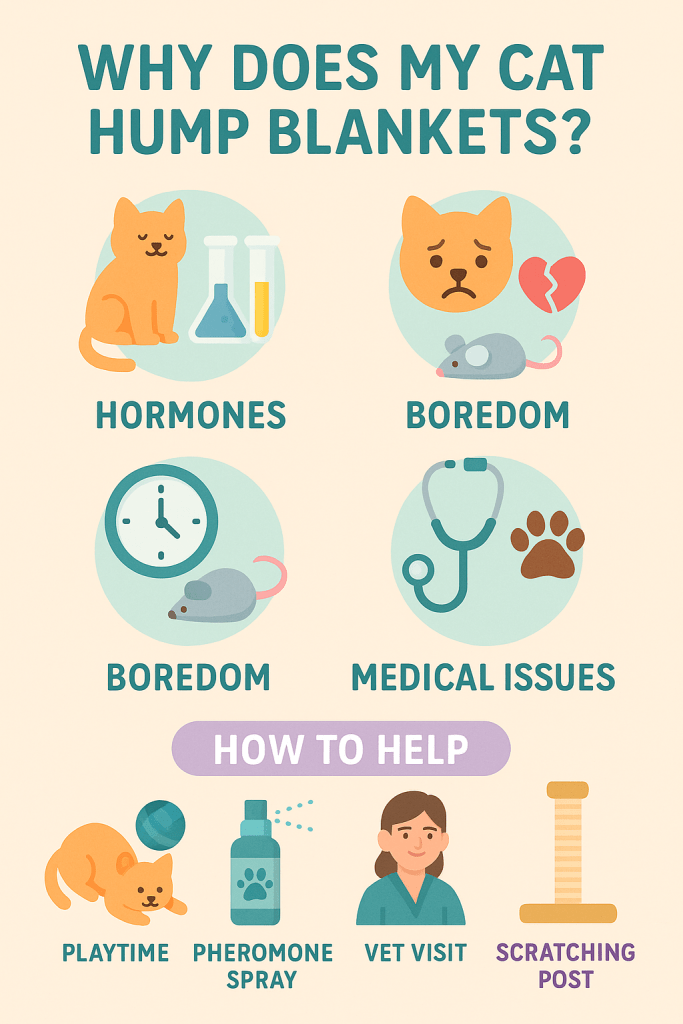
- Hormonal Causes – Unneutered males (and sometimes females) may hump due to sexual drive. Neutering often helps reduce this behavior.
- Stress or Anxiety – Humping can relieve tension, especially during environmental changes or overstimulation.
- Redirected Energy – After playtime, cats might redirect intense physical energy onto soft items.
- Territorial Display or Dominance – Mounting may express dominance—even on inanimate objects.
- Medical Triggers – Underlying health conditions like urinary tract issues or skin irritation may contribute. When in doubt, see your vet.
5. Male vs. Female Cats: Is There a Difference?
Both male and female cats can exhibit mounting behaviors, especially if intact. However, hormonal drives are stronger in unneutered males. Still, stress, play, and comfort-seeking are common triggers across genders.
6. Should You Stop It? And If So, How?
When to Let It Go
- Occasional humping of a blanket or toy.
- No signs of distress, injury, aggression, or obsessive repetition.
When to Intervene
- If the cat seems fixated, hurts itself, or the behavior disrupts daily life.
- If it’s combined with signs of anxiety, aggression, or other behavioral changes.
Gentle Solutions
- Spay/Neuter — Reduces hormonal motivations.
- Enrich & Play — Offer interactive toys, climbing structures, and daily play sessions to redirect energy.
- Behavioral Redirects — Gently distract with a favorite toy or game when mounting begins.
- Stress Reduction — Provide safe hiding spots, consistent routine, and feline pheromone diffusers.
- Environmental Enrichment — Window perches, puzzle feeders, and hiding spots can reduce stress-driven behavior.
7. What Not to Do
- Never punish physically or verbally. It creates fear and damages trust.
- Avoid shame tactics like isolating or scolding.
- Don’t overuse deterrents that risk damaging your bond (e.g., sprays or harsh interruptions).
8. When to Consult a Vet or Behaviorist
Seek professional help if your cat:
- Develops sudden, obsessive, or compulsive mounting.
- Shows other stress signals (e.g., spraying, hiding, aggression).
- Has possible medical issues linked to urinary, hormonal, or neurological disorders.
9. Real Owner Stories
- Bella’s boost: A dedicated owner added extra playtime and vertical space; her neutered cat Bella almost eliminated blanket-humping entirely within weeks.
- Milo’s method: Milo, a rescued male, was mounting when stressed. His behaviorist recommended pheromone therapy and crate retreats—Milo became much calmer in new environments.
10. Conclusion & Quick Checklist
Action Step What to Do Understand Is the behavior normal, or stress-induced? Wait and Observe Is it occasional or obsessive? Enrich & Play Provide outlets for energy and mental stimulation. Spay/Neuter Especially if behavior is hormonally driven. Redirect Kindly Distract with toys, interactive play. Seek Help if Needed Consult vet or behaviorist for behavioral or medical concerns.
Key Takeaway: Feline mounting is common—sometimes hormonal, sometimes stress-driven. With understanding, enrichment, and kindness, most cats can move past it.
Further Reading & Resources
- American Association of Feline Practitioners: Feline Behavior Guidelines
- PawDiet: 7 Signs Your Cat Is Stressed (and What to Do)
Frequently Asked Questions (FAQ)
Q1: Why is my neutered male cat still humping things?
Even after neutering, cats can continue humping due to learned behavior, stress, dominance, or habit. It doesn’t always mean sexual intent.
Q2: Should I be worried if my female cat is humping blankets?
It’s less common but not unheard of. Stress, anxiety, play behavior, or medical issues could be involved. If it’s frequent or obsessive, consult a vet.
Q3: Can I train my cat to stop this behavior?
Yes—using redirection, increased playtime, environmental enrichment, and calm routines. Avoid punishment, which can increase anxiety.
Q4: Is humping a sign of dominance in cats?
Possibly. Cats may hump to express control over space or other pets. It’s one of many potential signals, especially in multi-cat households.
Q5: When should I see a vet about this behavior?
If the humping is new, intense, or paired with health issues (e.g., excessive grooming, urination problems, aggression), seek veterinary advice.







 Fresh Cat News: Trusted Updates for Cat Lovers & Responsible Owners
Do you found this guide useful, please leave a comment.