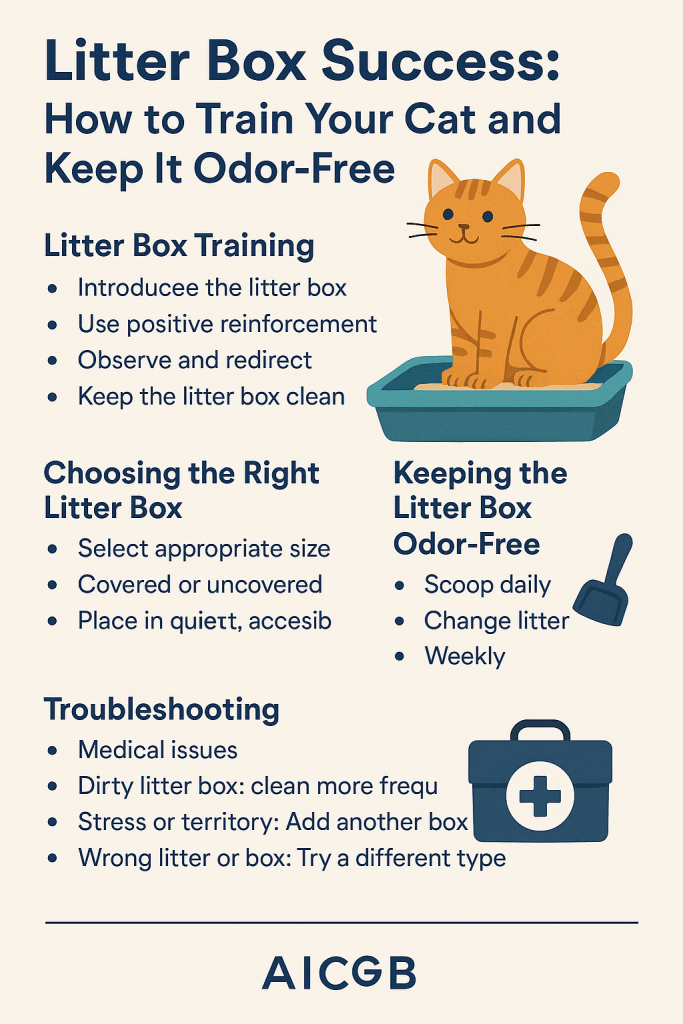
Whether you’re a new cat owner or a seasoned feline enthusiast, mastering the litter box routine is essential. Proper litter box training combined with consistent maintenance not only ensures your cat stays healthy and happy but also keeps your home smelling fresh and clean. In this guide, we’ll cover how to successfully train your cat to use the litter box and how to maintain it effectively for long-term success.
1. Why Litter Box Training Matters
Litter box training is a fundamental part of cat ownership. Cats are naturally clean animals and, with a little guidance, most quickly learn to use the box. Failure in training or maintenance often leads to accidents, which can cause frustration and behavioral issues.
Proper litter box training helps:
- Prevent unwanted elimination around the house
- Build trust between you and your cat
- Reduce odors and hygiene risks
- Detect early signs of health problems (like urinary issues)
2. Choosing the Right Litter Box
Before training even begins, selecting the right litter box is crucial.
Key considerations:
- Size: Your cat should have enough space to enter, turn around, and dig comfortably.
- Height: Kittens and senior cats may need boxes with lower sides.
- Covered vs. Uncovered: Some cats prefer privacy; others dislike enclosed spaces due to lingering smells or limited visibility.
Pro tip:
Place multiple boxes in a multi-cat household — the general rule is one box per cat, plus one extra.
3. Picking the Best Cat Litter
Litter preferences vary, and finding the right type may require some trial and error. Common litter types include:
- Clumping clay litter: Easy to scoop and very absorbent.
- Non-clumping clay litter: More affordable but harder to clean.
- Natural litter: Made from corn, wheat, wood, or paper; eco-friendly and low in dust.
- Crystal litter: Silica-based and highly absorbent but may not appeal to all cats.
Look for a litter that is:
- Low-dust (especially for asthmatic cats or sensitive humans)
- Unscented (many cats dislike strong perfumes)
- Soft on the paws (especially for kittens)
4. Location, Location, Location
Cats prefer quiet, safe, and easily accessible places. Avoid placing the box near:
- Noisy appliances
- High-traffic areas
- Feeding stations
If you live in a multi-story home, place one litter box on each level. Ensure there is adequate light and that your cat doesn’t have to jump through hoops to access the box.
5. Litter Box Training: Step-by-Step Guide
Step 1: Introduce the Litter Box
As soon as you bring your cat or kitten home, show them where the litter box is located. Gently place them inside it a few times to get them used to the smell and texture.
Step 2: Use Positive Reinforcement
Reward your cat with gentle praise or treats every time they use the litter box properly. Avoid punishment — it causes fear and confusion.
Step 3: Observe and Redirect
If your cat eliminates outside the box, clean the area thoroughly with an enzymatic cleaner. Gently redirect them to the box next time and watch for patterns.
Step 4: Keep It Clean
Scoop the litter box at least once a day to encourage regular use. Cats are less likely to use a dirty box.
6. Troubleshooting Common Litter Box Problems
Even trained cats may suddenly stop using the box. Here’s what to watch for:
A. Medical Issues
- Urinary tract infections, constipation, and kidney problems can lead to accidents. Always consult your vet if your cat’s habits change suddenly.
B. Stress or Territory Issues
- New pets, moving homes, or changes in routine can stress your cat. Multiple cats might fight over one litter box. Provide separate boxes and calming environments.
C. Dirty Litter Box
- A smelly or full litter box is a big turn-off. Cleanliness is essential to keep your cat returning.
D. Wrong Litter or Box
- If your cat suddenly avoids the box, try changing the litter type or switching from covered to uncovered (or vice versa).
7. How to Keep the Litter Box Smelling Fresh
Bad odors are one of the top complaints among cat owners. Luckily, they’re easy to control with consistent care.
Daily:
- Scoop waste once or twice a day.
- Stir the litter to distribute moisture.
Weekly:
- Change the litter completely and clean the box with mild soap and warm water.
- Avoid strong-smelling cleaners like bleach or ammonia — they may repel your cat.
Monthly:
- Replace the litter box every 6–12 months if it’s scratched or holds odor.
- Consider adding a deodorizing additive (baking soda works well).
8. Litter Box Etiquette in Multi-Cat Homes
In homes with more than one cat, litter box management becomes even more important.
Tips:
- Provide one box per cat, plus one extra.
- Space them out to avoid territorial disputes.
- Clean all boxes regularly — even if one cat is less fussy, others may be pickier.
9. Teaching Kittens vs. Adult Cats
For Kittens:
- Start training between 3–4 weeks old.
- Use shallow boxes for easy access.
- Keep them in a confined space at first, with the box nearby.
For Adult or Rescue Cats:
- Be patient — they may need time to adapt.
- Monitor for past trauma or health issues.
- Try using a litter attractant if the cat is unsure.
10. Bonus Tips for a Happier Litter Box Experience
- Use litter box liners if your cat tolerates them — they make cleaning easier.
- Use a mat around the box to catch stray litter.
- Track your cat’s bathroom habits — changes can signal illness.
- Use a hooded box with a carbon filter if odors are a problem and your cat tolerates enclosed spaces.
Conclusion
Training your cat to use the litter box — and keeping it clean — doesn’t have to be a struggle. With the right setup, some patience, and consistent maintenance, you’ll create a routine that works for both of you. A clean litter box is a happy one — and a happy cat makes a peaceful home.
FAQs
Q: How often should I clean my cat’s litter box?
A: Scoop daily, change litter weekly, and wash the box weekly.
Q: What if my cat suddenly stops using the box?
A: Rule out medical issues, check for stress, or try changing the litter or box type.
Q: Is scented litter bad for cats?
A: Many cats dislike strong scents. Unscented litter is usually safer and more appealing.
Q: How do I transition my cat to a new litter?
A: Mix small amounts of the new litter into the old, gradually increasing over a week.







 Fresh Cat News: Trusted Updates for Cat Lovers & Responsible Owners
Do you found this guide useful, please leave a comment.