If your cat has ever had fleas, you know just how frustrating and persistent these tiny pests can be. But have you ever wondered where cat fleas come from or how they were first treated? Understanding the origin of cat fleas and the evolution of flea control helps pet owners better manage and prevent infestations. This post will take you through the fascinating history of the cat flea and the early treatments that shaped modern veterinary care.
🦟 What Is a Cat Flea?
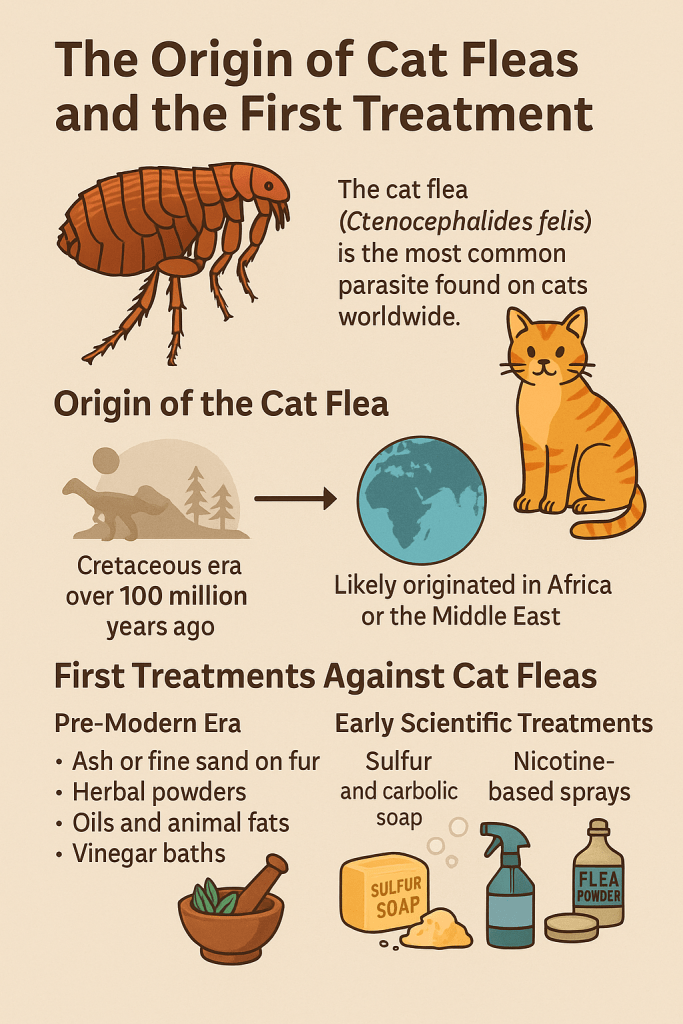
The cat flea (Ctenocephalides felis) is the most common external parasite found on cats worldwide. Despite the name, it can also infest dogs, rabbits, and even humans under certain conditions.
🔬 Key Facts:
- Size: 1–3 mm
- Color: Reddish-brown
- Life Cycle: Egg → Larva → Pupa → Adult (takes 2–3 weeks to several months)
- Habitat: Warm, humid environments (bedding, carpets, outdoor areas)
Cat fleas are resilient, adaptable, and prolific breeders, making them difficult to eliminate once an infestation begins.
🌍 Origin of the Cat Flea: Where Did It Come From?
📜 Ancient Roots
Fleas have existed for millions of years, with fossilized fleas dating back over 100 million years. These ancient fleas were larger and lived on dinosaurs before evolving to infest mammals and birds.
🐈 Specific Origin of Ctenocephalides felis:
- Believed to have originated in Africa or the Middle East, where early domesticated cats were found.
- Spread globally through human migration, trade routes, and colonization.
- Today, C. felis is found on every continent except Antarctica.
As humans brought cats aboard ships to control rodents, fleas traveled too, embedding themselves into domestic environments and expanding their reach.
💥 First Notable Impacts of Fleas on Health
While cat fleas don’t transmit the plague like rat fleas (Xenopsylla cheopis), they still pose serious risks:
Health Issues Caused by Cat Fleas:
- Flea allergy dermatitis (FAD)
- Tapeworm transmission (Dipylidium caninum)
- Anemia in kittens or elderly cats
- Skin infections due to scratching
This prompted early efforts in both folk remedies and scientific treatments.
🧴 The First Treatments Against Cat Fleas
🧪 Pre-Modern Era: Folk and Herbal Remedies
In ancient and medieval times, flea infestations were treated with:
- Ash or fine sand sprinkled on fur
- Herbal powders made from rosemary, lavender, or wormwood
- Oils and animal fat mixtures used to suffocate fleas
- Vinegar baths (still used in diluted form today)
These methods had limited success and often irritated the cat’s skin.
🧫 Early Scientific Treatments: 1800s–1900s
With the rise of veterinary medicine in the 19th century, treatments became more chemical-based:
🧼 Sulfur and Carbolic Soap
- Used to bathe infested animals
- Helped kill fleas but caused dryness or toxicity with frequent use
🧪 Nicotine-Based Sprays
- Derived from tobacco; highly effective but also toxic
- No longer used due to safety concerns
💨 Flea Powders and Dips (Mid-1900s)
- DDT was introduced as a powerful flea killer but was banned for environmental and health risks
- Later, carbaryl and pyrethrin-based powders became more common and safer
💊 Breakthrough: Modern Veterinary Flea Treatments
The real revolution in flea control came in the late 20th century.
🧬 1990s: Spot-On Treatments
- Products like Frontline (fipronil) and Advantage (imidacloprid)
- Applied to the cat’s neck once a month
- Kills adult fleas and prevents infestations
💉 Oral Flea Medications
- Pills like Capstar (nitenpyram) kill fleas within hours
- Others like Comfortis (spinosad) offer longer protection
💡 Integrated Flea Control:
- Combines adulticide with insect growth regulators (IGRs) to stop flea reproduction
- Examples: S-methoprene, lufenuron
Today, flea treatment is safer, more effective, and more convenient than ever before.
🚫 Prevention Is Better Than Cure
Now that you know where fleas come from and how treatments evolved, prevention becomes key.
🛡️ Flea Prevention Tips:
- Use monthly flea preventatives
- Vacuum floors, furniture, and bedding weekly
- Wash pet bedding in hot water regularly
- Treat all pets in the household (not just the affected one)
- Use flea combs to check your cat regularly
🧠 Did You Know?
- A single flea can lay 40–50 eggs per day
- Fleas can survive months without feeding in their pupal stage
- Indoor cats can still get fleas through shoes, clothing, or open windows
- Fleas jump up to 150 times their body length—like a human leaping over a skyscraper!
👨⚕️ When to See a Vet
If your cat shows signs of:
- Constant scratching or grooming
- Hair loss, scabs, or skin irritation
- Flea dirt (black specks in the fur)
- Lethargy or pale gums (from anemia)
…consult your vet immediately for a comprehensive flea control plan.
🧾 Final Thoughts
The cat flea, Ctenocephalides felis, may be tiny, but its impact can be huge. From its ancient origins to the first herbal remedies and modern spot-on treatments, flea control has come a long way. As a responsible cat owner, understanding this journey empowers you to protect your pet from discomfort, disease, and danger.
A flea-free cat is a happy cat—and a happier home. 🐾








 Fresh Cat News: Trusted Updates for Cat Lovers & Responsible Owners
Do you found this guide useful, please leave a comment.