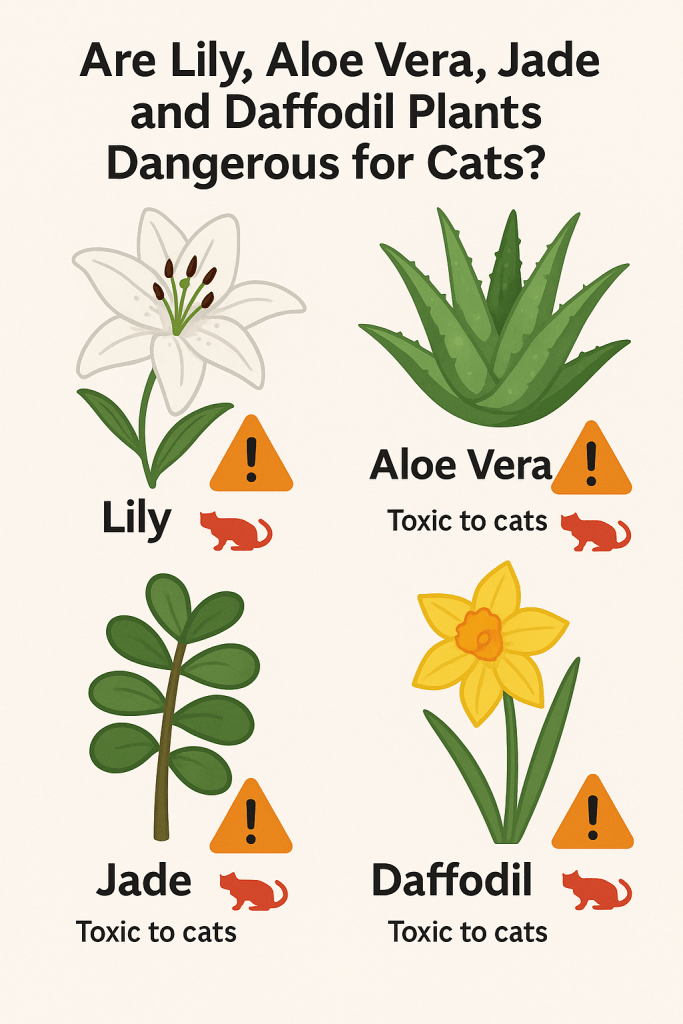
Cats are naturally curious—and that curiosity often extends to houseplants. While greenery can brighten up your home, some common plants are toxic to cats and can cause mild to severe health issues. In this post, we’ll explore four popular but dangerous plants for cats: Lily, Aloe Vera, Jade, and Daffodil. If you have any of these plants and a feline friend at home, read on to learn how to keep your kitty safe.
🌼 1. Lilies – Highly Toxic and Potentially Fatal
🚨 Toxicity Level: Extremely Toxic
Lilies are among the most dangerous plants for cats. Even small amounts can cause acute kidney failure, and in some cases, death.
👀 Symptoms of Lily Poisoning in Cats:
- Drooling
- Vomiting
- Lethargy
- Loss of appetite
- Dehydration
- Seizures
- Kidney failure within 24–72 hours
☠️ Parts of the Plant That Are Poisonous:
- Leaves
- Flowers
- Pollen
- Even the water in the vase
🔬 Why Lilies Are So Dangerous:
The exact toxic compound is unknown, but even licking pollen off fur can be deadly. Prompt veterinary treatment is essential.
✅ What to Do:
- Immediate emergency vet visit if ingestion is suspected
- Induce vomiting only if directed by a vet
- Remove all lilies from your home
🌿 2. Aloe Vera – Healing for Humans, Harmful for Cats
🚨 Toxicity Level: Moderate
While Aloe Vera is celebrated for its soothing properties in humans, it’s toxic to cats when ingested.
👀 Symptoms of Aloe Poisoning in Cats:
- Vomiting
- Diarrhea
- Loss of appetite
- Lethargy
- Tremors (in severe cases)
- Discoloration of urine
☠️ Toxic Components:
- Saponins and anthraquinones found in the latex (the yellowish juice just under the skin)
🔬 Why Aloe Vera Is a Risk:
The saponins irritate the digestive tract. Cats who chew or lick Aloe leaves are at risk.
✅ What to Do:
- Remove the plant from areas accessible to your cat
- Call your vet if your cat has bitten or eaten any part of the plant
- Use cat-safe alternatives for indoor greenery like cat grass or spider plants (non-toxic)
🌵 3. Jade Plant – A Common Succulent with Serious Risks
🚨 Toxicity Level: Mild to Moderate
Also known as the money plant or friendship tree, the jade plant is a popular succulent—but it’s poisonous to cats.
👀 Symptoms of Jade Poisoning in Cats:
- Vomiting
- Depression or lethargy
- Loss of coordination
- Muscle tremors (rare)
☠️ Toxic Components:
The exact toxic compound is unknown, but ingestion consistently leads to gastrointestinal and neurological symptoms in cats.
🔬 Why It’s Dangerous:
Cats are often drawn to the soft, chewy leaves. Even a small nibble can lead to vomiting and sluggish behavior.
✅ What to Do:
- Keep jade plants out of reach or remove them entirely
- Seek veterinary care if symptoms appear
- Watch for any behavioral changes after exposure
🌸 4. Daffodils – Pretty but Poisonous Spring Blooms
🚨 Toxicity Level: Moderate to Severe
Daffodils brighten gardens and homes, but they pose a significant threat to cats if ingested.
👀 Symptoms of Daffodil Poisoning in Cats:
- Vomiting
- Diarrhea
- Abdominal pain
- Drooling
- Irregular heartbeat
- Respiratory distress
- Convulsions (in severe cases)
☠️ Toxic Components:
- Lycorine, a toxic alkaloid
- Crystals in the bulbs that irritate tissues
🧨 Most Dangerous Part:
The bulb is the most toxic, though leaves and flowers are also harmful.
✅ What to Do:
- Prevent access to both indoor and outdoor daffodils
- If your cat digs in garden soil, don’t plant bulbs in accessible areas
- Visit your vet immediately if ingestion occurs
📋 Quick Toxicity Summary Table
Plant Toxic Part Symptoms Danger Level Lily All parts + water Vomiting, kidney failure, seizures Extremely High Aloe Vera Gel & latex Vomiting, tremors, appetite loss Moderate Jade Leaves & stem Vomiting, lethargy, coordination Mild to Moderate Daffodil Bulb, leaves, flower Vomiting, abnormal heart rhythm High
🧰 What to Do If Your Cat Eats a Toxic Plant
- Stay calm. Don’t panic—get information fast.
- Identify the plant. Take a photo or sample.
- Contact your vet or poison helpline:
- ASPCA Animal Poison Control: +1-888-426-4435
- Pet Poison Helpline: +1-855-764-7661
- Do NOT try home remedies.
- Follow vet instructions exactly.
🛡️ How to Cat-Proof Your Plants and Home
✅ Choose Cat-Safe Plants:
- Spider plant
- Areca palm
- Calathea
- Prayer plant
- Boston fern
🪴 Use Barriers or High Shelves:
- Use hanging planters
- Add double-sided tape around pots (cats hate sticky textures)
- Spray with cat-safe deterrents (like citrus-based sprays)
🧠 Train and Redirect:
- Provide cat grass as a safe chewing option
- Reward your cat when it ignores plants
- Use distractions like toys and climbing trees
📦 Conclusion: Better Safe Than Sorry
Your love for plants and your cat can coexist—with a little knowledge and planning. Lily, Aloe Vera, Jade, and Daffodils may be beautiful, but they’re dangerous for curious cats. Choosing pet-safe plants, monitoring your cat’s environment, and acting quickly in emergencies can prevent tragic outcomes.
Keeping your furry companion safe doesn’t mean sacrificing a beautiful home—it just means being a mindful plant parent.




 Fresh Cat News: Trusted Updates for Cat Lovers & Responsible Owners
Do you found this guide useful, please leave a comment.