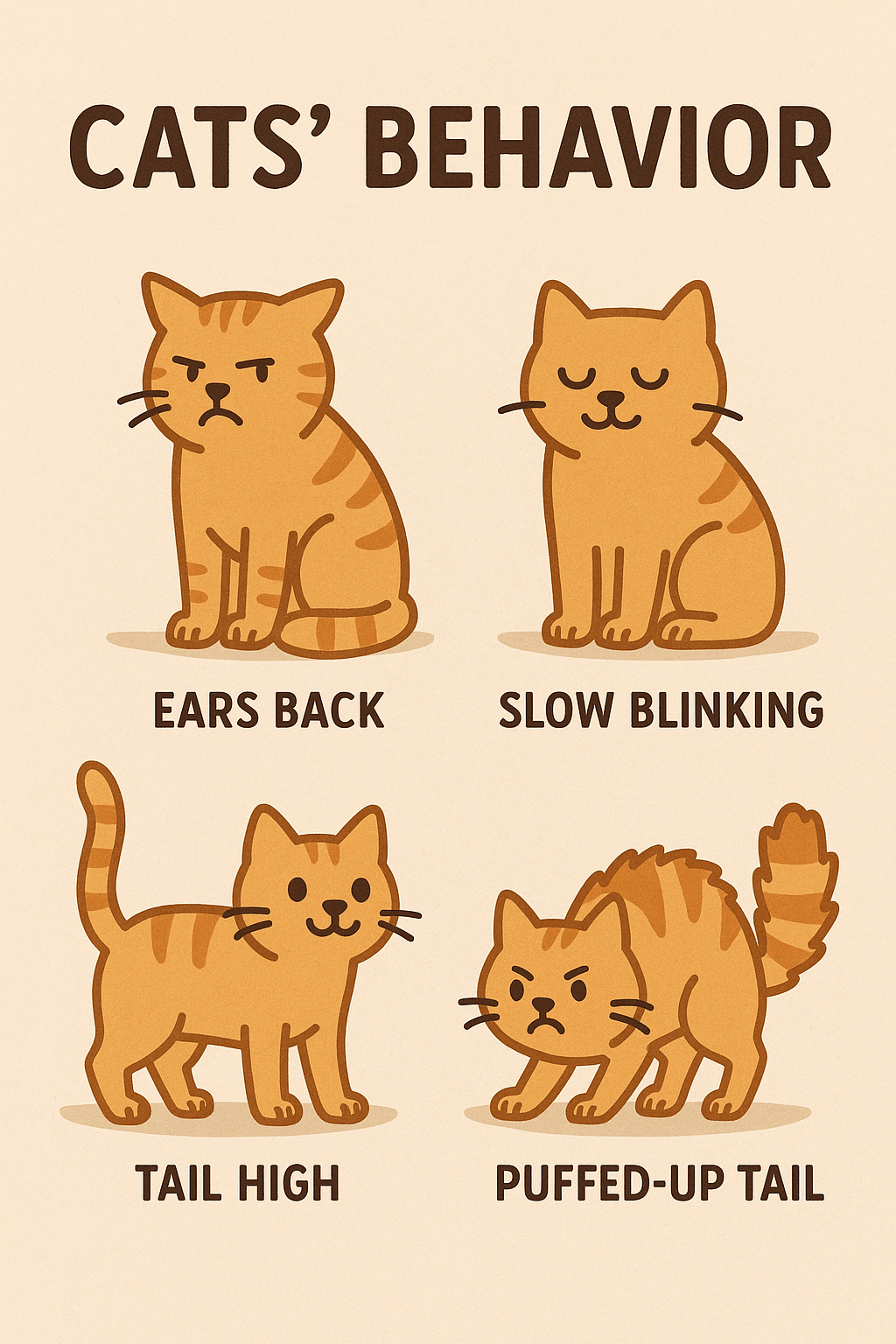
Cats are fascinating creatures with complex behaviors that often leave their owners puzzled. From purring to tail flicking, each action carries a unique meaning. Understanding these behaviors can strengthen the bond between you and your feline companion while ensuring their well-being.
In this comprehensive guide, we’ll explore:
- Common Cat Behaviors and Their Meanings
- Body Language: What Your Cat is Trying to Tell You
- Vocalizations: Decoding Meows, Purrs, and Hisses
- Playful vs. Aggressive Behaviors
- Signs of Stress or Illness in Cats
- How to Respond to Different Cat Behaviors
By the end of this article, you’ll have a deeper insight into your cat’s actions and how to interpret them effectively.
1. Common Cat Behaviors and Their Meanings
Purring
- Meaning: Often associated with contentment, but cats also purr when in pain or stressed.
- Context: If your cat is relaxed and kneading, it’s happy. If purring while hiding or tense, it may be self-soothing.
Kneading (Making Biscuits)
- Meaning: A leftover behavior from kittenhood (stimulating milk flow).
- Context: Indicates comfort, affection, or marking territory with scent glands in their paws.
Tail Flicking or Lashing
- Meaning:
- Slow swish: Curiosity or focus (e.g., watching a bird).
- Fast flicking: Irritation or agitation.
- Puffed-up tail: Fear or aggression.
Blinking Slowly (Cat Kisses)
- Meaning: A sign of trust and affection.
- Context: Try slow-blinking back to bond with your cat.
Bunting (Head-Butting)
- Meaning: A friendly gesture to mark you with their scent (from facial glands).
- Context: Shows affection and ownership (“You’re part of my family”).
2. Body Language: What Your Cat is Trying to Tell You
A cat’s posture reveals a lot about their mood:
- Relaxed: Ears forward, tail up, body loose.
- Alert: Ears perked, pupils dilated, tail twitching.
- Defensive: Ears flattened, back arched, fur puffed.
- Submissive: Crouched low, tail tucked, avoiding eye contact.
Ears Position
- Forward: Interested or happy.
- Sideways or Back: Annoyed or anxious.
- Flattened: Fearful or aggressive.
Eyes & Pupils
- Dilated pupils: Excitement, fear, or playfulness.
- Slit pupils: Aggression or focus (common in bright light).
Whiskers
- Forward: Curious or hunting.
- Pulled back: Nervous or defensive.
3. Vocalizations: Decoding Meows, Purrs, and Hisses
Cats communicate through various sounds: SoundMeaningShort meow Greeting (“Hello!”) Multiple meows Excited (“Feed me!”) Low-pitched meow Complaint (“Open the door!”) Purring Contentment or self-soothing Hissing/Growling Fear, anger, or warning Chirping/Trilling Excitement (often at prey)
4. Playful vs. Aggressive Behaviors
Playful Signs
- Pouncing on toys
- Gentle biting (no hissing)
- Ears forward, tail up
Aggressive Signs
- Ears flattened
- Hissing or growling
- Swatting with claws out
Note: Sudden aggression may indicate pain or stress—consult a vet if persistent.
5. Signs of Stress or Illness in Cats
Behavioral changes can signal health issues:
- Excessive grooming → Anxiety or skin problems
- Hiding more than usual → Pain or stress
- Litter box avoidance → UTI or kidney issues
- Loss of appetite → Dental problems or illness
If your cat shows unusual behavior, seek veterinary advice.
6. How to Respond to Different Cat Behaviors
- If your cat rubs against you: Pet them gently—they’re bonding.
- If they flick their tail aggressively: Give them space.
- If they bring you “gifts” (dead prey): They see you as family—don’t scold them.
- If they scratch furniture: Provide scratching posts as alternatives.
Final Thoughts
Understanding cat behaviors helps create a happier, healthier relationship with your pet. By paying attention to their body language, vocalizations, and habits, you can better meet their needs and strengthen your bond.
Do you have a quirky cat behavior you’d like decoded? Share in the comments!
- Description: “Discover what your cat’s behaviors really mean—from purring to tail flicking. Learn how to decode feline body language for a happier pet!”
#CatBodyLanguage #CatCommunication #WhyCatsDoThat #catSignal #CatOwnersGuide #DecodingCats #CatEmotion #FelineBehaviorTips







 Fresh Cat News: Trusted Updates for Cat Lovers & Responsible Owners
Do you found this guide useful, please leave a comment.