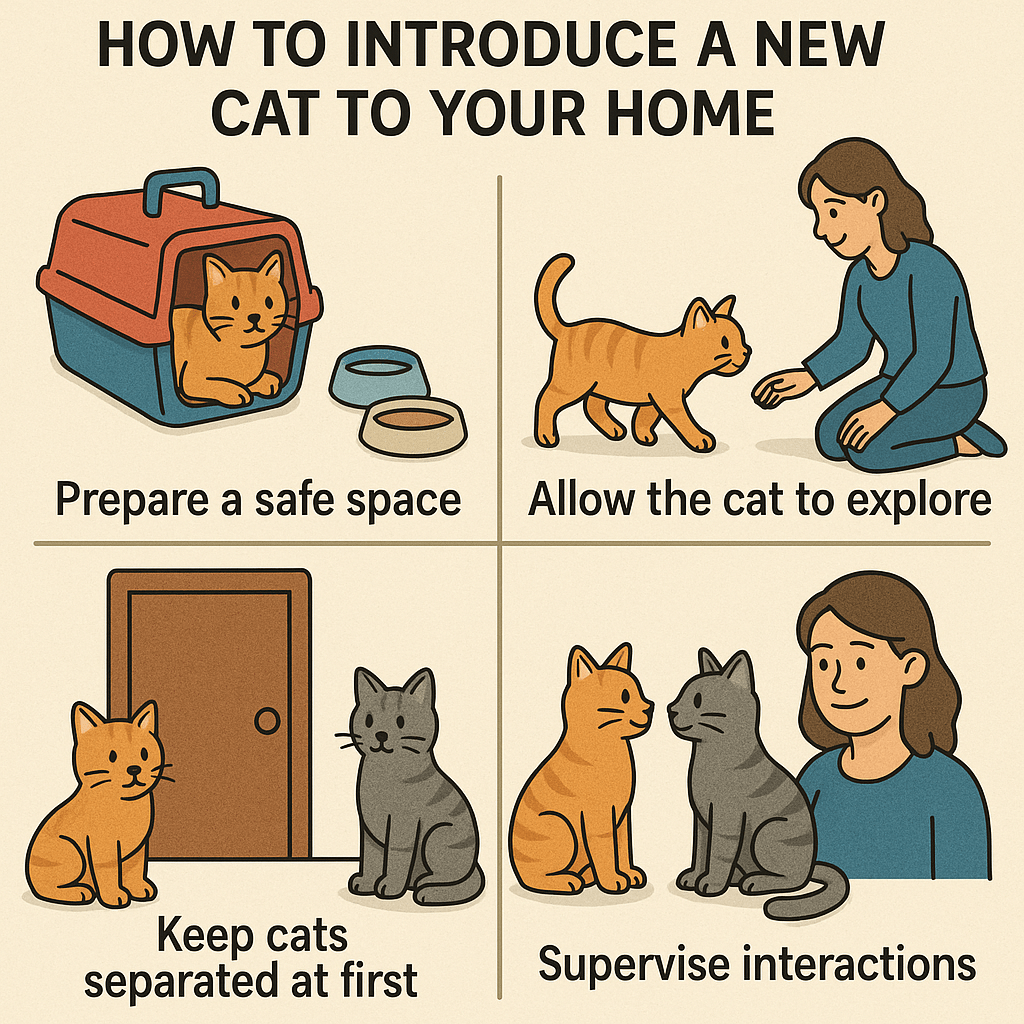
Bringing a new cat into your home is an exciting experience, but it can also be stressful—for both you and your feline friends. Whether you’re introducing a new kitten to a resident cat or adopting an adult cat into a multi-pet household, a slow and careful approach is important to ensuring a smooth transition.
Rushing the introduction process can lead to aggression, anxiety, and long-term behavioral issues. However, with patience, proper planning, and the right techniques, you can help your cats form a peaceful (or at least tolerant) relationship.
In this guide, we’ll cover:
✔ Preparing your house before the new cat arrives
✔ The step-by-step introduction process (with timelines)
✔ Common mistakes to avoid
✔ Signs of success (and when to seek help)
✔ Tips for multi-cat households
Let’s ensure a happy, stress-free transition for everyone!
Step 1: Prepare Your Home Before the New Cat Arrives
Before bringing your new cat home, set up a safe, separate space for them. This helps reduce stress and prevents territorial conflicts.
Essential Supplies for the New Cat:
✅ A quiet room (bedroom, bathroom, or spare room)
✅ Food & water bowls (separate from resident cats)
✅ Litter box (one per cat, plus an extra)
✅ Scratching posts & toys
✅ Comfort items (blankets, beds, hiding spots)
✅ Feliway diffusers (calming pheromones)
Why Separation is Crucial
Cats are territorial, and sudden introductions can trigger fear or aggression. A gradual introduction helps them adjust to each other’s scent and presence without direct confrontation.
Step 2: The Step-by-Step Introduction Process
Phase 1: Scent Swapping (Days 1-3)
Before the cats see each other, let them get used to each other’s scent.
✔ Rub a towel on one cat and place it near the other.
✔ Switch bedding between cats.
✔ Use a pheromone diffuser (like Feliway) to reduce tension.
Goal: Associate the other cat’s scent with positive experiences (treats, playtime).
Phase 2: Controlled Visual Contact (Days 4-7)
Once they’re comfortable with each other’s scent, allow brief, supervised visual contact.
✔ Use a baby gate or cracked door so they can see but not touch.
✔ Feed them on opposite sides of the door (gradually moving closer).
✔ Reward calm behavior with treats and praise.
Warning: Hissing/growling is normal, but separate them if aggression escalates.
Phase 3: Supervised Face-to-Face Meetings (Days 7-14+)
When both cats seem relaxed, allow short, controlled interactions.
✔ Keep initial meetings short (5-10 minutes).
✔ Have toys/treats ready to distract if tension arises.
✔ Never force interaction—let them approach at their own pace.
Signs of Progress:
- Sniffing without hissing
- Playing or ignoring each other
- Relaxed body language (ears forward, tail up)
Red Flags:
- Staring, growling, swatting
- Puffed-up fur or arched backs
- Excessive hiding
If fights break out, separate them immediately and go back to earlier phases.
Step 3: Common Mistakes to Avoid
❌ Rushing the process – Forcing cats together too soon can cause long-term issues.
❌ Punishing aggressive behavior – This increases stress; instead, redirect with toys/treats.
❌ Neglecting individual attention – Ensure each cat gets one-on-one playtime.
❌ Skipping vertical space – Cats feel safer with tall perches and escape routes.
Step 4: Signs of Successful Integration
✔ Eating near each other without tension
✔ Grooming or sleeping in the same room
✔ Play-fighting (no hissing/yowling)
Full acceptance can take weeks or months—be patient!
Step 5: Special Considerations for Multi-Cat Households
If you have multiple resident cats, introduce the new cat one at a time to prevent overwhelming them.
✔ Ensure enough resources (litter boxes, food stations, hiding spots).
✔ Monitor group dynamics—some cats may bond faster than others.
Final Tips for a Smooth Transition
- Keep routines consistent (feeding, playtime).
- Use interactive toys to build positive associations.
- Consult a vet or behaviorist if aggression persists.
Conclusion
Introducing a new cat requires patience, preparation, and positive reinforcement. By following these steps, you’ll minimize stress and help your cats build a harmonious relationship.
How long did it take your cats to get along? Share your experiences in the comments!







 Fresh Cat News: Trusted Updates for Cat Lovers & Responsible Owners
Do you found this guide useful, please leave a comment.