Understanding the Behavior Behind Your Cat’s Hunting “Gifts”
Cats are fascinating creatures, full of quirks and behaviors that both charm and perplex their owners. One of the most puzzling—and often unpleasant—habits that many cat parents encounter is the sight of a dead mouse, bird, or insect on the doorstep or even in the living room. But why do cats bring dead animals home? Are they showing off? Trying to feed us? Or is there a deeper instinct at play?
In this post, we’ll explore the biology, psychology, and behavior behind this phenomenon to help you understand your feline friend better—and how to manage it.
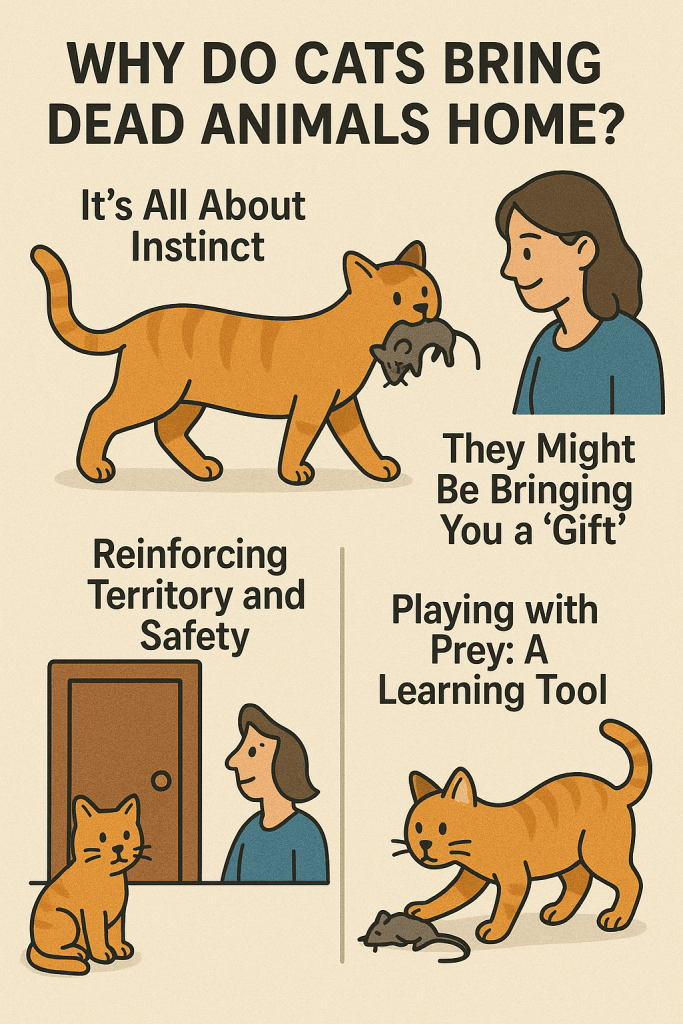
1. It’s All About Instinct
At the heart of this behavior lies your cat’s natural hunting instinct. Cats are obligate carnivores, meaning their bodies are designed to hunt and consume meat. Even if your pet cat has never had to hunt for food in her life, the drive to chase, pounce, and kill is deeply ingrained.
Wild cats hunt to survive, and domestic cats retain that instinct—even when they are well-fed. Bringing prey home is simply an extension of that innate behavior. It’s part of their “programming.”
Key Insight: Even well-fed indoor cats may hunt out of instinct, not hunger.
2. They Might Be Bringing You a “Gift”
Many cat owners interpret the delivery of a dead animal as a kind of offering or gift. And there’s some truth to this. In the wild, mother cats teach their young to hunt by bringing them injured or dead prey to practice on.
If your cat brings you a dead mouse, they may be treating you as part of their family—possibly even as a helpless kitten that needs to be taught how to survive. This behavior is particularly common in spayed female cats, who retain maternal instincts.
What it Means:
- Your cat may see you as family.
- They might think you’re a poor hunter and are trying to help.
- They’re trying to “teach” you how to catch your own food.
3. Reinforcing Territory and Safety
Cats are territorial creatures. In the wild, leaving dead prey in or near their den can serve to reinforce that the area is theirs. By bringing a kill home, they’re not only returning to a safe space but also “marking” their environment.
You might notice your cat chooses certain areas of the house—like a doormat or bed—as their go-to drop-off point. These are usually spots they associate with safety and comfort.
4. It’s a Sign of a Successful Hunt
Cats are solitary hunters. Unlike dogs, they don’t hunt in packs. So when a cat makes a successful kill, they may feel the need to showcase that achievement.
In the feline world, a successful hunt is a big deal. By bringing the catch home, they may be “celebrating” that success or simply sharing their pride with you.
5. Playing with Prey: A Learning Tool
Cats often don’t kill their prey immediately. You might witness your cat toying with a mouse before delivering the final blow. While this might seem cruel, it’s part of the learning and practice process.
For domestic cats who don’t rely on hunting for survival, this act becomes more of a game or training session—especially for younger or more energetic cats.
6. Your Cat Might Just Be Bored
Indoor cats especially can become bored if not mentally or physically stimulated. Hunting provides an outlet for energy and keeps their minds active.
A cat that doesn’t have toys, climbing structures, or interactive play may turn to hunting small insects, rodents, or birds (if they go outside) as a way to relieve boredom. Bringing the prey home is just a side effect.
7. Cats Mimic Their Wild Counterparts
Even if your house cat has never set paw outside, their DNA still holds thousands of years of wild cat behavior. The African wildcat—the ancestor of the domestic cat—is known for hunting and hiding its kill for later.
This evolutionary trait hasn’t disappeared in your cuddly tabby. Stashing a mouse behind the couch might just be your cat’s version of putting leftovers in the fridge!
8. Are They Hungry? Not Always.
One common myth is that cats hunt because they’re hungry. While this can be true for feral or stray cats, most domestic cats don’t hunt out of hunger. It’s more about instinct, play, and stimulation than a need for food.
In fact, many cats will ignore the prey entirely after catching it. Some may not even eat what they kill—they just want to go through the motions.
9. How to Discourage This Behavior
While some owners appreciate the gesture, others find it distressing, especially when birds or other protected wildlife are involved. Here are a few strategies to help:
✔️ Keep Cats Indoors
The simplest solution is to keep your cat indoors, especially during dawn and dusk when small animals are most active.
✔️ Use a Bell Collar
Collars with bells can help alert prey to your cat’s presence, giving them a chance to escape. Make sure it’s a breakaway collar to prevent accidents.
✔️ Provide Mental Stimulation
Interactive toys, puzzle feeders, and regular play sessions can help burn off hunting energy.
✔️ Try Leashed Outdoor Time
For adventurous cats, consider leash training or building a “catio” (cat patio) to allow safe outdoor experiences.
10. What If My Cat Eats the Prey?
Eating prey isn’t unusual, but it can be risky. Wild rodents and birds may carry parasites, diseases, or poisons (like rat bait). If your cat regularly hunts and eats animals, talk to your vet about deworming and health screenings.
11. What Should I Do When They Bring Something Home?
Here’s how to respond calmly:
- Don’t punish your cat: They won’t understand and might become confused or anxious.
- Praise gently or ignore: If you want to reduce the behavior, avoid giving attention to the act.
- Dispose of the animal safely: Use gloves and disinfect the area.
- Redirect the behavior: Provide appropriate toys or interactive games instead.
12. The Bottom Line
Cats bring dead animals home because they’re driven by instinct—not malice or confusion. Whether it’s to teach you, share their success, or mark their territory, your cat is acting on deeply rooted behaviors shaped by thousands of years of evolution.
While it can be unpleasant, it’s important to understand that this behavior is natural and—odd as it sounds—can even be a sign of affection or trust.
Final Thoughts
Your cat isn’t trying to gross you out—they’re just being a cat. Understanding the why behind their behavior helps us become more compassionate and informed pet parents. And while it’s okay to set boundaries and redirect unwanted habits, always approach your feline friend with patience and respect.





 Fresh Cat News: Trusted Updates for Cat Lovers & Responsible Owners
Do you found this guide useful, please leave a comment.